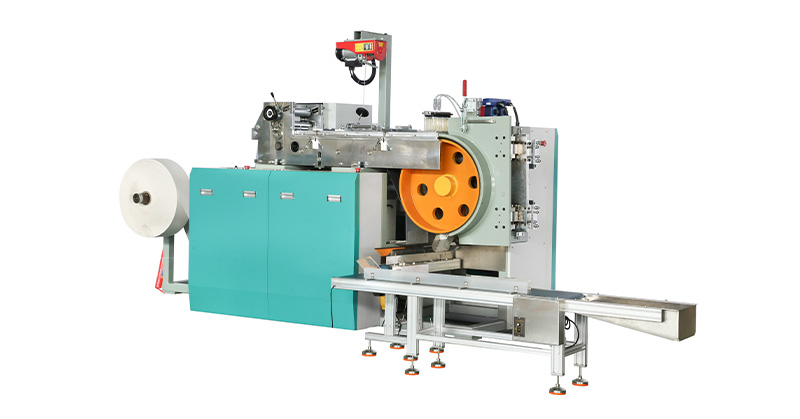
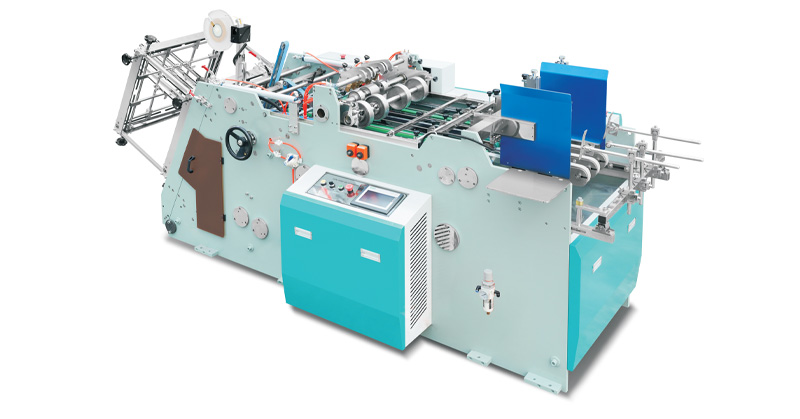
You're comparing two lines. Same output spec. Same price range. One shows CE and FDA compliance documentation. The other says "equivalent international standards." Which do you pick?
Most buyers default to the certified option, but not because they understand what those marks actually guarantee. Here's the uncomfortable truth: CE and FDA certifications don't guarantee your line will run faster or break less often. What they do guarantee is entirely different—and for many buyers, more important.
Let's break down what you're actually getting with certified vs. non-certified equipment, dimension by dimension.
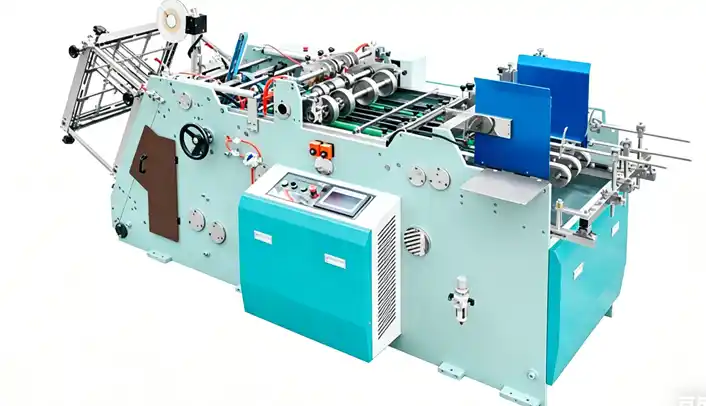
1. What CE Certification Actually Means for Your Production Floor
CE marking isn't a quality award. It's a legal declaration that equipment meets EU safety, health, and environmental protection requirements. For a paper lunch box forming machine, this primarily means:
-
Machinery Directive 2006/42/EC: Emergency stops, two-hand controls, guard interlocks, and risk reduction for moving parts
-
Low Voltage Directive 2014/35/EU: Electrical insulation, grounding, and thermal protection
-
EMC Directive 2014/30/EU: The machine won't interfere with other equipment on your floor
What does this look like in practice? A CE-certified press has enclosed cam mechanisms so operators can't reach moving parts. Non-certified lines often leave these exposed, saving on sheet metal costs. A certified unit requires category 3 safety relays that self-check for welded contacts; uncertified alternatives use standard relays.
Field observation: One Vietnamese packaging plant bought non-certified equipment and failed their EU buyer's factory audit. They spent $4,200 retrofitting guards and safety circuits—and still couldn't get documentation retroactively. The certification either exists at shipment or it doesn't.
2. FDA Compliance: The Exporter's Non-Negotiable
FDA certification for food-contact paper forming machines works differently than CE. The FDA doesn't certify machines—it certifies materials and designs for cleanability. What you need is documented evidence that:
-
All food-contact surfaces (forming dies, transfer fingers, stacking guides) use FDA-grade stainless steel (typically 304 or 316)
-
Any lubricants that could contact paper are NSF H1 or FDA 21 CFR compliant
-
The machine design allows complete cleaning with no dead-legs where residue accumulates
For a lunch box production line exporting to the US, you'll need SGS or Intertek test reports demonstrating compliance with FDA 21 CFR sections 176.170 (paper in contact with aqueous/fatty foods) and 175.105 (adhesives).
Non-certified lines often use standard lubricants and unspecified steel alloys. In a humid production environment, that cheap bearing grease can migrate onto paper blanks through airborne mist—invisible contamination that fails migration testing when your customer's distributor sends samples to a lab.
3. The Documentation Gap: What You Can Actually Prove
Here's a real-world scenario: You win a contract to supply lunch boxes to a European food distributor. Their compliance team asks for your machine's:
-
CE declaration of conformity
-
Technical construction file
-
Risk assessment documentation
-
Electrical schematics with safety component callouts
-
Food-contact material certificates
If your machine came without proper certification, you have nothing to provide. Some suppliers offer "CE-like" or "tested to CE standards" claims—these are meaningless without a formal EU Declaration of Conformity signed by an authorized representative.
According to a 2024 survey of packaging industry auditors, 35% of first-time food packaging exporters fail their initial buyer audit specifically due to missing or invalid machine certifications. The remediation cost averages 6,000–6,000–12,000 per machine, plus 4–8 weeks of production delays.
4. Insurance and Liability: The Silent Differentiator
Your business insurance policy likely has a clause about "certified equipment operation." If a non-certified machine injures an operator or causes a fire, your claim can be denied. Worse: if your uncertified line produces packaging that contaminates food, product liability coverage may not apply.
Certified equipment includes:
-
Documented safety circuit testing
-
Certified emergency stop response time (<0.2 seconds)
-
Verified electrical panel clearances
-
Thermal overload protection on all motors
Non-certified units cut these corners. The savings look attractive on an invoice. They look catastrophic in a lawsuit.
| Comparison Dimension | Certified (CE/FDA Compliant) | Non-Certified / Generic |
|---|---|---|
| Safety Guards | Enclosed moving parts, interlocked doors | Often open mechanisms, basic guarding |
| Electrical Components | Branded relays (Omron, Schneider, Siemens) | Generic or unbranded components |
| Food Contact Materials | 304/316 stainless, NSF H1 lubricants | Unspecified steel, standard grease |
| Documentation | EC Declaration, risk assessment, material certs | Basic manual, commercial invoice only |
| Audit Survival | Full traceability, test reports available | Typically fails audit |
| Insurance Coverage | Fully insurable | Potential coverage gaps |
5. Real Maintenance Implications: What Breaks and What Doesn't
Certification requires documented quality management. That usually means the manufacturer uses traceable components from established suppliers. Non-certified lines use whatever was cheapest on Alibaba that week.
When a certified line's emergency stop relay fails after two years, you buy an identical replacement from Omron or Schneider. When a non-certified line's safety relay fails, it's often a generic unit with no part number cross-reference. Your machine sits idle while you hunt for a compatible substitute—or worse, you bypass the safety circuit entirely (and void any remaining legal protection).
One Midwest US packaging company learned this the hard way: their non-certified forming press stopped operating after a power surge. The supplier sent a replacement control board that didn't match the existing wiring diagram. Production lost nine days. The certified alternative they'd passed on had standardized components available from local industrial suppliers within 24 hours.
6. ISO 9001 and Factory Audits: What It Means for You
Some non-certified equipment manufacturers hold ISO 9001 certification. This does mean they have documented processes. But ISO 9001 covers quality management, not product safety compliance. A factory can be ISO-certified and still ship machines that fail FDA material requirements.
What you actually need to see:
-
ISO 9001:2015 – Factory has consistent production processes
-
Specific test reports – SGS or Interstek for FDA food contact
-
CE technical file – Available for inspection, not just a sticker
If the seller says "CE certified" but can't produce the Declaration of Conformity document, they're using the term loosely. Walk away.
7. The Cost Difference: Upfront vs. Over Five Years
A certified paper lunch box production system typically costs 15–25% more upfront than an uncertified equivalent. Here's what that premium buys over 60 months:
| Cost Factor | Certified Line | Non-Certified Line |
|---|---|---|
| Initial Purchase | +$8,000–15,000 baseline | Base price |
| Audit Preparation | Minimal (documentation ready) | $5,000–10,000 potential |
| Compliance Retrofit | None needed | $3,000–8,000 possible |
| Spare Parts Availability | Standard, widely available | Uncertain, potential extended downtime |
| Resale Value | Higher (documented compliance) | Low (unclear certification status) |
| Legal Risk | Low | Moderate to High |
Over five years, the certified line often costs less total—and carries dramatically lower risk.
8. Supplier Transparency: The Ultimate Test
Here's a practical test you can run today. Email any supplier you're considering and ask for:
-
A copy of their CE Declaration of Conformity (not a photo of a sticker on a machine)
-
An FDA food-contact test report from a recognized lab (SGS, Intertek, TÜV)
-
A component brand list for electrical and safety parts
Suppliers with proper certification will provide these within one business day. Those who hesitate, offer partial documents, or claim "it's all in the manual" are selling uncertified equipment—regardless of what their sales page claims.
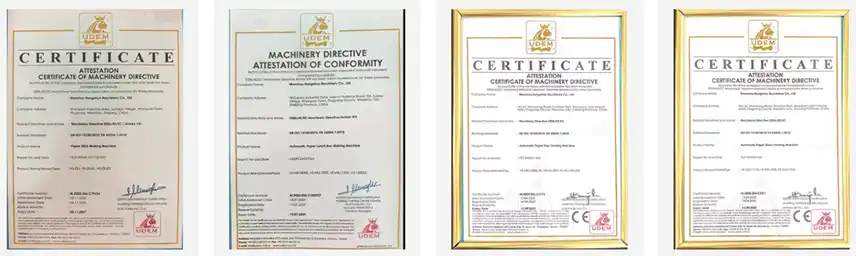
Some manufacturers, such as Wenzhou Hongshuo, explicitly state CE compliance for their food container equipment lines and serve clients in over 50 regulated markets. If you want to compare certified configurations side by side, review the technical documentation package for certified models here.
9. Making Your Final Decision
Certification isn't about machine performance. It's about risk management, market access, and legal protection.
Choose certified equipment if:
-
You export to EU, US, or other regulated markets
-
Your customers conduct factory audits
-
You want insurable, documented compliance
-
Long-term reliability matters more than lowest upfront price
Non-certified might work if:
-
You sell only in unregulated local markets
-
Buyers never audit your facility
-
You accept higher legal and operational risk
But here's the reality I've seen across dozens of packaging buyers: Almost everyone who buys non-certified "to save money" ends up spending more on retrofits, documentation, or replacement within three years. The few who get away with it were operating in markets with zero enforcement—and those markets are shrinking every year.
If you're serious about exporting or supplying food brands, buy certified. And request a compliance checklist specific to your target markets before finalizing any purchase. Your future self—and your legal team—will thank you.