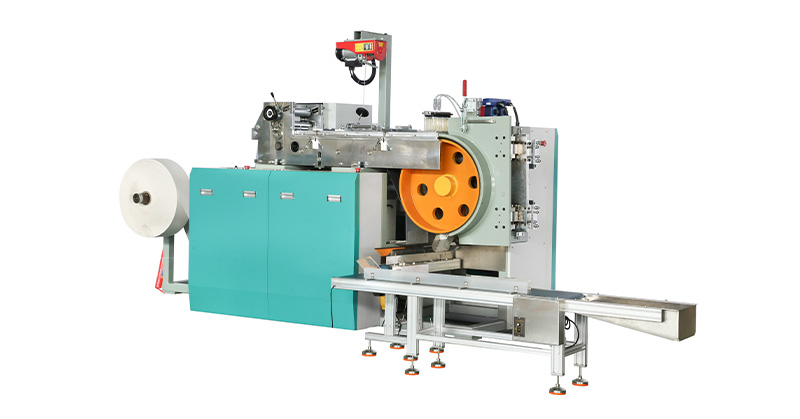
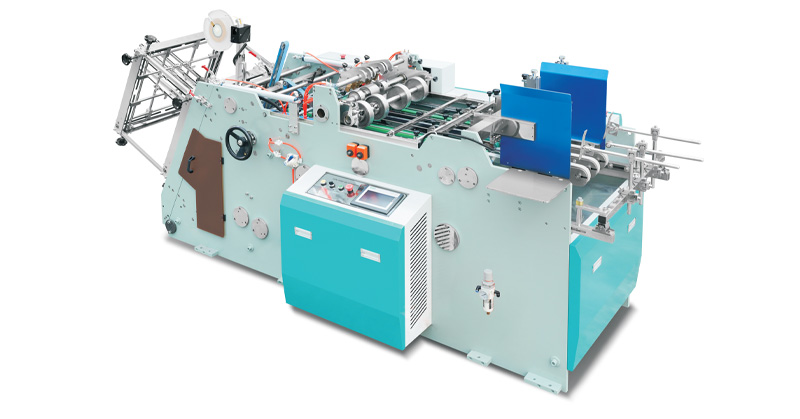
It’s 3 PM on a Friday. Your production line is running at full speed, but the floor is littered with rejected blanks, torn corners, and misaligned folds. You calculate the waste: nearly 8% of today’s raw material has become scrap. Multiply that by 300 working days, and you’re losing thousands—maybe tens of thousands—of dollars annually.
If this sounds familiar, you’re not alone. In the paper container industry, scrap rates between 5% and 12% are often accepted as “normal.” But leading manufacturers consistently operate below 2%. What’s their secret? It’s not magic—it’s systematic problem-solving.
Why Your Current Machine Might Be Bleeding Profit
Before jumping to solutions, let’s break down where most waste originates. Based on shop floor audits across dozens of converting facilities, three culprits account for over 70% of scrap events.
1. Inconsistent Material Feeding
Even small tension variations during unwinding cause paper to skew. When the web shifts by just 1-2 mm, subsequent scoring and cutting operations lose registration. The result? Off-center bottoms, overlapping sidewalls, and boxes that won’t lock properly.
2. Die-Cutting Misalignment
A worn or slightly misaligned die cutter leads to partial cuts or incomplete penetration. Operators often compensate by increasing pressure, which accelerates tool wear and creates fuzzy edges—impossible to sell in food-grade applications.
3. Heating and Forming Discrepancies
For coated paper, heat activation must be precise. Too low, and the sealing layer won’t bond; too high, and the material curls or delaminates. Many machines lack closed-loop temperature control, forcing operators to guess and adjust manually.
Step-by-Step Solutions to Cut Scrap Rate by Half
The good news: each of these issues can be resolved without replacing your entire line. Below is a proven framework adopted by mid-sized converters.
Step 1: Stabilize Material Path with Tension Control
Install a dancer roller assembly or retrofittable tension sensor. This maintains constant web tension regardless of roll diameter changes. A stable feed reduces sideways drift by up to 90%. Many modern paper box machine designs already integrate this feature—if yours doesn’t, aftermarket kits are available for under $2,000.
Pro tip: Always verify that your unwind stand’s brake pads are evenly worn. Uneven braking creates cyclical tension spikes. Replace them every 800 operating hours as preventive practice.
Step 2: Implement a Die-Cutting Alignment Protocol
Create a 10-minute daily checklist:
-
Clean cutting rule grooves (built-up paper dust changes clearance)
-
Check rule protrusion (should be 0.5–0.8 mm above the base)
-
Use a dial indicator to verify anvil cylinder runout (<0.05 mm)
One large folding carton producer reduced scrap from 6.8% to 3.1% within two weeks just by mandating this protocol. No new hardware required.
Step 3: Upgrade to Zone-Specific Temperature Control
If your machine uses a single heating blanket, consider retrofitting modular heating zones. This allows independent temperature adjustment for bottom, wall, and flap sealing areas. A 40°C variance across the forming station is common with single-zone systems; multi-zone cuts that to ±3°C.
Common Operating Mistakes That Inflate Waste
Even with perfect equipment, operator habits often sabotage scrap reduction. Watch out for these:
-
“Just in case” over-gluing – Excess adhesive migrates to exposed paper areas, causing sticking in the stacker. Use precision applicator rollers.
-
Ignoring humidity swings – Paper gains or loses moisture throughout the day. If your facility lacks climate control, adjust forming pressure by 5-10% when relative humidity changes by more than 15%.
-
Delaying anvil blanket replacement – A compressed blanket creates uneven contact. Replace every 1.5 million cycles or when you see light transmission through formed corners.
Preventive Maintenance That Pays for Itself
Scrap reduction isn’t a one-time fix—it’s a continuous discipline. Build a monthly routine around three pillars:
1. Registration Check
Run 100 consecutive sheets through the machine at normal speed. Stop and measure each for fold deviation. If more than three exceed 1 mm, inspect your feed rollers and pull roll bearings.
2. Tooling Sharpness Audit
Use a microscope (10x magnification) to examine the cutting rule edge. Any nicks larger than 0.1 mm warrant replacement. Dull tooling increases stripping force, which stretches paper and causes dimensional instability.
3. Lubrication Consistency
Over-lubrication attracts paper dust, forming an abrasive paste that wears out cams and links. Follow OEM specifications exactly—more is not better. A small brush applicator is far superior to grease gun “splattering.”
When to Consider a Dedicated Solution
The steps above will dramatically improve most setups. But if your machine is more than 12 years old, or if you’ve already optimized feeds, alignment, and temperature yet still exceed 4% scrap, the core mechanical architecture may be limiting you. Older machines often lack servo-driven registrations and rigid box transport systems—features now standard on modern equipment.
If you’re evaluating a replacement or second line, pay close attention to three specifications:
-
Maximum forming speed with coated paper (not just uncoated)
-
Tool change time (under 15 minutes indicates smart design)
-
Scrap collection rate (some units self-segregate waste for easier recycling)
Leading manufacturers have moved to integrated systems where feeding, cutting, forming, and stacking share a single control architecture. This eliminates the cumulative tolerances of standalone modules.
Final Thoughts: Small Changes, Big Impact
Reducing scrap rate isn’t about buying the most expensive machine. It’s about diagnosing where tolerance stacks up, then applying targeted fixes. Start with tension stabilization and daily die checks—those two actions alone typically cut waste by 30-40% within the first week.
Remember: Every 1% scrap reduction on a line producing 2 million boxes per month saves roughly 20,000 boxes worth of material annually. At current kraft paper prices, that’s real money back to your bottom line.
If you’re ready to move beyond band-aid fixes and want to see how a purpose-built system handles challenging coated papers and high-speed forming, request a scrap audit checklist and technical comparison from HONGSHUO. Their engineering team provides customized recommendations based on your actual production data—no generic sales pitch.
What’s your current scrap rate? Drop a comment below or share this article with your production manager. Sometimes the best solution starts with a simple conversation.