You're planning to expand your burger box production line. One of the first decisions you'll face is whether to invest in a single-station or double-station machine. The choice affects not just your output—it impacts your floor space, your labor costs, and how well you can adapt to changing customer orders.
But here's the challenge: many buyers assume a double-station burger box making machine simply means "twice as good." That oversimplification ignores setup complexity, changeover time, and the types of boxes you actually run. This guide provides a practical framework for comparing these configurations based on real production needs—so you can choose the right scale for your business, not just the biggest or the fastest.
Understanding the Station Concept
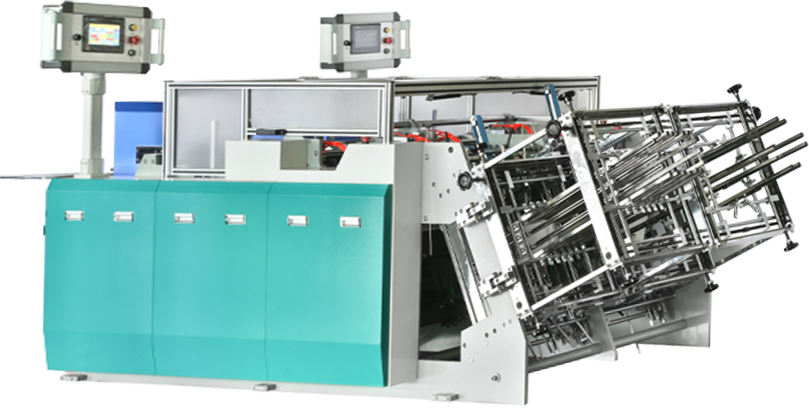
In burger box machinery, a "station" refers to a complete, independent forming unit. Each station contains a mold set and the mechanisms needed to shape, press, and eject a finished box.
| Configuration | How It Works | Output Characteristic |
|---|---|---|
| Single-station | One forming unit, one box per machine cycle | Lower speed, predictable output |
| Double-station | Two identical, independently operating units in parallel | Two boxes per cycle, effectively double the output |
The station configuration is a primary driver of a machine's output capacity. More stations mean more simultaneous production—but also affect footprint, power requirements, and initial investment.
Side-by-Side Comparison: Key Decision Factors
| Comparison Factor | Single-Station | Double-Station |
|---|---|---|
| Output range | Typically 30–150 pcs/min | Typically 60–300+ pcs/min |
| Daily capacity | Suitable for small to medium batch production | Designed for continuous high-volume production |
| Changeover time | Faster (one tooling set, ~30 minutes) | Slower if both stations need reconfiguration (~60 minutes) |
| Box style flexibility | One style at a time | Can run two different styles simultaneously with independent control |
| Floor space | More compact | Larger footprint |
| Initial investment | Lower | Higher |
| Ideal for | Startups, flexible lines, 1–2 box styles | Capacity expansion, high-volume contracts, multi-style runs |
What the Output Numbers Mean for Your Business
A single-station machine producing 60–150 pieces per minute might seem sufficient for a startup. However, sustained output is typically lower than peak ratings—material quality, operator experience, and changeover time all affect real-world throughput.
A 2024 benchmarking study by Technical University of Munich's Packaging Technology Group found that improper station selection accounted for 28% of reported "changeover downtime inefficiencies" among European food packaging SMEs. The study emphasized that double-station machines only deliver ROI when production schedules are intentionally designed to leverage parallel runs.
Translation to business impact: For a business running 8-hour shifts, a 60 pcs/min machine yields approximately 28,800 boxes per shift (theoretical). With changeovers and downtime, your actual daily output may be 20,000–24,000 boxes. Plan for the lower number.
How to Choose Based on Your Production Needs
Your decision should be guided by concrete business factors, not just maximum speed.
Step 1: Calculate Your Required Daily Output
Review your current and forecasted orders. The recommended configuration based on monthly volume:
| Monthly Volume | Recommended Configuration | Rationale |
|---|---|---|
| Under 500,000 boxes | Single Station Burger Box Making Machine | Lower upfront investment; sufficient capacity |
| 500,000–1,500,000 boxes | Evaluate both | Single at upper end may struggle; double offers growth room |
| Over 1,500,000 boxes | Double Station Burger Box Making Machine | Higher output; lower per-unit cost at scale |
| Multi-style, high-mix | Servo-driven independent dual station | Programmable; frequent changeovers, complex box designs |
Step 2: Evaluate Your Box Style Mix
-
One or two box styles, low changeover frequency: Single-station may suffice
-
Three or more styles, frequent changes: Servo-driven single or double station recommended
-
Two styles running simultaneously: Double station
-
Complex geometries (lock-bottom, window): Full servo precision system
A double-station machine allows two different specifications to run simultaneously—meaning you can produce burger boxes on one station and cake boxes on the other without downtime for mold changes.
Step 3: Consider Your Space and Utilities
Ensure your workshop can accommodate the larger size and power supply needs of a double-station unit. Double-station machines offer a footprint-to-output advantage—you effectively double throughput without doubling floor space.
Step 4: Analyze Long-Term Costs
The higher output of a double-station machine must justify its higher cost through increased sales or contract fulfillment. For many, starting with a reliable single-station configuration is a prudent first step.
Real-World Application Scenarios
Scenario A: Startup Restaurant Supplier
Profile: A new packaging converter targeting local restaurants. Monthly target: 200,000–300,000 burger boxes. One box style. Single shift. Limited capital.
Recommendation: Single-station machine. A single-station model provides flexible automatic forming for burger boxes, cake boxes, and French fries boxes at an accessible investment level.
Growth path: As volume increases, you can add a second single-station machine or trade up to a double-station model.
Scenario B: Established Food Packaging Converter
Profile: An existing manufacturer expanding into paper lunch boxes. Monthly target: 1 million+ boxes. Multiple styles. Two-shift operation.
Recommendation: Double-station configuration. A double-station machine allows two different box specifications to run simultaneously, effectively doubling capacity without requiring a second machine. For maximum flexibility, a full servo independent double-station model offers the flexibility to run completely different styles on each station.
To see how different machine configurations serve various production needs, explore the paper lunch box machine application examples for different box styles and production volumes.
From Production Planning to Equipment Selection
You now have a clear framework for comparing single-station and double-station burger box machines.
The core principles are clear:
-
Single-station machines offer lower upfront investment, faster changeovers, and are ideal for startups or businesses with lower volume and fewer box styles.
-
Double-station machines deliver significantly higher output, can run two styles simultaneously, and are designed for continuous high-volume production—but require higher initial investment and more careful production planning.
-
The right choice depends on your production volume, box style mix, and growth trajectory—not just maximum speed ratings.
-
Plan for growth by choosing configurations that can scale with your business rather than buying twice.
Once you've clarified your production requirements and target box specifications, comparing specific machine models within a manufacturer's line becomes the next logical step. You can review single-station configurations for flexible production or double-station models for high-volume scenarios.
Frequently Asked Questions (FAQ)
Can a double-station machine run with only one station active?
This depends on the machine's design. Some advanced models allow it, which can be useful for maintenance or lower-demand periods. You should confirm this capability with the manufacturer.
Does a double-station machine require two operators?
No. Both single and double-station machines from reputable manufacturers like Hongshuo are designed to be fully automatic. One operator typically monitors the machine, feeds paperboard, and removes finished product stacks.
Is the per-unit production cost lower on a double-station machine?
Often, yes. While the machine costs more, the significantly higher output can reduce the cost per box when considering depreciation and energy use spread over a much larger quantity. This efficiency is key for large-scale production.
Can I upgrade a single-station machine to a double-station later?
Generally, no. The station configuration is a fundamental part of the machine's frame and drive system. Upgrading would essentially require a new machine. It's crucial to forecast your growth and choose a configuration that will serve your needs for several years.