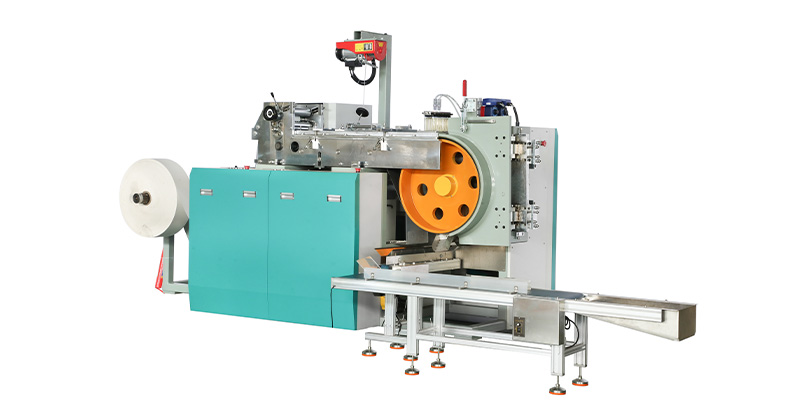
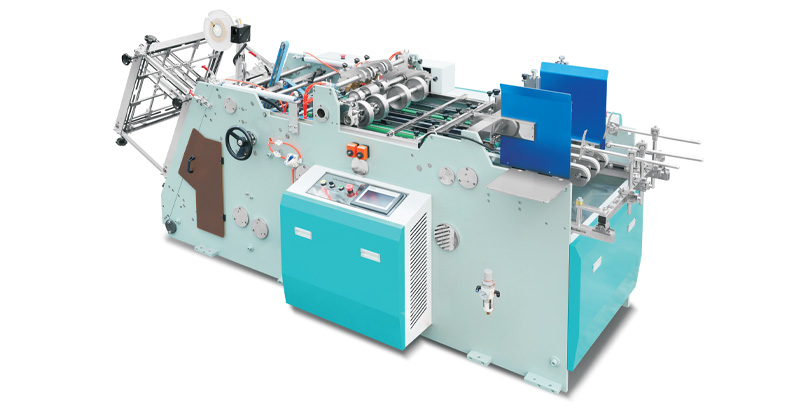
A paper stick machine’s output rating — often listed as 400–1000 pcs/min — is a range, not a fixed number. The same machine produces far fewer sticks when running a 6 mm diameter, 200 mm length specification than when running a 1.8 mm cotton swab stick. Diameter, stick length, and forming speed are linked by the physics of winding and cutting.
This guide explains that relationship so you can plan capacity with numbers, not assumptions.

1. Why Output Is a Range, Not a Single Number
Paper stick machines are rated by linear forming speed (m/min) or by a piece-per-minute range. Neither number alone tells you what the machine will produce with your specific stick.
The machine forms continuous paper tubes and cuts them to length. The number of sticks produced per minute depends on:
- Line speed (how fast the paper tube is formed)
- Stick length (how many pieces fit into each meter of tube)
- Diameter (which affects how fast the machine can run stably)
- Number of forming lanes (on some machine configurations)
A machine that runs at a high line speed with a short stick may produce fewer pieces than a machine running slower with a shorter stick. Conversely, a thick stick that requires slower forming will reduce output even if the machine’s maximum speed looks impressive on paper.
2. The Core Calculation: From Line Speed to Sticks per Minute
The basic conversion from line speed to piece output is:
pcs/min = line speed (m/min) × 1000 / stick length (mm)
For a single forming lane, this formula gives the theoretical output. If the machine has multiple lanes, multiply by the number of lanes.
For example, at a line speed of 30 m/min with a 100 mm stick length:
30 × 1000 / 100 = 300 pcs/min per lane
If the same machine runs a 200 mm stick at the same line speed:
30 × 1000 / 200 = 150 pcs/min per lane
The line speed has not changed. The stick length has doubled. The output has halved.
Our paper stick machine range is listed at 400–1000 pcs/min, with a stick length range of 50–260 mm and a diameter range of 1.8–6 mm depending on the model. The listed pcs/min figure is achievable only within a specific combination of diameter and length. As stick diameter increases, the machine’s stable forming speed typically decreases.
3. How Diameter Limits Line Speed
A paper stick is formed by winding paper strips around a forming rod. A larger diameter requires more paper layers, more glue surface, and more winding tension. The tube must remain round and firm before cutting. This is why paper stick forming machines run at lower linear speeds than paper straw lines, and why the speed drops further as diameter increases.
A practical relationship from our product specifications and industry practice:
- 1.8 mm diameter (cotton swab, slim candy stick): the machine can run toward the upper end of its speed range, closer to 1000 pcs/min.
- 2–4 mm diameter (standard lollipop, candy stick): stable output typically falls in the mid-to-upper range, depending on paper and glue.
- 4–6 mm diameter (thicker support sticks, larger candy sticks): the machine must run slower to maintain forming quality. A 6 mm stick may run at approximately 400 pcs/min, while a 2.5 mm stick can run at approximately 1000 pcs/min on comparable equipment.
The number on the specification sheet is a ceiling. The diameter sets the realistic operating window.
If you are still deciding which diameter fits your target application, our paper stick diameter selection guide covers the standard ranges by end-use market.
4. How Stick Length Multiplies the Effect
Length affects output directly because every meter of formed tube yields fewer pieces as the stick gets longer. The calculation is linear:
| Stick length | Theoretical pcs/min at 30 m/min, single lane |
|---|---|
| 70 mm | 428 |
| 100 mm | 300 |
| 150 mm | 200 |
| 200 mm | 150 |
| 260 mm | 115 |
This table assumes a single forming lane and a constant line speed. In practice, the machine may not reach 30 m/min with every diameter. But the table shows the direction of the effect: a longer stick reduces piece output without any change in machine speed.
When a buyer asks for “1000 pcs/min,” the first question should be: at what length and diameter? Without those two numbers, the output claim cannot be verified.
5. From Application to Capacity: Planning in the Right Order
The practical planning sequence is the reverse of what many buyers do. Instead of starting with the machine’s maximum speed, start with the finished stick and work backward.
Step 1: Define the application and stick specification
- Food stick (lollipop, candy, stirrer): diameter and length are usually driven by the candy or cup standard.
- Cotton swab stick: diameter is typically 1.8–2.5 mm, with a length around 70–75 mm depending on the swab format.
- Daily chemical stick (diffuser, cosmetic applicator): diameter and length vary by the downstream assembly or packaging requirement.
- Medical stick: diameter tolerance and edge finish are more critical than maximum speed.
Step 2: Calculate the required pieces per minute from business demand
If the target is a certain number of pieces per shift, divide by the effective working minutes (accounting for breaks, roll changes, and maintenance). This gives the required steady-state output, not the peak output.
Step 3: Check whether the machine can reach that output at your diameter and length
Use the pcs/min formula. If the required output is close to the machine’s theoretical maximum at your stick length, there is little room for the speed reduction caused by a larger diameter or a heavier paper.
Step 4: Confirm paper and glue compatibility
A machine may reach a speed with one paper grade but not another. Thicker paper, coated paper, or a different glue system can change the stable forming window. The output figure should always be tied to a confirmed material specification.
You can review the available paper stick machine configurations to see the diameter and length ranges for each model.

6. What This Means for Machine Selection
A machine with a higher maximum speed is not automatically the better choice. If your product is a 4–6 mm thick stick with a long length, a machine optimized for high-speed thin sticks may never reach its rated output. A heavier-duty configuration with a more powerful drive and a reinforced forming head may produce more sellable sticks at a lower speed.
The relevant question is not “what is the maximum pcs/min?” It is “what is the stable pcs/min at my diameter, length, and paper grade, across a full shift?”
Before requesting a quotation, prepare:
- Target diameter and length
- Paper material and grammage
- Required output per shift
- Whether multiple sizes will run on the same machine
- Any downstream assembly tolerance
With these details, the machine recommendation can be matched to the production plan instead of the headline speed.
If you have a stick sample and a target output, you can send your specifications to our technical team for a capacity review.
FAQ
Why does the same paper stick machine have different output for different diameters?
A larger diameter requires more paper layers and more winding time per unit length. The machine must slow down to maintain forming quality. The output range reflects this diameter-dependent speed limit.
How do I calculate paper stick machine output for my stick length?
Use: pcs/min = line speed (m/min) × 1000 / stick length (mm). If the machine has multiple lanes, multiply by the lane count. Always confirm the line speed that is stable for your diameter and paper grade.
Is a higher pcs/min rating always better?
No. A high maximum speed is only useful if it is stable at your production diameter and length. For thicker or longer sticks, a heavier-duty machine running at a lower speed may produce more sellable output than a high-speed machine running outside its stable window.
What length range does a paper stick machine support?
Our paper stick machine range supports stick lengths of approximately 50–260 mm, depending on the model and configuration. Custom lengths may be available based on mold and machine configuration.
How does paper thickness affect output?
Paper thickness affects forming pressure and glue penetration. A thicker paper may require slower line speed to achieve a clean cut and a stable seam. The output calculation should use the line speed that is proven with the actual paper grade.
Can one machine produce both thin cotton swab sticks and thick candy sticks?
Some multi-function configurations can produce a range of diameters by changing molds or adjusting parameters. However, the stable line speed and output will differ between the thin and thick specifications. The machine should be evaluated at both ends of the intended range.
Conclusion
Paper stick machine output is not a single number. It is the result of line speed, stick length, and diameter working together. Before comparing machines, calculate the required pcs/min from your actual stick specification and business demand. Then check whether the machine can hold that output at your diameter, length, and paper grade.
If the output claim on a specification sheet is not tied to a diameter and length, treat it as a ceiling, not a promise. Use the pcs/min formula and a material confirmation to turn the ceiling into a realistic production plan.