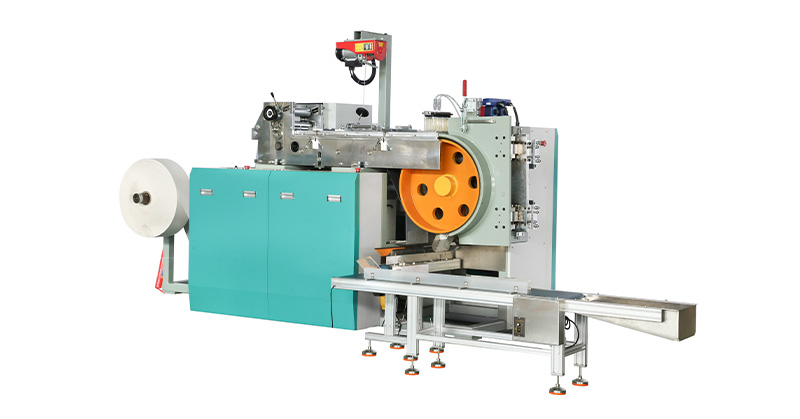
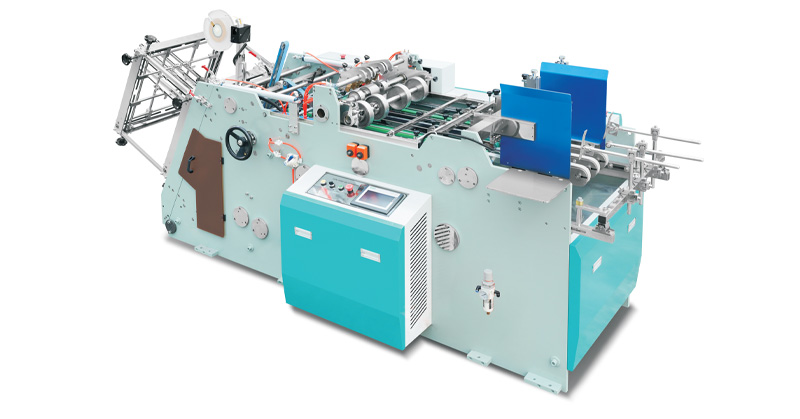
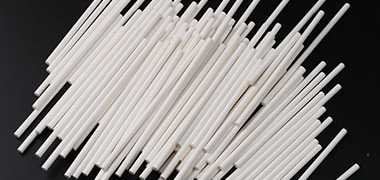
Walk down any personal care aisle. Baby products, makeup applicators, and first-aid swabs. For decades, the stick inside was plastic or wood. Now? Retailers are demanding paper. Consumers are checking labels. And daily chemical brands are scrambling to secure paper-based stick production without disrupting their supply chains.
If you're a contract manufacturer or a brand owner exploring in-house production, you're facing a maze of decisions: paper grades, forming speeds, edge finishing, and biocompatibility. Let's map the terrain.
1. Why Paper? The Market Pull Is Real
The numbers explain the urgency. The global cotton swab market exceeded $2.3 billion in 2024, according to industry tracking. And plastic-stick bans are spreading: the EU Single-Use Plastics Directive (SUP), Canada's SOR/2022-138, and at least nine U.S. states have restricted plastic swabs.
Major retailers—CVS, Walgreens, Tesco—have committed to paper-only store brands. One European personal care company reported a 340% increase in paper swab inquiries between 2022 and 2024. This isn't a trend. It's a transition.
But converting to paper isn't as simple as swapping raw materials. Paper behaves differently: it absorbs moisture, varies in stiffness, and requires different sealing methods. The equipment that made plastic sticks won't work. You need a dedicated approach.
2. Paper Stick Basics: Diameter, Density, and Feel
Before discussing machines, understand the product. A quality cotton swab stick needs:
-
Diameter: 2.0–2.5mm for standard swabs; 2.5–3.0mm for jumbo baby swabs
-
Roundness: No flat spots (irritates ear canal or applicator surface)
-
Surface smoothness: Below 300 Bekk seconds (rougher sticks abrade cotton)
-
Stiffness: Minimum 55–65 mN (millinewtons) for 85mm length without bending under use
Paper choice determines these parameters. Virgin Kraft (170–220 gsm) gives the best stiffness-to-weight ratio. Bamboo paper (more expensive) offers natural antimicrobial claims. Recycled content paper (cheapest) requires a higher basis weight for the same stiffness and creates more dust during forming.
Most daily chemical manufacturers start with 190–200 gsm virgin kraft, then optimize. Don't let a supplier sell you "eco-friendly paper" without stiffness data. Test it.
3. The Core Production Process: From Roll to Stick
Making paper sticks for swabs follows a linear process. Understanding each stage helps you spot where quality problems start:
| Stage | Process | Critical Quality Point |
|---|---|---|
| 1. Unwinding | Paper roll mounted on a tension-controlled shaft | Consistent tension ±0.5N |
| 2. Slitting | Wide roll cut into narrow strips (stick width) | Clean cut, no frayed edges |
| 3. Gluing | Adhesive applied to one or both strips | Uniform application, no voids |
| 4. Winding | Strips wound around a mandrel to form a tube | Tight, overlapping layers |
| 5. Cutting | Continuous tube cut to stick length | Square ends, no crushing |
| 6. Drying | Conveyor through a heated tunnel or ambient | Full adhesive cure, no warping |
Each stage interacts with the next. Inconsistent tension at unwinding causes oval sticks. Uneven glue application leads to delamination during cotton tipping. Rushed drying makes sticky sticks that clump in packaging.
4. Adhesive Selection: The Silent Differentiator
Most buyers overlook this. Don't. The glue holds your stick together during winding and keeps it stable during cotton application. Three options exist:
-
Dextrin-based (food-grade): Cheap, water-soluble, but softens in high humidity (above 65% RH). Fine for dry climates. Risky for coastal or monsoon regions.
-
Polyvinyl acetate (PVA) emulsion: Stronger, more humidity-resistant, but takes longer to cure (24–48 hours). Requires heated drying.
-
Cross-linked PVAc: Highest strength, fastest cure (15–30 minutes), but more expensive (2–3× dextrin). Best for high-speed lines serving humid markets.
One Thai swab manufacturer switched from dextrin to cross-linked PVAc after their sticks bent during cotton attachment in the rainy season. Material cost rose 18%. Customer complaints about "floppy swabs" dropped to zero. Worth every baht.
For paper stick forming lines targeting daily chemical applications, look for adhesive systems with temperature-controlled reservoirs (maintains viscosity) and closed-loop flow monitoring. If you're evaluating different adhesive setups, review the technical specifications for compatible glue systems here.
5. Edge Finish Matters More Than You Think
A clean cut exposes paper fibers. Those fibers can:
-
Snag cotton during tipping
-
Shed particles into packaging (visible dust)
-
Absorb moisture and swell (bulging stick ends)
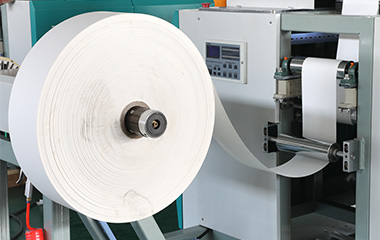
Medical and cosmetic applications require sealed edges—either heat-sealed during cutting or coated post-forming. The difference is visible under 10× magnification: sealed edges look glazed; raw cuts look furry.
Production implication: Sealing adds either a heated cutting blade (consumes more power, wears faster) or a secondary coating station (adds complexity). Budget lines skip this. For baby products or feminine care, skipping sealed edges creates a rough product that irritates skin.
6. Tipping Compatibility: Designing for Your Customer
Your stick isn't the final product. Your customer will add cotton tips. That means your stick must work with tipping machines—rotary or in-line applicators that wrap and crimp cotton.
Common tipping failures:
-
Stick ovality (crimped cotton spins around a round stick, but an oval stick won't seat correctly)
-
End burrs (rough cut catches cotton fibers, creating uneven tips)
-
Diameter variation (tipping heads set for 2.2mm ±0.05mm; 2.3mm jams, 2.1mm slips)
Specify: Stick diameter tolerance of ±0.03mm. Roundness deviation under 0.04mm. Communicate these to your equipment supplier. Generic lines don't hold these tolerances. Dedicated swab stick manufacturing systems do.
7. Production Speed vs. Quality: Finding Your Balance
Speed sells machines. But for daily chemical products, quality consistency matters more than raw peak output. Always calculate good sticks per hour (GSPH), not just rated speed.
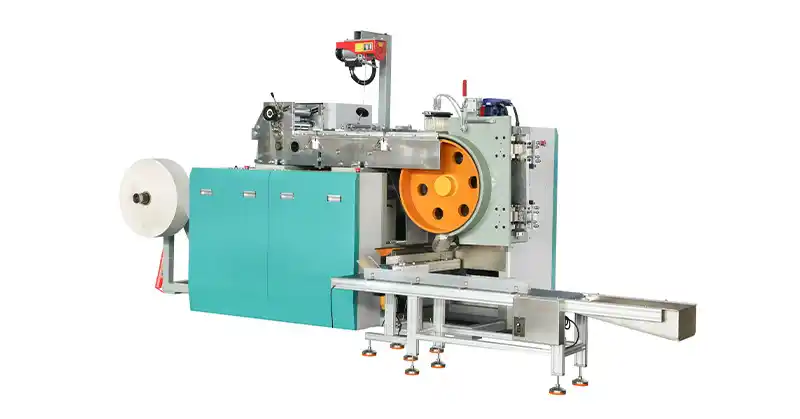
Most equipment on the market is divided into different grades, with uneven operating speeds and inconsistent finished product quality. Unlike graded models, our machine adopts a unified single model design with no version distinction. It maintains a steady running speed of 1000 sticks per minute all the time, featuring stable operation, precise dimensional tolerance, and neat sealed edges.
It perfectly balances ultra-high production efficiency and stable product quality, needing no compromise between speed and performance. It fully meets mass-production demands and is equally applicable to high-standard hospital-grade baby swabs and conventional hotel disposable swabs.
8. Quality Testing: What to Validate Before Shipping
Set up these in-process tests:
| Test | Method | Acceptable Range |
|---|---|---|
| Diameter | Laser micrometer, 10 sticks per hour | 2.0–2.5mm ±0.03mm |
| Ovality | Rotate the stick under the dial indicator | <0.04mm deviation |
| Bending stiffness | Three-point bend test (55mm span) | >60 mN for 85mm stick |
| Adhesive cure | IPA rub test (10 strokes) | No transfer to cloth |
| Fiber shedding | Tape lift test on 50 sticks | <3 visible fibers total |
Document results batch by batch. One Indonesian exporter lost an EU contract because they couldn't produce six months of fiber shedding records. The product was fine. The paperwork wasn't.
9. Sustainability Claims: What You Can Actually Say
Eco-positioning drives sales. But false claims trigger greenwashing lawsuits (increasing in the US and EU). Verify these before marketing:
-
Paper source: FSC or PEFC certification required for "sustainable forestry" claims
-
Biodegradability: ASTM D6400 or EN 13432 certification for industrial composting
-
Adhesive: Check if cross-linked PVAc is considered biodegradable (many are not; specify "water-dispersible" instead)
-
Packaging: Paper sticks in plastic cartons = still plastic waste
One Australian personal care brand was fined AUD $53,000 for claiming "100% compostable" swabs. The sticks composted. The adhesive did not. Don't make that mistake.
10. Making the In-House Decision: A Framework
Bringing paper swab stick production in-house requires answering five questions:
-
Volume: Above 500,000 sticks/month? Buy. Below? Outsource.
-
Quality tier: Medical/cosmetic grade? Buy certified equipment. Promotional grade? Entry-level may suffice.
-
Space: Need 200–400 sq ft for line + raw material + finished goods staging.
-
Labor: One trained operator per shift, plus a quality tech part-time.
-
Capital: Entry lines 25k–45k;high−precisionsealed−edgelines25k–45k;high−precisionsealed−edgelines65k–110k.
If you answer yes to volume, quality, and capital, the math favors in-house. If not, find a specialist contract manufacturer and focus on branding.
For manufacturers ready to evaluate specific line configurations—including diameter tolerance data, adhesive compatibility charts, and sealed-edge options—explore the technical specifications for daily chemical applications here.
11. Final Advice: Start Small, Then Scale
Don't buy a 400-stick/min line for your first installation. Start with a mid-range, modular system (200–250 sticks/min) that allows:
-
Easy mandrel changes for different diameters
-
Adjustable drying length (add sections as speed increases)
-
Upgradable cutting system (add edge sealing later)
Run it for six months. Learn your material variations, operator training needs, and quality bottlenecks. Then expand. The daily chemical market isn't going back to plastic. You have time to get this right.