You run a medical supply company. Your catalog includes tongue depressors, cotton swab sticks, and wound applicators. All made from paper. No splinters. No plastic waste. And right now, you're either paying a premium to a third-party manufacturer or wishing you could bring production closer to your control.
But healthcare isn't food service. The rules are stricter. The liability is higher. And the cost of a mistake—say, a batch of tongue depressors that delaminates during examination—goes beyond a refund. It goes to patient safety.
So what does it actually take to produce medical-grade paper sticks that hospitals and clinics will trust? Let's walk through the real requirements, dimension by dimension.
1. The Paper Itself: Not All Kraft Is Equal
For clinical use, your raw material must meet documented biocompatibility standards. The two most relevant are ISO 10993 (biological evaluation of medical devices) and ASTM D6400 for biodegradability claims.
What does this mean practically? You need paper that is:
-
Elemental chlorine-free (ECF) or totally chlorine-free (TCF) – residual chlorine compounds cause skin irritation
-
Formaldehyde-free – common in some paper coatings, but a known allergen in prolonged contact
-
Heavy metal tested – lead, mercury, and cadmium levels below trace thresholds
FSC-certified paper is good for marketing. ISO 10993-compliant paper is good for patient safety. Don't confuse the two.
A Swedish medical packaging firm reported in a 2024 industry white paper that switching from standard kraft to ISO 10993-tested paper added 12% to their material cost but reduced customer complaints about "roughened edges" and "residue on skin" by nearly 80% over two years.
2. Edge Finish and Splinter Risk: The Real Differentiator
Here's where medical-grade production separates from commodity paper stick manufacturing. A standard paper stick line produces a clean cut—inspect it under 2x magnification, and you'll see exposed fibers. Those fibers can detach. In a throat swab or a tongue depressor, loose fibers are a foreign body risk.
Medical-grade requires sealed edges. Either through:
-
Heat sealing during the final cutting stage (melts the paper's surface fibers into a smooth rim)
-
Biocompatible coating applied inline after forming (adds a thin, clear barrier)
The difference is visible under magnification and verifiable with a fiber detachment test (ISO 10993-10 for irritation and skin sensitization). Ask your potential equipment supplier: Does your machine produce sealed edges? Can I see a microscopic comparison?
Generic machines often skip edge sealing entirely because it adds 3,000–3,000–5,000 to the production line's cost. In consumer-grade sticks (like coffee stirrers), nobody cares. In a tongue depressor that spends 30 seconds in a patient's mouth, it matters.
3. Production Environment: Clean Enough for What?
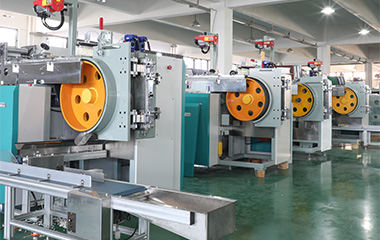
Your workshop doesn't need to be a Class 10,000 cleanroom. But it does need documented contamination control. Healthcare buyers expect:
-
Dedicated production area (no cardboard dust from adjacent packaging lines)
-
HEPA-filtered positive air pressure (keeps airborne particles out)
-
Stainless steel contact surfaces on the forming and cutting stations
-
Regular microbial surface testing (contact plates or swab tests, records maintained)
One Malaysian manufacturer of disposable medical applicators learned this the hard way: they produced excellent sticks, but their facility shared space with a recycled paper shredder. Airborne mold spores settled on the finished product. A routine sterility test failed. The entire batch—14,000 units—was destroyed. Their equipment was fine. Their facility layout wasn't.
4. Adhesives and Coatings: The Invisible Variable
If you're making multi-ply sticks (common for thicker tongue depressors), you're using a water-based adhesive. Medical standards limit:
-
Residual volatile organic compounds (VOCs) – ISO 10993-7 specifies the maximum allowable for different application durations
-
pH range – must be neutral to slightly acidic for oral contact
-
Extractable heavy metals – leached into saliva or wound fluid
Standard dextrin-based glues (common in paper straw production) often fail VOC tests. You need medical-grade polyvinyl acetate (PVAc) or ethyl vinyl acetate (EVA) emulsions with certificates of analysis for each batch.
Cost difference: medical-grade adhesive runs 2-3x standard paper glue. Volume matters, but you can't substitute safely.
5. Dimensional Consistency: A Clinical Requirement
A coffee stirrer can be 4.8mm wide ±0.3mm. A tongue depressor used for oral examination needs tighter control. Healthcare specifications commonly require:
-
Width tolerance: ±0.1mm
-
Thickness uniformity: ±0.05mm across the full length
-
Straightness: no visible bow along a 150mm length
Meeting these requires precision forming rollers with ground surfaces, not turned. It requires servo-driven tension control, not mechanical brakes. And it requires laser micrometer feedback on the production line (or offline batch inspection).
Generic paper stick production equipment often skips these tighter tolerances. The machine runs fine for craft sticks or lollipop handles. But healthcare auditors will reject a batch that varies in thickness—even if the function isn't obviously compromised.
6. Lot Traceability: Non-Negotiable for Medical
Here's a question most buyers never ask: Can this line assign batch numbers and retain samples?
For medical-grade products, you need documented traceability from raw paper roll to finished case. That means:
-
Inkjet or laser marking on each stick (batch code + date)
-
Or printed carton labeling with bar-coded lot information
-
Retained sample storage for each production batch (typically 12 months)
If your equipment can't integrate a batch marking station, you'll be hand-stamping cartons—a process that fails audits consistently. One US importer of Chinese-made medical applicators lost a major hospital contract because their manual labeling system had four cartons with mismatched batch numbers in a single pallet. The hospital's receiving audit flagged it immediately. Contract gone.
7. Production Scale vs. Healthcare Demand
Healthcare orders tend to be steady but small-batch. A hospital system might order 50,000 tongue depressors monthly, not 500,000. That favors quick-change tooling (switch between stick widths or lengths in under 15 minutes) over raw speed.
Your ideal line for medical applications should prioritize:
-
Changeover speed over peak cycle rate
-
Inspection accessibility (can you see both sides of the stick during production?)
-
Sample retention port (a designated station to pull and archive finished sticks)
Compare that to a high-volume consumer line designed for 300 sticks/min on a single size. Different requirements entirely.
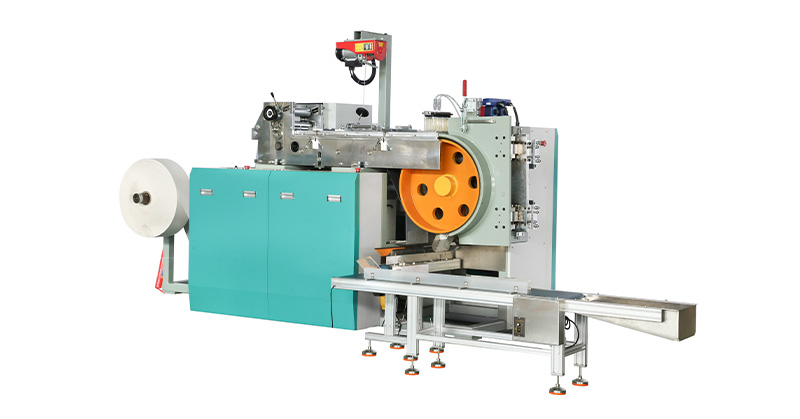
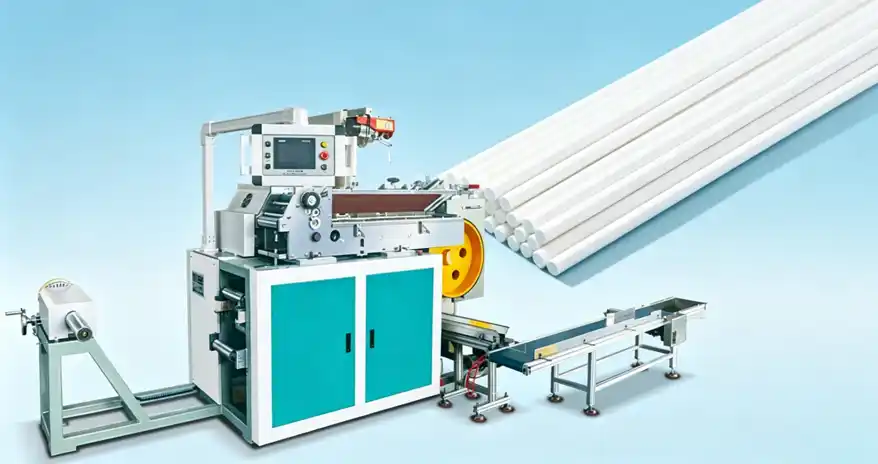
Some paper stick forming systems allow modular configuration between healthcare-grade finishing options and standard output. If you want to compare medical-grade specifications across different equipment tiers, focus on edge sealing, material compatibility, and batch marking integration.
8. Real-World Cost Per Stick: Healthcare Edition
Let's run numbers for a facility producing 300,000 tongue depressors monthly (a reasonable volume for a regional medical supplier):
| Cost Component | Standard Grade | Medical Grade |
|---|---|---|
| Paper (per ton) | $900–1,100 (food grade) | $1,300–1,600 (ISO 10993 tested) |
| Adhesive (per liter) | $3.50–5.00 (dextrin) | $8–15 (medical PVAc) |
| Edge sealing process | Not applied | +$0.002–0.003 per stick |
| Batch marking | Optional (+$0.001) | Required (+$0.002) |
| Quality testing | In-house visual | Third-party batch sampling (+$300/month) |
| Total per stick approx. | $0.008–0.011 | $0.018–0.024 |
Medical-grade costs roughly double. But the selling price reflects that—healthcare buyers typically pay 0.04–0.07perunitforcertifiedpapertonguedepressors,comparedto0.04–0.07perunitforcertifiedpapertonguedepressors,comparedto0.015–0.025 for food-service grade. The margin per stick is actually higher for medical, provided you can deliver documentation.
9. The Audit Reality: What Your Buyers Will Check
Before signing a supply agreement, a responsible healthcare distributor will visit your facility. Their checklist will include:
-
Raw material quarantine area (Does incoming paper have separate storage from finished goods?)
-
In-line metal detection (mandatory for any product that goes near eyes or orifices)
-
Record retention system (can you pull all records for batch #2409-01 within 30 minutes?)
-
Change control procedure (what happens when the paper supplier changes? Coating formula? Do you re-certify?)
If your production floor looks like a craft workshop, you won't pass. The equipment needs to support these systems, not fight against them.
10. When to Outsource vs. Make In-House
Given the complexity, when does in-house production make sense for medical-grade paper sticks?
Make in-house if:
-
You already sell multiple healthcare paper products (tongue depressors + swabs + spatulas)
-
Your monthly volume exceeds 500,000 units across all SKUs
-
You have quality management experience (ISO 13485 or similar)
-
Your facility can dedicate segregated production space
Outsource if:
-
You're under 150,000 units monthly
-
Paper sticks are one of 50 product lines you distribute
-
You lack in-house QA for medical device documentation
One successful transition story: A Turkish medical distributor started by outsourcing all paper stick products. As their sales grew to $1.2M annually in this category, they invested in a dedicated medical-grade paper stick line with full edge sealing and batch marking. Within 18 months, they increased the margin from 22% to 41% and gained control over delivery timing. But they only made the move after reaching consistent volume.
11. Final Verdict: The Healthcare Production Decision
Medical-grade paper stick production isn't about speed. It's about precision, cleanliness, and documentation. The equipment matters less than the system around it—material storage, batch tracking, testing protocols.
If you're currently evaluating whether to bring production in-house, start with a gap analysis: compare your current facility and equipment capabilities against the ISO 10993-related requirements above. You'll quickly see which gaps are expensive to close and which are deal-breakers.
For those ready to take the next step, look for equipment that explicitly supports healthcare compliance features:
-
Sealed-edge cutting mechanism
-
Medical-grade adhesive application system
-
Batch code marking integration
-
Stainless steel food-contact surfaces
You can request a healthcare-grade specification checklist to guide your equipment evaluation. No brochures. Just the technical details that matter for regulatory compliance.