You’ve invested in a paper lunch box production line. You’ve selected your box styles and adhesive system. But here’s a question that can make or break your ability to supply food packaging in the U.S. market: Is your adhesive FDA-compliant for food contact?
The answer isn’t always straightforward. FDA regulations for food-contact adhesives are detailed and specific—and misunderstanding them can lead to rejected shipments, failed audits, or lost customers. For paper box converters supplying fast-food chains, bakeries, or export markets, getting this right is non-negotiable.
This guide explains the core FDA regulation governing adhesives in food packaging—21 CFR 175.105—and provides a practical framework for paper box converters to achieve and document compliance.
The Foundation: 21 CFR 175.105 – Adhesives
The primary regulation governing adhesives used in food packaging is 21 CFR 175.105, part of the FDA’s indirect food additives regulations. This section specifies the conditions under which adhesives may be safely used as components of articles intended for packaging, transporting, or holding food.
What 21 CFR 175.105 Requires
The regulation establishes two fundamental requirements for adhesive use:
1. The adhesive must be prepared from approved substances
The adhesive formulation must use one or more of the optional substances listed in paragraph (c) of the regulation, subject to any prescribed limitations. These include substances generally recognized as safe (GRAS) for use in food or food packaging, substances permitted by prior sanction or approval, and other substances named in the regulation.
2. The adhesive must either be separated from food by a functional barrier or meet specific limitations
This is the critical distinction for paper box converters:
| Food Type | Requirement |
|---|---|
| Dry foods | The quantity of adhesive that contacts packaged dry food shall not exceed the limits of good manufacturing practice (GMP) |
| Fatty and aqueous foods | The quantity of adhesive that contacts packaged fatty and aqueous foods shall not exceed the trace amount at seams and at the edge exposure between packaging laminates that may occur within GMP limits. Under normal conditions of use, packaging seams or laminates must remain firmly bonded without visible separation |
What this means for paper box converters: For dry food packaging (e.g., burger boxes for sandwiches, cookie boxes), adhesive contact is permitted as long as it is within GMP limits—meaning the minimum amount necessary to achieve the bond. For fatty or wet foods (e.g., fried chicken boxes, salad containers), only trace amounts at seams and edges are permitted.
Beyond 175.105: Additional Compliance Pathways
While 21 CFR 175.105 is the foundational regulation, it is not the only pathway to compliance. Paper box converters should be aware of three additional mechanisms.
Food Contact Substance (FCS) Notifications
Under federal law, a food contact substance that is a food additive must be authorized for that use before it is marketed in the U.S. Such authorization is usually obtained by submitting information to FDA through a Food Contact Notification (FCN). The FDA maintains a public inventory of all FCS uses authorized through the FCN program.
Important limitation: According to Section 409(h)(1)(C) of the Federal Food, Drug, and Cosmetic Act, FCNs are effective only for the listed manufacturer and its customers. Other manufacturers must submit their own FCN for the same food contact substance and intended use.
What this means for converters: If your adhesive supplier has an FCN for a specific substance, that clearance applies to your use of that adhesive only if you are a customer of that notifier. You cannot assume that an FCN obtained by one manufacturer covers your use of a similar product from a different supplier.
Threshold of Regulation (TOR) Exemptions
For substances that migrate at very low levels (typically below 0.5 parts per billion), FDA may grant a TOR exemption, eliminating the need for a full FCN.
Regulations for Paper and Paperboard (21 CFR 176.170 and 176.180)
The FDA also regulates components of paper and paperboard in contact with food under 21 CFR 176.170 (aqueous and fatty foods) and 176.180 (dry foods). These regulations identify substances that may be safely used as components of the food-contact surface of paper and paperboard.
According to FDA guidance, food-contact paper and paperboard must comply with 21 CFR 176.170 or 176.180, and adhesives must comply with 21 CFR 175.105.
Labeling Requirements for Food-Packaging Adhesives
A specific and often-overlooked requirement: To assure safe usage of adhesives, the label of the finished adhesive container shall bear the statement “food-packaging adhesive.”
What this means for converters: When you purchase adhesive from your supplier, verify that the container is properly labeled. This is not just a best practice—it is a regulatory requirement under 21 CFR 175.105(b).
Practical Compliance Checklist for Paper Box Converters
Based on the regulatory framework above, here is a practical checklist for paper box converters to ensure FDA food-contact adhesive compliance.
Step 1: Verify Your Adhesive Formulation
Request documentation from your adhesive supplier confirming that all components of the adhesive formulation are listed in 21 CFR 175.105(c) or covered by an applicable FCN or TOR exemption.
Step 2: Confirm the Appropriate Food Type Classification
Determine whether your finished boxes will contact dry foods, fatty foods, or aqueous foods. This classification determines the applicable limitation:
-
Dry foods: Adhesive contact permitted within GMP limits
-
Fatty/aqueous foods: Only trace amounts at seams and edges permitted
Step 3: Validate the Adhesive Application Method
Ensure your paper lunch box machine applies adhesive only at seam locations, not on surfaces that will directly contact food. This is particularly important for fatty and aqueous food applications.
Step 4: Obtain and Maintain Certificates of Compliance
Request a Certificate of Compliance (CoC) from your adhesive supplier confirming that the adhesive meets FDA requirements for its intended use. Maintain these certificates as part of your quality documentation.
Step 5: Verify Container Labeling
Confirm that adhesive containers are labeled with the statement “food-packaging adhesive” as required by 21 CFR 175.105(b).
Step 6: Document Your Supply Chain
If your adhesive relies on an FCN, confirm that you are a customer of the notifier listed in the FCN. If not, the FCN does not cover your use.
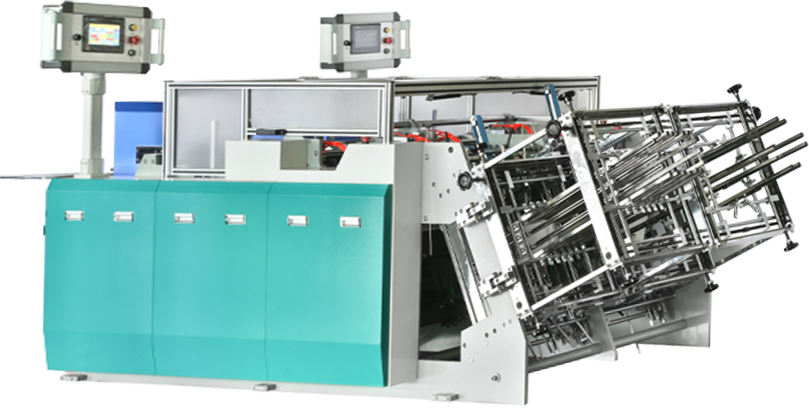
For a detailed overview of machine configurations that support FDA-compliant cold glue systems, review the paper lunch box machine series overview.
Common Compliance Mistakes and How to Avoid Them
Mistake 1: Assuming “FDA-Approved” Means Direct Food Contact
Compliance with 21 CFR 175.105 does not mean that an adhesive is suitable for direct food contact. 21 CFR 175.105 addresses adhesives used in packaging—not adhesives applied directly to food surfaces.
Prevention: Understand the distinction between indirect food additives (packaging adhesives) and direct food additives. For direct food contact applications, different regulations apply.
Mistake 2: Relying on a Supplier’s FCN Without Verification
An FCN is effective only for the listed manufacturer and its customers. If you switch adhesive suppliers, the new supplier’s FCN may not cover your application.
Prevention: Verify FCN coverage for your specific supplier and intended use. Request documentation.
Mistake 3: Overlooking the “Functional Barrier” Requirement
For fatty and aqueous foods, the adhesive must either be separated from food by a functional barrier or limited to trace amounts at seams.
Prevention: If your box design has adhesive on surfaces that could contact food (beyond seams), consider whether a functional barrier (e.g., a coating or liner) is needed.
Mistake 4: Failing to Document Good Manufacturing Practice
The GMP requirement—“shall not exceed the limits of good manufacturing practice”—is a performance standard. If you cannot demonstrate that your adhesive application is minimized to the lowest practical amount, you may fail an audit.
Prevention: Document your adhesive application rates and demonstrate that they are the minimum necessary for a secure bond.
Real-World Application: Paper Lunch Box Production
For a paper lunch box converter supplying the U.S. market, here is how FDA compliance typically applies in practice.
Scenario: Standard Burger Box for a Fast-Food Chain
Box type: Flip-top burger box
Food type: Dry (burger bun and patty, typically wrapped or separated)
Adhesive: Cold glue applied at seam locations
Compliance pathway:
-
Adhesive formulation must be listed in 21 CFR 175.105(c) or covered by an FCN
-
Adhesive quantity at seams must be within GMP limits
-
Adhesive container must bear “food-packaging adhesive” labeling
-
Certificate of Compliance from adhesive supplier required
-
Finished box seams must remain firmly bonded without visible separation
For practical examples of how different adhesive configurations serve various food packaging applications, review the paper lunch box machine application examples.
From Compliance Understanding to Production Implementation
You now have a framework for understanding FDA food-contact adhesive compliance for paper box production.
The core principles are clear:
-
21 CFR 175.105 is the primary regulation governing adhesives in food packaging
-
Adhesive formulations must use approved substances listed in the regulation
-
Food type classification (dry vs. fatty/aqueous) determines the applicable limitation on adhesive contact
-
FCNs provide an additional pathway for substances not listed in the regulation, but are supplier-specific
-
Labeling of adhesive containers with “food-packaging adhesive” is a regulatory requirement
-
Documentation—Certificates of Compliance and FCN verification—is essential for audits and customer requirements
Once you have confirmed your adhesive formulation and compliance pathway, the next logical step is ensuring your paper lunch box machine applies adhesive precisely at seam locations with minimal waste—consistent with good manufacturing practice requirements.
For a detailed review of machine configurations that support precision cold glue application for FDA-compliant production, visit the paper lunch box machine series overview.
Related Reading
Continue building your food packaging compliance expertise with these complementary guides:
-
Cold Glue vs Hot Melt for Paper Lunch Box Lines: Which Adhesive System Meets FDA Requirements?
-
Paper Lunch Box Machine Applications: Matching Equipment to Box Styles
-
Understanding FDA 21 CFR 176.170: Paper and Paperboard Compliance for Food Packaging
-
Food Contact Substance Notifications: When and How to Verify Supplier Compliance
-
Documenting Good Manufacturing Practice for Adhesive Application in Paper Box Production