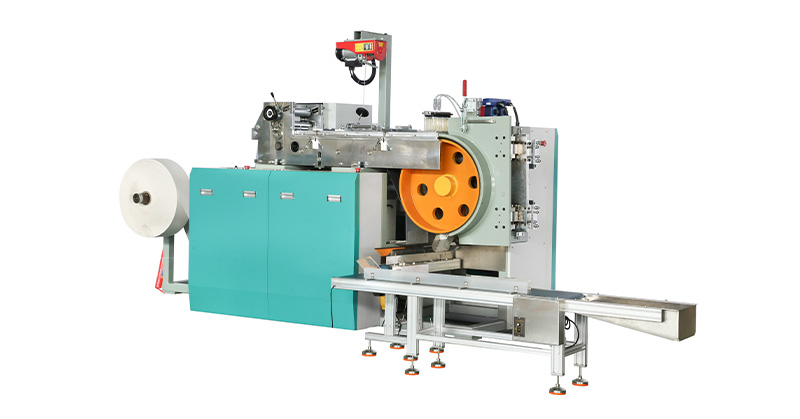
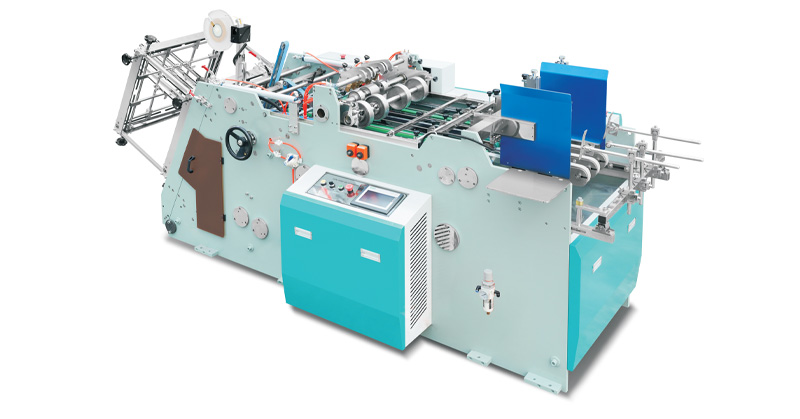
You’ve decided to produce paper lunch boxes. But which box style should you start with—and more importantly, does your equipment choice support the styles your customers actually need?
A machine that excels at producing standard burger boxes may struggle with lock-bottom designs that require no glue, or window boxes that demand precise cutting. Choosing the wrong configuration can limit your product range, increase changeover downtime, or force you to turn away orders.
This guide breaks down five common paper lunch box styles—flip-top, boat-shaped, window, fold-over, and lock-bottom—and explains what each requires from your paper lunch box machine. By the end, you’ll know which equipment capabilities matter most for your target product mix.
Understanding the Five Common Paper Lunch Box Styles
Paper lunch boxes come in a variety of shapes and structures, each designed for specific food service applications. Hongshuo’s paper lunch box machines can produce flip-top, boat-shaped, window, fold-over, and lock-bottom structures, with each style matched to the correct mold design, paper material, and glue layout.
Flip-Top Box
The flip-top box features a foldable top that is easy to open and close while maintaining a stable structure. These boxes are essential items for the fast food, baking, and food delivery industries.
Key equipment requirements:
-
Precise creasing and folding for consistent lid alignment
-
Reliable glue application to secure the closure mechanism
-
Stable forming pressure to maintain structural integrity
Typical end-users: Fast-food chains, bakeries, meal delivery services
Boat-Shaped Box
An open or semi-open design with a boat-like shape. These boxes are highly displayable and easy to access, making them perfect for visual appeal and immediate consumption.
Key equipment requirements:
-
Forming capability for curved or tapered side walls
-
Clean edge finishing for a premium presentation
-
Ability to handle lighter paper grades for cost efficiency
Typical end-users: Street food vendors, casual dining, takeaway outlets
Window Box
A flip-top opening paired with a skylight design that combines sealing and display functions. Window boxes offer visual appeal while maintaining convenient access to the contents.
Key equipment requirements:
-
Precision cutting or die-cutting for window openings
-
Accurate registration between the window and the box body
-
Compatible with transparent film or paper window materials
Typical end-users: Premium bakeries, pastry shops, gift food packaging
Fold-Over Box
Designed to achieve a tight seal, fold-over boxes offer excellent sealing and leak-proof performance to protect products requiring freshness.
Key equipment requirements:
-
Strong folding pressure for secure closure
-
Consistent glue application for leak-proof sealing
-
Higher precision to maintain seal integrity across production runs
Typical end-users: Fresh food delivery, salad containers, sauce packaging
Lock-Bottom Paper Box
This design features a unique interlocking structure at the bottom that can take loads without needing glue. It is perfect for products that have to be transported.
Key equipment requirements:
-
Precision forming for interlocking tabs to engage correctly
-
No glue system required (reduces consumable costs)
-
Higher mechanical precision to ensure lock mechanism functions reliably
Typical end-users: Food delivery platforms, takeaway restaurants, catering services
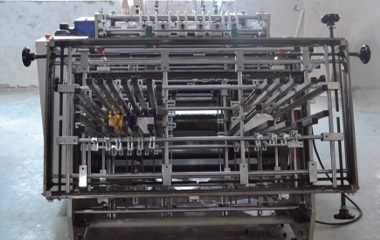
Equipment Capabilities That Matter for Each Box Style
Not all paper lunch box machines are created equal. The following table maps each box style to the critical equipment capabilities required for successful production.
| Box Style | Key Forming Requirement | Glue Required? | Critical Machine Feature |
|---|---|---|---|
| Flip-Top | Lid creasing and folding | Yes | Precise scoring mechanism |
| Boat-Shaped | Curved wall forming | Yes | Flexible mold design |
| Window Box | Window cutting + body forming | Yes | Cutting/die-cutting integration |
| Fold-Over | Tight sealing fold | Yes | High-pressure folding station |
| Lock-Bottom | Interlocking tab forming | No | Precision mechanical forming |
Hongshuo’s machines support both food-grade cold glue as standard and hot melt adhesive as an optional process, with lower adhesive and heating energy consumption. For lock-bottom boxes that do not require glue, the standard cold glue system can be bypassed, reducing consumable costs.
Matching Machine Configurations to Your Box Style Mix
Your choice of machine configuration should reflect not just what you produce today, but what your customers will request tomorrow.
Single-Station Configuration
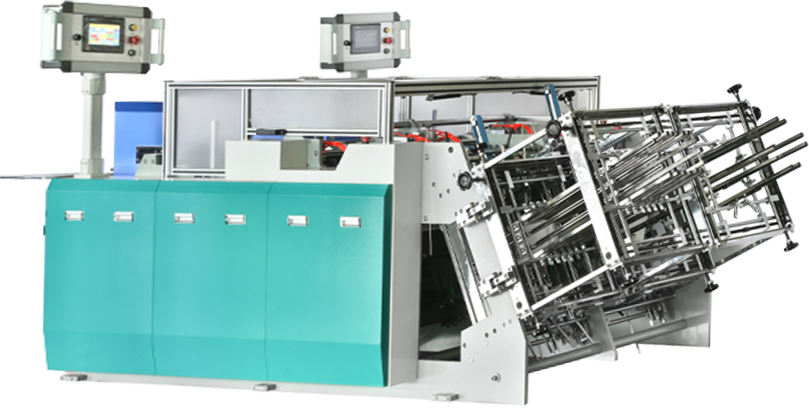
A single-station machine produces one box style at a time. It is optimized for high-volume production of a single design. Hongshuo offers multiple single-station models, including the HS-800 (cam double-guide-rail drive) and HS-1000 (gear mechanical or servo motor drive), both delivering 60–300 pieces per minute on 200–600 g/m² paperboard material.
Best suited for:
-
Producing one box style in high volumes
-
Standard burger boxes or flip-top boxes with consistent specifications
-
Operations where changeover frequency is low
-
Startups or flexible production lines
Box styles supported: All five styles can be produced, but each requires a mold change and setup adjustment. Changeover time between styles is typically longer.
Double-Station Configuration
A double-station machine features two independent forming stations operating in parallel, allowing for simultaneous production of two different box styles. Hongshuo’s HS-1200 double station paper box making machine can be used for different specifications of cartons operating at the same time.
Best suited for:
-
Capacity expansion projects where current lines need higher speed or more stable multi-shift production
-
Medium to large packaging companies with diverse product lines
-
Simultaneous production of different box styles (e.g., burger boxes and fry containers)
-
Running two different sizes or styles to fulfill complex orders
Box styles supported: Any combination of two styles simultaneously—for example, a flip-top box on one station and a boat-shaped box on the other.
Independent Dual-Station Forming Solution
For maximum flexibility, Hongshuo also offers independent dual-station forming solutions. The HS-1400 full servo independent double station model features full servo motors with ±0.1 mm precision, delivering 120–600 pieces per minute.
Box styles supported: The independent station design allows each station to operate with its own parameters, making it ideal for complex orders requiring two completely different box specifications simultaneously.
Servo-Driven vs Mechanical Drive
The drive system also affects your ability to handle multiple box styles. Hongshuo offers three control system options: cam double-guide-rail drive, gear mechanical or servo motor option, and full servo precision forming system.
For lock-bottom boxes specifically: The interlocking mechanism requires precise forming to ensure tabs engage correctly. Full servo systems with ±0.1 mm precision offer the accuracy needed for consistent lock-bottom production without rejects.
For a detailed overview of available machine configurations and their production capabilities, review the paper lunch box machine series overview.
Real-World Application Scenarios
Scenario A: Fast-Food Chain Supplier
Customer profile: A packaging converter supplying burger boxes to a national fast-food chain.
Box style required: Standard flip-top burger box, high volume, consistent specifications.
Equipment recommendation: A single-station high-speed machine optimized for that specific box style. The HS-1000 is engineered for mass production environments where output volume is critical, specializing in rapid production of standard-sized burger boxes and other three-dimensional cartons, including packing boxes, cake boxes, and French fries boxes.
Key consideration: With minimal changeover requirements, the single-station configuration delivers the lowest cost per box.
Scenario B: Diverse Food Service Supplier
Customer profile: A packaging company serving multiple restaurants, cafes, and delivery platforms.
Box styles required: Flip-top (for burgers), boat-shaped (for fries/snacks), and lock-bottom (for delivery containers).
Equipment recommendation: A double-station machine with servo drives. The HS-1200 allows simultaneous production of two different carton specifications, effectively doubling output compared to a single-station machine or enabling multi-product production without downtime for mold changes.
Key consideration: The ability to run different box styles on the same machine reduces the need for multiple dedicated lines. With Hongshuo’s double-station configuration, two independent stations can operate at the same time, each producing different box types.
For practical examples of how different equipment configurations serve various market needs, review the paper lunch box machine application examples.
Five Steps to Match Your Machine to Your Box Style Mix
Step 1: List Your Current and Target Box Styles
Start by documenting every box style you currently produce or plan to produce. Include:
-
Box style name (flip-top, boat-shaped, etc.)
-
Estimated monthly volume for each
-
Any special features (windows, lock-bottom mechanisms, etc.)
Step 2: Identify Shared vs. Unique Requirements
Group your box styles by their equipment requirements:
-
Which styles require glue? (All except lock-bottom)
-
Which require cutting or die-cutting? (Window boxes)
-
Which require the highest precision? (Lock-bottom)
Step 3: Evaluate Changeover Frequency
How often will you switch between styles?
-
Low frequency (weekly or less): Single-station machine may suffice
-
High frequency (daily or multiple times per day): Double-station or servo-driven machine recommended
Step 4: Consider Future Growth
If you expect to add box styles or increase volume, choose a machine platform that can scale. Double-station machines and servo-driven configurations offer more flexibility for future product expansion.
Step 5: Assess Certification Requirements
Different end-markets may require different certifications. Hongshuo machines meet international standards, including CE and SGS, with food-grade cold glue as standard. Fast-food chains and export markets often require these certifications—ensure your chosen machine supports the certifications your customers demand.
From Box Style Selection to Equipment Specification
You now have a complete framework for matching paper lunch box machine configurations to your target box styles.
The core principles are clear:
-
Flip-top boxes require precise creasing and reliable glue application—most standard machines can handle these well.
-
Boat-shaped boxes need curved forming capability and clean edge finishing.
-
Window boxes demand cutting/die-cutting integration and precise registration.
-
Fold-over boxes require strong folding pressure and consistent sealing.
-
Lock-bottom boxes need precision mechanical forming and do not require a glue system, reducing consumable costs.
-
Single-station machines are cost-effective for high-volume production of one style—HS-800 and HS-1000 are strong options for startups and flexible lines.
-
Double-station machines offer flexibility for diverse product lines and simultaneous production of two styles—HS-1200 delivers 120–600 pieces per minute for capacity expansion.
-
Servo-driven systems provide faster changeover and tighter precision for complex geometries.
Once you have identified your target box styles and estimated production volumes, the next logical step is comparing specific machine configurations—single station vs. double station, servo vs. mechanical drive, cold glue vs. hot melt—to find the optimal match for your product mix.
For a detailed review of available configurations and their production capabilities, visit the paper lunch box machine series overview.
Related Reading
Continue building your paper lunch box production expertise with these complementary guides:
-
Cold Glue vs Hot Melt for Paper Lunch Box Lines: Which Adhesive System Meets FDA Requirements?
-
Paper Lunch Box Machine for Small Business vs Enterprise: Scale Selection Guide
-
Paper Lunch Box Machine Capacity Planning: From Single Shift to 24/7 Operation
-
Material Selection Guide for Paper Lunch Box Production: Cardboard, Coated Paper, and Corrugated
-
Total Cost of Ownership: Entry-Level vs. Industrial Paper Lunch Box Equipment