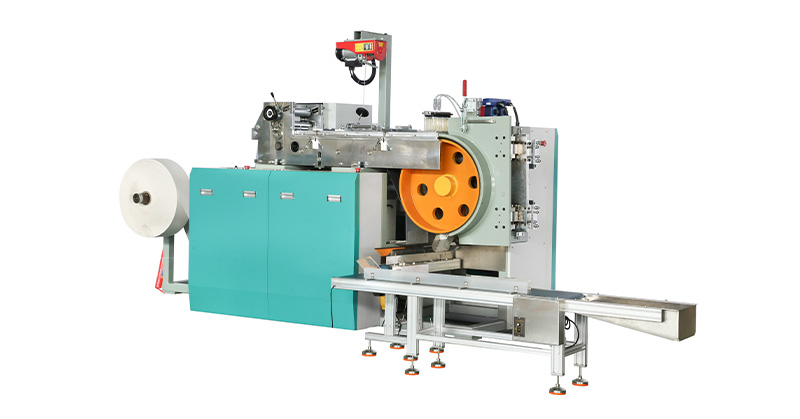
You’ve identified a market opportunity for eco-friendly paper lunch boxes. Now comes the critical equipment decision: should you start with a compact, lower-cost machine or invest immediately in a high-volume industrial line?
The answer isn’t simply “bigger is better” or “start small to save money.” Choosing the wrong scale can leave you with idle capacity you’re paying for—or worse, a machine that cannot keep up with orders you’ve already secured.
This guide provides a decision framework based on production volume, operational complexity, and growth trajectory. By the end, you’ll know which equipment class aligns with your current business stage and how to plan for future expansion.
This guide focuses on production-scale planning rather than comparing individual machine models. It helps buyers define the required output, automation level, labor structure, and expansion path before reviewing specific paper lunch box machine configurations.
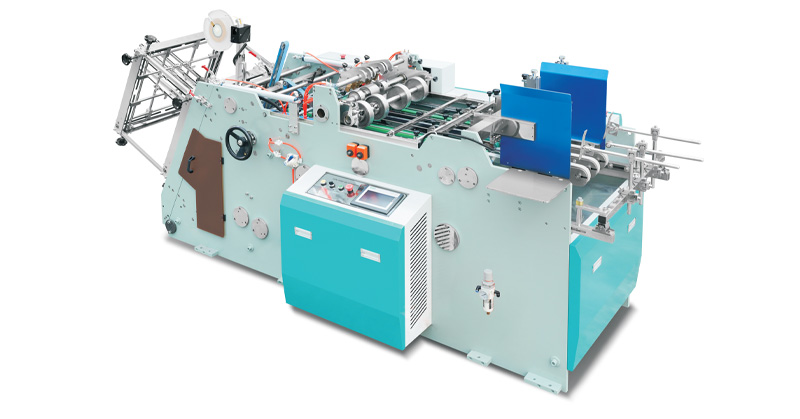
Defining Small-Business and Industrial Production Scales
Before comparing features, it’s important to understand what “small business” and “enterprise” mean in the context of paper lunch box production.
Small Business / Entry-Level Production
This category serves startups, small-scale converters, or businesses diversifying into paper packaging as a secondary product line.
Typical characteristics:
-
Production speed: Lower-speed configurations; suitable for smaller batch runs
-
Automation level: Semi-automatic or basic automatic; manual feeding options
-
Flexibility: Single station; one box shape at a time
-
Changeover time: Longer between different box styles
-
Footprint: Compact; fits in smaller workshop spaces
-
Operator skill: Basic training sufficient; mechanical adjustments may be needed
-
Certifications: Basic CE; may require additional testing for food-contact compliance
Best suited for:
-
Monthly output at lower volume ranges
-
One or two standard box styles (e.g., burger boxes only)
-
Local or regional distribution with less stringent certification requirements
-
Businesses with existing mechanical maintenance capability
Enterprise / Industrial-Grade Production
This category serves established packaging manufacturers, high-volume converters, or businesses supplying national and international food chains.
Typical characteristics:
-
Production speed: Higher-speed configurations engineered for continuous operation
-
Automation level: Fully automatic; servo-controlled precision
-
Flexibility: Double station capable of running two different box styles simultaneously
-
Changeover time: Shorter with programmable parameters
-
Footprint: Larger; requires dedicated production floor space
-
Operator skill: Touchscreen interface; minimal mechanical intervention
-
Certifications: CE, FDA-compliant cold glue systems, SGS, UL, and other food-contact grades (as noted on Hongshuo’s official website)
After defining your production scale, compare available paper lunch box machine models by station type, output, material range, and control configuration.
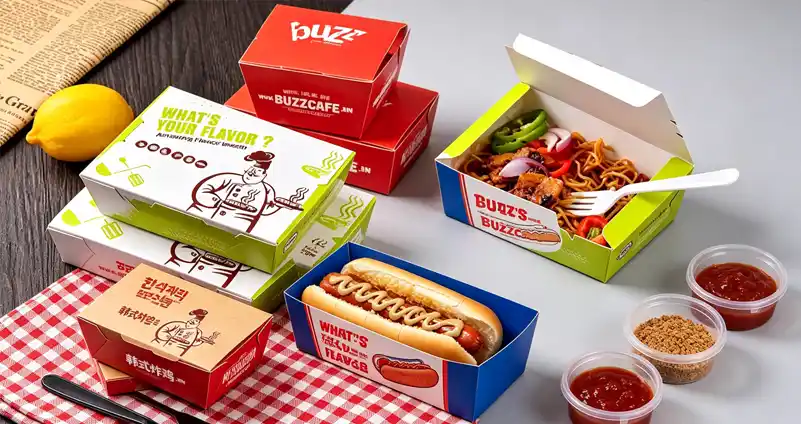
Seven Business Factors That Determine the Required Production Scale
The following comparison helps you evaluate which scale matches your actual production environment.
1. Production Speed and Realistic Throughput
| Parameter | Small Business Class | Enterprise Class |
|---|---|---|
| Rated speed range | Lower range (often 60–300 pcs/min in industry) | Higher range (often 200–600+ pcs/min) |
| Sustained output per shift | Moderate | Substantially higher |
| Monthly capacity (single shift) | Lower baseline | Multiple times higher |
Context from the industry: The Packaging Machinery Manufacturers Institute (PMMI) notes that the “rated speed” of packaging machinery often assumes ideal conditions—consistent material quality, optimal ambient temperature, and experienced operators. Enterprise-class machines are engineered to sustain higher speeds across more variable real-world conditions.
What this means for you: A machine rated at higher speed will not automatically double your output if material feeding, glue application, or quality inspection create bottlenecks. However, enterprise-class equipment is designed for continuous operation with fewer interruptions.
2. Automation Level and Labor Requirements
| Factor | Small Business | Enterprise |
|---|---|---|
| Operators needed per shift | Typically more | Typically fewer |
| Manual intervention frequency | More frequent (feeding, adjustment, rejection removal) | Less frequent (automatic feeding, reject ejection) |
| Skill level required | Mechanical aptitude for adjustments | Touchscreen operation; parameter selection |
| Training time to proficiency | Longer | Shorter |
Translation to operational benefit: Reducing operator count per shift lowers ongoing labor costs—a significant advantage in markets where skilled manufacturing labor is both expensive and scarce. According to the Processing and Packaging Machinery Association (PPMA), the shift toward servo-driven systems is increasingly driven by the need to reduce labor dependence and improve changeover flexibility.
3. Flexibility for Multiple Box Styles
Small businesses often start with one box style (e.g., a standard burger box). As customers request variety (flip-top, window boxes, boat-shaped containers), flexibility becomes essential.
| Box Style | Small Business | Enterprise |
|---|---|---|
| Single burger box | Optimized | Optimized |
| Flip-top box | Requires mold change | Programmable; faster changeover |
| Lock-bottom box | May not be supported without glue | Supported with cold glue system |
| Window box | Requires additional tooling | Supported with precision cutting |
| Running two styles simultaneously | Not possible on single station | Double station models allow simultaneous production |
Decision implication: If your customer base demands variety (e.g., supplying multiple restaurant chains with different container types), enterprise-class flexibility directly impacts your ability to compete.
4. Adhesive System: Cold Glue vs. Hot Melt
Adhesive choice affects both food-contact compliance and ongoing consumable costs.
| Adhesive Aspect | Small Business Class | Enterprise Class |
|---|---|---|
| Typical system | Hot melt or basic cold glue | Food-grade cold glue with precision applicators |
| Adhesive consumption per box | Higher | Lower (precision applicators reduce waste) |
| Food-contact certification | May require additional testing | Standard compliance (CE/FDA as noted on Hongshuo’s website) |
| Warm-up time | 10–15 minutes for hot melt | None for cold glue |
| Environmental impact | Higher VOCs with hot melt | Minimal; water-based |
What this means for you: Food-grade cold glue systems help meet regulatory requirements for export to markets like the EU and US, where contact materials must comply with frameworks such as the FDA’s Food Contact Notification (FCN) process. Enterprise-class cold glue systems can reduce adhesive consumption and simplify compliance documentation.
5. Maintenance and Uptime Reliability
| Maintenance Factor | Small Business | Enterprise |
|---|---|---|
| Scheduled maintenance frequency | More frequent | Less frequent |
| Spare parts availability | Basic stock | Comprehensive inventory; global service network (Hongshuo has Indonesia, Thailand, Philippines, Germany, Mexico, Colombia, Spain, Dominican Republic) |
| Diagnostic capability | Visual and manual checks | On-screen error codes; remote support options |
| Reliability expectation | Suitable for intermittent operation | Engineered for continuous operation |
6. Energy Efficiency
Enterprise-class machines, particularly servo-driven models, are generally designed to use energy more efficiently per unit produced. As PPMA notes, servo drive systems are increasingly applied to replace mechanical linkages and synchronize multiple axes in advanced high-speed packaging machinery. This architectural difference means industrial equipment can achieve better energy performance per box produced, especially in multi-shift operations.
7. Certifications and Market Access
| Certification Aspect | Small Business | Enterprise |
|---|---|---|
| CE (EU safety) | May be present | Present (confirmed on Hongshuo homepage) |
| FDA food-contact | May be absent or limited | Standard on cold glue models |
| SGS / ISO / UL | Optional | Multiple certifications available (ISEGA, JFRL, SGS, DIN, UL, GECA listed on Hongshuo website) |
Practical impact: Without documented food-grade compliance, supplying to major food brands or exporting to regulated markets may be restricted. Enterprise equipment from established manufacturers like Hongshuo is designed with these certifications integrated.
Production-Scale Decision Framework for Growing Packaging Businesses
Use this matrix to guide your equipment scale decision based on your current and projected production profile.
| Decision Factor | Choose Small Business Class | Choose Enterprise Class |
|---|---|---|
| Current monthly volume | Lower range | Higher range |
| Number of box styles | 1–2 styles | 3+ styles or custom shapes |
| Target customers | Local, non-chain, price-sensitive | Regional chains, food brands, export |
| Certification requirements | Basic CE only | FDA, food-contact, SGS, export docs |
| Operating shifts | 1 shift, intermittent | 2–3 shifts, continuous |
| Maintenance staff | On-site mechanical technician | Limited; need diagnostic support |
| Capital availability | Constrained, prioritizing cash flow | Flexible, prioritizing per-unit cost |
Scenario A: Startup or Diversification
Profile: First-time paper box producer, lower monthly volume target, one style (burger boxes), local distribution.
Recommendation: Small business class. The lower upfront investment preserves capital for raw materials and market development. As volume grows, you can add a second small machine or trade up.
Key consideration: Ensure the small business machine uses food-grade adhesive or has an optional cold glue system. This preserves your ability to upgrade customers later.
Scenario B: Established Converter Expanding into Paper Boxes
Profile: Existing packaging business adding paper lunch boxes to product line, initial orders secured for medium-high volume, two styles (flip-top and lock-bottom).
Recommendation: Enterprise class, specifically a double station model. The ability to run two styles simultaneously can effectively double your capacity without requiring two separate machines. Lower per-unit adhesive consumption helps recover the higher purchase price over time.
Scenario C: High-Volume Supplier to Food Chains
Profile: Contract manufacturer supplying multiple fast-food brands, higher monthly volume, 4–5 box styles, requires FDA certification.
Recommendation: Enterprise class with servo drives and cold glue system. Certification compliance is non-negotiable for your customer base. Reliability and reduced downtime are critical decision factors.
For practical examples of how different equipment scales perform across industries, review the paper lunch box machine application examples.
Growth Planning: How to Scale Without Wasting Capital
One common mistake is buying enterprise equipment before you have enterprise volume—or buying small business equipment that cannot grow with you.
Option 1: Modular Starter Configuration
Some manufacturers offer entry-level configurations on an enterprise-class platform. You pay less upfront for reduced speed or single-station operation, but the machine chassis, drive system, and control architecture are the same as the high-volume model.
Advantage: Upgrading to higher speed or adding a second station requires only software activation or bolt-on modules, not a new machine.
Option 2: Two Small Machines vs One Enterprise Machine
At higher monthly volumes, compare:
-
Two small business machines: Higher labor requirements, more floor space, double the maintenance, but lower upfront cost and redundancy if one fails.
-
One enterprise machine: Lower labor requirements, less floor space, lower per-unit consumables, higher upfront cost.
Break-even consideration: If labor savings from the enterprise machine and consumable efficiencies offset the higher monthly investment over time, enterprise may be the more economical long-term choice. The PPMA notes that the increased performance and flexibility offered by servo drives often more than compensates for any additional upfront cost in high-volume applications.
From Production-Scale Planning to Machine Model Selection
You now have a framework for defining the production scale your business requires. The next step is to translate that requirement into a machine specification by comparing station type, rated output, control system, material compatibility, and mold configuration.
Review Hongshuo’s available machine models only after confirming your target box styles, expected shift output, and 12-month capacity plan.
The core principles are clear:
-
Small business class minimizes upfront risk for lower volumes, fewer styles, and local markets without strict certification requirements.
-
Enterprise class can deliver lower per-unit operating costs and certification readiness for higher volumes, multiple styles, and regulated market access.
-
Plan for growth by choosing modular enterprise platforms or a staged equipment strategy rather than buying twice.
Once you have estimated your current and 12-month production volumes, the next logical step is comparing specific configurations—single station vs double station, cold glue vs. hot melt, servo vs. mechanical drive—within your chosen scale category.
For a detailed review of available configurations and their production capabilities, visit the paper lunch box machine series overview.
Related Reading
Continue building your paper lunch box production expertise with these complementary guides:
-
Cold Glue vs Hot Melt for Paper Lunch Box Lines: Which Adhesive System Meets FDA Requirements?
-
Paper Lunch Box Machine Applications: Matching Equipment to Box Styles
-
Paper Lunch Box Machine Capacity Planning: From Single Shift to 24/7 Operation
-
Material Selection Guide for Paper Lunch Box Production: Cardboard, Coated Paper, and Corrugated
-
Total Cost of Ownership: Entry-Level vs Industrial Paper Lunch Box Equipment