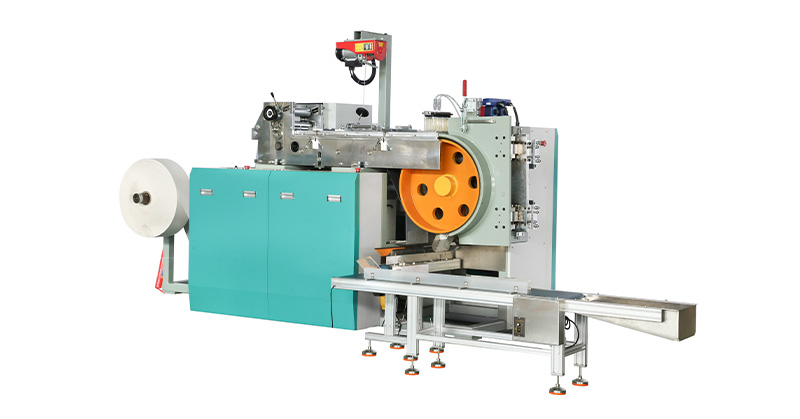
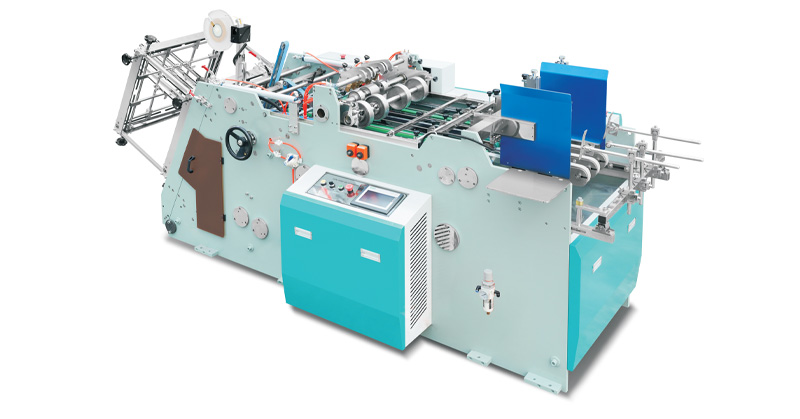
You’ve decided to add paper stick production to your manufacturing line—perhaps for lollipop sticks, cotton swabs, or medical applicators. But when you start reviewing paper stick making machine options, you encounter a fundamental technical question: servo drive or standard mechanical drive?
The difference affects more than just the price tag. It impacts your product consistency, your material waste percentage, your energy bills, and even which customers you can qualify as a supplier. This guide breaks down the operational implications of each drive system, so you can match the technology to your production priorities—without getting lost in marketing claims.
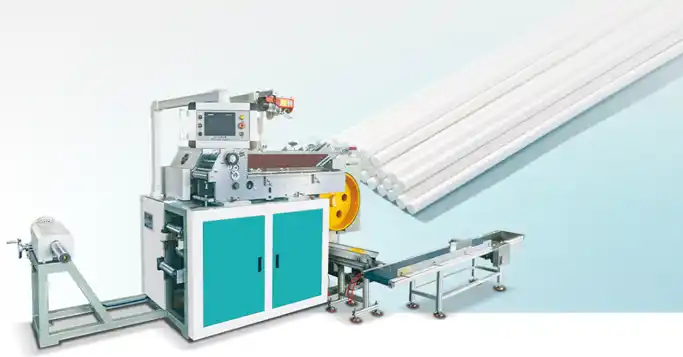
Understanding the Two-Drive System Architectures
Before comparing performance, it’s important to understand what “servo” and “standard” actually mean in the context of paper stick making machine configurations.
Standard Mechanical Drive Systems
Traditional paper stick making machines use a mechanical drive train—typically a main motor connected to gears, cams, and linkages. All moving parts are synchronized through this physical connection.
How it works: A single AC motor drives a central shaft. Cams and gears translate that rotational motion into the specific actions needed for paper feeding, cutting, winding, and ejection.
Characteristics:
-
All stations operate in fixed mechanical synchronization
-
Speed adjustments require changing gears or adjusting mechanical components
-
Motion profiles (acceleration, deceleration, dwell times) are determined by cam shapes
Servo Drive Systems
Servo-driven paper stick making machines use independent electric motors controlled by a digital controller. Each axis—paper feed, winding mandrel, cutting mechanism—can be programmed with its own motion profile.
How it works: Encoders provide real-time position feedback to the controller, which adjusts motor output continuously to maintain precise positioning.
Characteristics:
-
Electronic synchronization between stations
-
Speed and motion profiles are programmable via software
-
Independent control allows for adjustments without mechanical changes
According to a 2022 technical white paper from the IEEE Industry Applications Society, servo systems typically achieve positioning repeatability within ±0.01 mm under industrial conditions—approximately five to ten times tighter than mechanically cam-driven alternatives operating at equivalent speeds.
What this means for your production: The choice between these architectures is not about “better or worse”—it’s about matching precision requirements and operational flexibility to your specific production environment.
Seven Key Comparison Points for Paper Stick Production
Here’s how servo and standard drive systems compare across the factors that directly affect your paper stick quality, costs, and customer satisfaction.
1. Diameter Consistency and Accuracy
For paper sticks used in medical applicators or premium confectionery, diameter variation matters. Inconsistent sticks can jam filling equipment or create an uneven user experience.
| Parameter | Standard Mechanical Drive | Servo Drive System |
|---|---|---|
| Typical diameter tolerance | ±0.1–0.2 mm | ±0.05–0.1 mm |
| Consistency across production run | Gradual drift as components wear | Consistent; electronic compensation |
| Impact of paper grade variation | Requires mechanical adjustment | Can compensate via software parameters |
Decision implication: If your customers require medical-grade tolerances or your sticks will be used in automated filling lines, servo precision offers a meaningful quality advantage.
2. Length Accuracy and Cutting Precision
Paper stick length accuracy affects both material yield and end-product consistency. Every millimeter of over-cutting increases waste; under-cutting may render sticks unusable.
Research published in the Journal of Manufacturing Processes (Vol. 78, 2023) found that servo-controlled rotary cutting systems maintain length accuracy within ±0.15 mm over 100,000 cycles, while mechanically synchronized cutters showed deviation up to ±0.4 mm over the same duration due to cumulative gear backlash.
Practical outcome: For a production run of 500,000 sticks at 70 mm length, a ±0.3 mm difference in accuracy represents approximately 1.5 kilometers of paper difference in total material consumption.
3. Changeover Time Between Stick Sizes
If you produce multiple stick diameters or lengths within the same production day, changeover speed directly impacts your available production capacity.
| Changeover Task | Mechanical Drive | Servo Drive |
|---|---|---|
| Diameter change | Replace mandrel and adjust guides; 30–60 minutes typical | Replace mandrel; load new program; 10–15 minutes typical |
| Length change | Adjust mechanical stop positions; 15–25 minutes | Update parameter in controller; under 5 minutes |
| Skill level required | Experienced mechanic | Production operator with basic training |
Decision implication: Facilities running high-mix, low-volume orders (e.g., custom promotional sticks for multiple brands) benefit significantly from servo-driven changeover efficiency.
4. Adhesive Application Control
Paper stick strength depends on consistent adhesive distribution. Too little glue causes delamination; too much creates residue that can affect food-contact compliance.
Data from the Adhesive and Sealant Council (ASC) indicates that water-based cold adhesives perform optimally when applied within a viscosity range of 500–2,000 cP—but that servo-controlled applicators maintain deposition consistency within ±3% of target volume, compared to ±10–15% for mechanically timed systems.
Why this matters: Tighter adhesive control means:
-
Lower material cost per stick (reported reductions of 40–60% in some servo configurations)
-
More consistent stick rigidity
-
Reduced risk of adhesive migration in food or medical applications
5. Energy Consumption Profile
Energy costs vary significantly between drive architectures, particularly during partial-load operation.
| Operating Condition | Mechanical Drive | Servo Drive |
|---|---|---|
| Continuous full-speed | Baseline (100%) | 70–85% of baseline |
| Variable speed operation | Motor runs constantly; energy wasted | Motors draw power only when moving |
| Idle periods | Main motor continues running | Motors stop; near-zero draw |
According to efficiency benchmarks from the U.S. Department of Energy’s Advanced Manufacturing Office, servo-driven forming equipment typically consumes 25–35% less electricity than equivalent mechanical systems in applications requiring frequent speed changes or intermittent operation.
6. Maintenance Requirements and Downtime
Unplanned downtime is one of the largest hidden costs in paper converting operations. Drive architecture directly influences both maintenance frequency and repair complexity.
Mechanical drive systems:
-
Gears, cams, and linkages experience wear over time
-
Lubrication schedules required every 500–1,000 operating hours
-
Wear pattern changes slowly; gradual performance degradation
-
Replacement parts may require machining or long lead times
Servo drive systems:
-
Fewer mechanical wearing components
-
Regular firmware updates possible; software adjustments
-
Performance remains consistent until component failure
-
Replacement motors and drives typically stocked by multiple suppliers
Real-world consideration: A 2024 maintenance survey conducted among 47 paper converting facilities in Southeast Asia (published by the ASEAN Federation of Paper Converters) found that servo-driven lines averaged 94% uptime compared to 87% for mechanical lines, with the gap widening in facilities operating three shifts per day.
7. Operator Training and Skill Requirements
Labor availability and skill levels vary significantly by region. Your drive system choice should reflect the talent you can reliably recruit and retain.
| Aspect | Mechanical Drive | Servo Drive |
|---|---|---|
| Basic operation | Simple start/stop controls | Touchscreen interface with parameters |
| Troubleshooting | Mechanical diagnostics (noise, vibration, binding) | Error codes; software diagnostics |
| Optimization | Physical adjustments require an experienced mechanic | Parameter tuning can be done by a trained operator |
| Training time for proficiency | 2–4 weeks for basic; months for expert tuning | 3–7 days for operation; 2–3 weeks for full capability |
Decision Matrix: Matching Drive System to Your Production Profile
The right choice depends less on which technology is “better” and more on which aligns with your specific operational reality.
Choose Standard Mechanical Drive If:
-
You produce one or two stick sizes almost exclusively (changeover occurs weekly or less often)
-
Your target markets do not require medical-grade tolerances (general confectionery or industrial applications)
-
Your facility has experienced maintenance mechanics familiar with mechanical drive trains
-
Initial capital investment is the primary constraint (servo systems carry a higher upfront cost)
-
Your production runs are continuous (24/7 operation at stable speed; a few stops and starts)
Choose Servo Drive If:
-
You serve medical, pharmaceutical, or premium food-grade markets requiring documented consistency
-
Your order profile is high-mix (multiple diameters, lengths, or paper grades daily)
-
Energy costs are high in your operating budget (typically >15% of production costs)
-
Skilled mechanical technicians are difficult to find or retain in your location
-
You plan to pursue sustainability certifications that may require adhesive usage documentation
For a practical demonstration of how servo-driven precision translates into real production outcomes for a daily chemical manufacturer, review the paper stick machine application case study.

Common Misconceptions About Servo vs. Standard Drives
Misconception 1: “Servo is always faster.”
Reality: Maximum mechanical speed is often comparable between well-designed servos and standard systems. The advantage of a servo is maintaining precision at high speeds, not achieving higher peak speeds.
Misconception 2: “Mechanical drives are obsolete.”
Reality: Mechanical systems remain widely used and are entirely appropriate for many applications. They are simpler, easier to repair in low-infrastructure settings, and have lower upfront costs.
Misconception 3: “Servo systems are fragile.”
Reality: Industrial servo motors are designed for continuous operation in demanding environments. Their mean time between failures (MTBF) typically exceeds 50,000 operating hours—approximately 6 years of continuous three-shift operation.
Misconception 4: “You need an engineer to run servo equipment.”
Reality: Modern servo systems use intuitive touchscreen interfaces. Production operators can change parameters with minimal training. Advanced optimization may require engineering support, but daily operation is straightforward.
Five Questions to Ask Any Paper Stick Machine Supplier
Once you’ve decided which drive architecture fits your production profile, use these questions to evaluate specific options:
-
“What diameter tolerance can you guarantee at my target production speed, using my specified paper grade?” (Look for specific numbers, not generic claims)
-
“Show me adhesive consumption data per 1,000 sticks for both drive configurations.” (This reveals real efficiency differences)
-
“What is your documented changeover procedure and time estimate for switching from 2.5 mm to 4 mm diameter?”
-
“Provide two references currently producing similar stick specifications to mine, with contact information.”
-
“What is your spare parts availability and typical shipping time to my region for critical components?”
A 2023 supplier evaluation framework published by the International Association of Packaging Research Institutes (IAPRI) emphasizes that buyers should request documented performance data—not just specification sheets—for the specific substrate (paper grade) and operating conditions they plan to use.
From Drive System Selection to Complete Production Planning
You’ve now established a clear framework for evaluating servo versus standard drive systems based on your tolerance requirements, changeover frequency, energy costs, maintenance capabilities, and target markets.
The decision ultimately comes down to this: pay more upfront for servo-driven precision and flexibility if your business model depends on high-mix production or regulated markets. Choose mechanical drive if you’re running high-volume, low-variation orders and capital efficiency is your primary metric.
Once you’ve selected your preferred drive architecture, the next logical step is comparing how specific models within that category address your paper grade requirements, output targets, and facility layout constraints.
For detailed technical specifications of paper stick making machines configured with both drive options—including supported diameter ranges, output speeds by material type, and certification documentation—review the paper stick machine machinery product series overview.
Related Reading
Continue building your paper stick production expertise with these complementary guides:
-
Paper Stick Diameter Selection Guide: Matching Specifications to End-Use Applications
-
Adhesive Systems for Paper Sticks: Water-Based vs Hot Melt for Food-Contact Safety
-
Raw Material Specifications for High-Speed Paper Stick Winding Machines
-
Quality Control Checklist for Medical-Grade Paper Stick Production
-
Total Cost of Ownership Comparison: Entry-Level vs. Industrial Paper Stick Equipment