You’ve identified a market opportunity in paper lunch boxes. The numbers look promising—the global paper lunch box machine market is expected to grow from USD 470.8 million in 2025 to USD 1,000 million by 2035, at a CAGR of 7.8%. But now comes the harder question: what size machine do you actually need?
The most common mistake in equipment selection is confusing theoretical maximum speed with sustainable daily output. A machine rated at 300 pieces per minute won’t deliver that number consistently if your material feeding, operator skill, or changeover process creates bottlenecks. Over-buying ties up capital in idle capacity. Under-buying leads to missed deadlines and strained components.
This guide helps you match machine capacity to your actual production requirements—so you invest in the right scale, not the biggest or the cheapest.
Understanding Machine Capacity: What the Numbers Really Mean
Paper lunch box machines are typically rated in pieces per minute (PPM) or boxes per hour (BPH). But these numbers require interpretation.
Theoretical vs Sustainable Output
| Metric | What It Means | Why It Matters |
| Rated speed (peak PPM) | Maximum speed under ideal conditions | Rarely achieved in real production |
| Sustainable output | Actual production over a full shift | The number that matters for capacity planning |
| Effective capacity | Output minus downtime, changeovers, rejects | Your true production ceiling |
A standard single-station paper box forming machine typically produces 60–150 pieces per minute. High-speed automated systems can reach 150–200+ pieces per minute with tighter tolerances and fewer defects. Double-station configurations can deliver 120–300 pieces per minute—roughly double the output of a single-station machine.
Translation to business impact: If you need 100,000 boxes per week, a 60 PPM machine running one 8-hour shift delivers approximately 28,800 boxes per day (theoretical). With changeovers and downtime, your actual daily output may be 20,000–24,000 boxes. Plan for the lower number.
Calculating Your Baseline Throughput
Before contacting any supplier, define your minimum required output. Consider:
-
Current order volume — How many boxes do you need to produce this month?
-
Projected growth — Where will volume be in 12–24 months?
-
Peak demand — What’s the highest hourly output required during holiday seasons or contract fulfillment?
-
Operating shifts — Will you run one, two, or three shifts per day?
-
Operator skill level — Novice operators require slower speeds while learning the equipment
Matching Machine Scale to Production Volume
Once you’ve established your baseline throughput, you can evaluate which machine configuration fits.
| Monthly Volume | Recommended Configuration | Typical Speed Range | Best For |
| Under 500,000 boxes | Single station | 60–150 pcs/min | Startups, flexible lines, one or two box styles |
| 500,000 – 1,500,000 boxes | Evaluate both | — | Single station at upper end may struggle; double station offers growth room |
| Over 1,500,000 boxes | Double station | 120–300+ pcs/min | High-volume, continuous production |
| Multi-style, high-mix | Servo-driven or independent dual station | Programmable | Frequent changeovers, complex box designs |
Single-Station Configurations
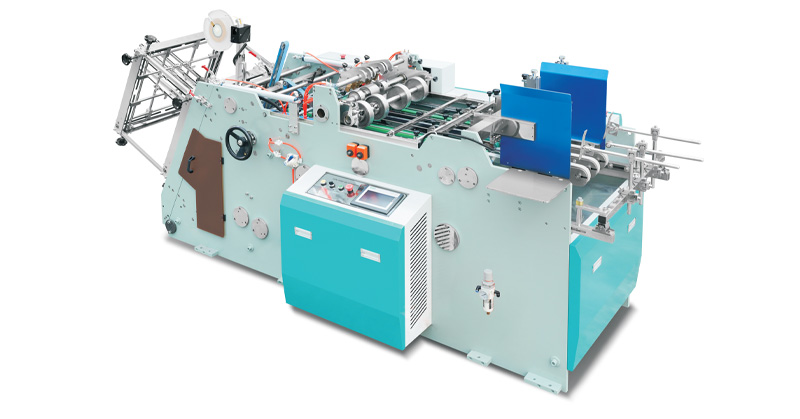
A single-station machine completes one forming cycle at a time. It operates as a compact, flexible workhorse that handles one carton per cycle.
Advantages:
-
Lower initial investment
-
Easier for novice operators to tune, clean, and maintain
-
Faster mold changes (approximately 30 minutes)
-
Ideal for small to medium batch production (500–5,000 pieces per day)
Limitations:
-
One box style at a time
-
Maximum output capped by single-cycle operation
Double-Station Configurations
A double-station machine uses two independent forming stations that operate simultaneously, effectively doubling output without significantly increasing floor space.
Advantages:
-
2x higher output with the same labor input
-
Two different box specifications can run simultaneously in a coordinated production plan
-
Ideal for high-volume, continuous production (10,000+ pieces per day)
Considerations:
-
Higher initial investment
-
Requires stricter raw material quality control—poorly cut paper blanks can cause simultaneous multi-lane jams
-
Longer mold change time (approximately 1 hour)
Servo-Driven vs. Mechanical Drive
Beyond station count, the drive system affects your ability to handle different production profiles.
| Drive Type | Characteristics | Best Suited For |
| Mechanical (cam/gear) | Fixed motion profiles; lower cost | High-volume, single-style production |
| Servo | Programmable motion; ±0.1mm precision | Frequent changeovers, complex box geometries |
| Full servo independent | Each station is independently controlled | Maximum flexibility; different styles on each station |
Servo-driven machines increase precision, reduce maintenance hours, and stabilize long-term output. They are particularly valuable for operations producing multiple box styles with frequent changeovers.
Five Steps to Match Machine Capacity to Your Production Plan
Step 1: Define Your Required Daily Output
Start with your monthly target. Divide by operating days per month. Then divide by shift hours.
Example: 600,000 boxes/month ÷ 22 days = 27,273 boxes/day. For an 8-hour shift: 27,273 ÷ 8 = 3,409 boxes/hour, or approximately 57 boxes/minute.
Step 2: Add a Buffer for Real-World Factors
Apply efficiency factors:
-
Downtime: 10–15% for changeovers, cleaning, maintenance
-
Rejects: 2–5% depending on material quality and operator experience
-
Ramp-up: Lower speed during the first hour of each shift
Example: 57 PPM required × 1.25 (25% buffer) = 71 PPM minimum rated speed.
Step 3: Consider Growth Trajectory
If your business is growing, buy capacity for your 12-month target, not today’s volume. The packaging machinery market continues to expand, driven by increasing demand for eco-friendly packaging solutions. If you’re in a growth trajectory, buying equipment that can scale with you—rather than replacing it in 2–3 years—is often the more economical long-term decision.
Step 4: Evaluate Box Style Variety
| Box Style Mix | Recommended Configuration |
| 1–2 styles, low changeover frequency | Single station |
| 3+ styles, frequent changes | Servo-driven single or double station |
| Two styles running simultaneously | Double station |
| Complex geometries (lock-bottom, window) | Full servo precision system |
Step 5: Assess Labor and Skill Availability
-
Limited skilled labor: Servo-controlled systems with touchscreen interfaces reduce operator dependency
-
Experienced mechanical team: Mechanical drive systems may be acceptable
-
High labor costs: Automation pays back faster—industry best practices suggest investing in automation when manual labor costs exceed 25% of gross margin
Real-World Application Scenarios
Scenario A: Startup Restaurant Supplier
Profile: A new packaging converter targeting local restaurants. Monthly target: 200,000–300,000 burger boxes. One box style. Single shift. Limited capital.
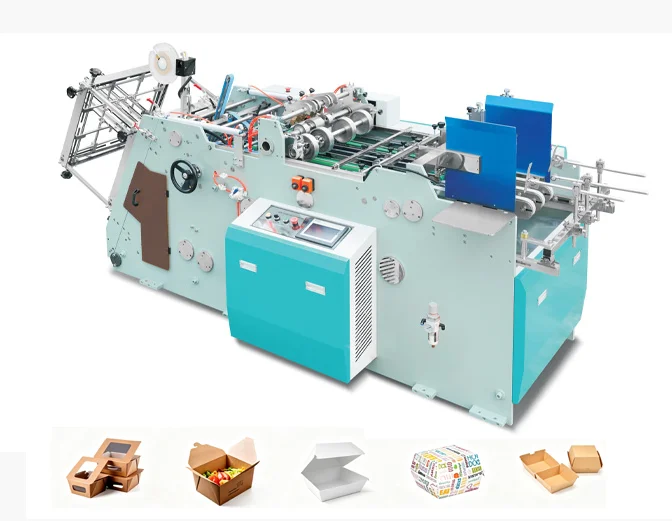
Recommendation: Single-station machine. A single-station model provides flexible automatic forming for burger boxes, cake boxes, and French fries boxes at an accessible investment level. Mold changes take approximately 30 minutes, allowing occasional style switches without significant downtime.
Growth path: As volume increases, you can add a second single-station machine or trade up to a double-station model.
Scenario B: Established Food Packaging Converter
Profile: An existing manufacturer expanding into paper lunch boxes. Monthly target: 1 million+ boxes. Multiple styles (burger boxes and cake boxes). Two-shift operation.
Recommendation: Double-station configuration. A double-station machine allows two different box specifications to run simultaneously, effectively doubling capacity without requiring a second machine. For maximum precision, a full servo independent double-station model offers the flexibility to run completely different styles on each station.
For examples of how different machine configurations serve various production needs, explore the paper lunch box machine application examples for different box styles and production volumes.
Common Capacity-Planning Mistakes
Mistake 1: Buying for Peak Speed, Not Sustained Output
A machine rated at 300 PPM rarely delivers 300 PPM across an entire shift. Material variations, operator breaks, and minor adjustments all reduce actual output.
Prevention: Ask suppliers for sustained output data with your specific paper grade. Run test batches if possible.
Mistake 2: Ignoring Changeover Time
If you produce multiple box styles, changeover time directly impacts available production hours. A machine that requires 1 hour to change molds vs. 30 minutes loses approximately 4 production hours per week with four changeovers.
Prevention: Factor changeover time into your capacity calculation. Servo-driven machines typically offer faster changeovers through programmable parameters.
Mistake 3: Overlooking Material Compatibility
Up to 70% of operational downtime can stem from mismatches between machine specifications and paper substrates. Your chosen machine must handle your target paper grades (typically 200–600 g/m² for paper lunch box production).
Prevention: Confirm material compatibility before purchase. Run your actual paper grade through the machine during testing.
Mistake 4: Underestimating Floor Space Requirements
Double-station machines offer a footprint-to-output advantage—you effectively double throughput without doubling floor space. However, high-speed machines demand rapid raw material feeding, requiring adequate space to stage paper rolls or die-cut blanks.
From Capacity Planning to Equipment Specification
You now have a framework for matching paper lunch box machine capacity to your production volume.
The core principles are clear:
-
Define your baseline throughput before evaluating any machine—know your required daily output, not just monthly targets
-
Apply real-world efficiency factors—downtime, rejects, and changeovers reduce theoretical capacity by 20–30%
-
Match station count to volume—single station for under 500,000 boxes/month; double station for over 1.5 million boxes/month
-
Consider your growth trajectory—buying for 12-month targets often saves money compared to replacing equipment in 2–3 years
-
Don't ignore changeover time—if you produce multiple styles, servo-driven machines offer faster changeovers and better long-term value
Once you’ve estimated your current and 12-month production volumes and identified your target box styles, the next logical step is comparing specific configurations—single station vs. double station, mechanical vs. servo drive, cold glue vs. hot melt—within your chosen capacity range.
For a detailed review of available configurations and their production capabilities, visit the paper lunch box machine specifications and capacity options.
Related Reading
Continue building your paper lunch box production expertise with these complementary guides:
-
Paper Lunch Box Machine for Small Business vs Enterprise: Scale Selection Guide
-
Single-Station vs Double-Station Paper Lunch Box Machines: Which Configuration Fits Your Production Mix?
-
Paper Lunch Box Machine Applications: Matching Equipment to Box Styles
-
Total Cost of Ownership: Entry-Level vs. Industrial Paper Lunch Box Equipment
-
Capacity Planning for Paper Lunch Box Production: From Single Shift to 24/7 Operation