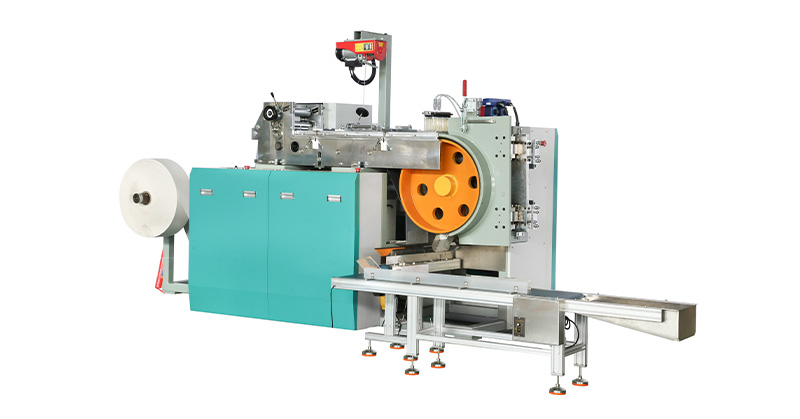
You’ve decided to produce paper sticks. You’ve even chosen your paper stick making machine configurations. But now comes a question that seems deceptively simple: what diameter should your paper sticks be?
The answer matters more than you might think. Choose a diameter that’s too narrow, and your sticks may snap during filling or use. Choose one that’s too wide, and they won’t fit into the intended product—whether that’s a lollipop, a cotton swab, or a medical applicator. This guide walks you through the standard diameter ranges for each major end-use application, so you can specify the right dimension for your target market from day one.
Why Diameter Consistency Directly Impacts Your Success
Before diving into specific measurements, it’s worth understanding why diameter precision matters to your customers—and ultimately to your profitability.
The Downstream Impact of Diameter Variation
When your paper sticks feed into a customer’s automated production line—whether they’re inserting sticks into lollipops, attaching swab tips, or packaging medical devices—even 0.1 mm of diameter variation can cause problems:
| Issue | Consequence |
|---|---|
| Stick too thick | Jams in feeding mechanism; line stoppage; damaged equipment |
| Stick too thin | Falls out of product; loose fit; customer rejects batch |
| Inconsistent diameter | Uneven adhesive application; variable product quality |
According to a 2023 quality benchmark report from the International Association for Food Protection (IAFP), diameter variation exceeding ±0.1 mm in confectionery sticks was cited as a leading cause of production line stoppages among surveyed candy manufacturers, resulting in an average of 4–6 hours of unplanned downtime per month per production line.
What this means for you: If you supply paper sticks to automated filling operations, your diameter tolerance directly affects your customers’ operational costs. Tighter tolerances command higher prices and build longer supplier relationships.
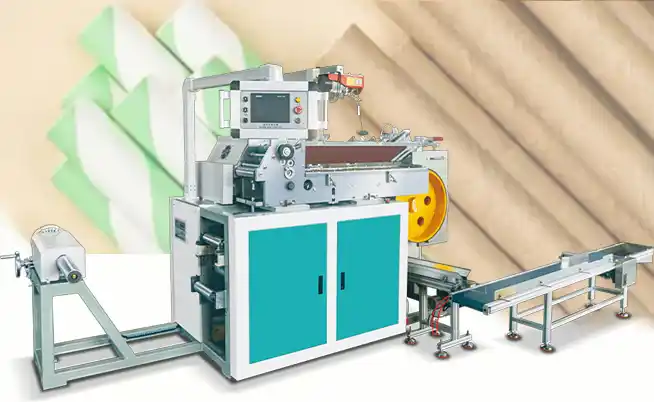
The Role of Your Paper Stick Making Machine
Your paper stick machinery product series overview determines the diameter range and precision you can achieve. Servo-driven systems generally maintain tighter tolerances (±0.05–0.1 mm) than mechanical drives (±0.1–0.2 mm), as discussed in our drive system comparison. However, even the most precise machine cannot compensate for incorrect diameter specification at the outset.
Standard Diameter Ranges by End-Use Application
Paper sticks serve three primary industries: confectionery/food, daily chemicals (personal care), and healthcare/medical. Each industry has established diameter conventions based on decades of equipment standardization.
Application Category 1: Confectionery and Food Sticks
This category includes lollipop sticks, cake pop sticks, dessert sticks, coffee stirrers, and candy applicators.
| Diameter Range | Typical Applications | Key Requirements |
|---|---|---|
| 2.5 – 3.0 mm | Standard lollipops, small candy sticks | Smooth surface; food-grade materials |
| 3.0 – 3.5 mm | Premium lollipops, cake pops | Higher rigidity for heavier candy |
| 3.5 – 4.0 mm | Extra-large lollipops, frozen confectionery | Maximum strength; often flat or shaped ends |
| 4.0 – 6.0 mm | Coffee stirrers, dessert spoons (stick format) | Heat resistance for hot beverages |
Industry context: Research published in the Journal of Food Engineering (Vol. 315, 2022) indicates that consumer preference for lollipop stick rigidity correlates positively with perceived product quality—meaning thicker sticks (≥3.0 mm) are associated with premium positioning.
Diameter tolerance expectation: ±0.1 mm for automated filling lines; ±0.2 mm acceptable for manual insertion.
Application Category 2: Daily Chemical and Personal Care Sticks
This category includes cotton swab sticks, cosmetic applicators, fragrance diffuser sticks, and household cleaning product sticks.
| Diameter Range | Typical Applications | Key Requirements |
|---|---|---|
| 2.0 – 2.5 mm | Standard cotton swabs (single tip) | Consistent roundness; low glue residue |
| 2.5 – 3.0 mm | Double-tip cotton swabs, cosmetic applicators | Smooth surface for tip attachment |
| 3.0 – 4.0 mm | Fragrance diffuser sticks, ear curettes | Even absorption for oils; visual consistency |
| 4.0 – 5.0 mm | Household cleaning sticks (e.g., swabs for electronics) | Rigidity for mechanical cleaning action |
A 2024 market analysis by the European Personal Care Association (EPCA) noted that the shift from plastic to paper in cotton swab production has accelerated across EU member states following the Single-Use Plastics Directive. Manufacturers now require paper sticks that maintain straightness within 0.5 mm over 75 mm length—a specification that demands precision winding.
Diameter tolerance expectation: ±0.1 mm for automated swab-tipping machines; ±0.15 mm for manual assembly.
Application Category 3: Medical and Healthcare Sticks
This category includes medical applicators, tongue depressors (stick format), swab sticks for specimen collection, and pharmaceutical mixing sticks.
| Diameter Range | Typical Applications | Key Requirements |
|---|---|---|
| 2.0 – 2.5 mm | Fine-tip medical applicators, otic swabs | Sterilization compatibility; smooth surface |
| 2.5 – 3.5 mm | Standard medical swabs, specimen collection | Breakpoint consistency; no splintering |
| 3.5 – 5.0 mm | Tongue depressors (cylindrical), mixing sticks | High rigidity; medical-grade certification |
| 5.0 – 6.0 mm | Specialty applicators, throat swabs | Extended length options; visual inspection markers |
Critical regulatory context: Guidance from the U.S. Food and Drug Administration (FDA) under 21 CFR Part 880 requires that medical swab sticks demonstrate no delamination or surface roughness that could retain biological material. This places stringent requirements on both diameter consistency and surface finish—typically demanding tolerances of ±0.05 mm for Class I medical devices.
Diameter tolerance expectation: ±0.05–0.1 mm; documented quality control required.

Diameter Decision Framework: Five Questions to Ask Yourself
Before finalizing your paper stick diameter specifications, work through these five questions:
Question 1: What is your customer’s existing equipment?
If your buyer uses automated filling or tipping machinery, they likely have fixed tooling designed for a specific diameter range. Ask for their acceptance specifications before setting your target.
Why this matters: Retooling a lollipop-forming machine for a different stick diameter can cost $5,000–15,000 and requires a line shutdown. Buyers with established operations will rarely change diameter for a new supplier.
Question 2: What is the stick’s functional requirement?
Different applications place different demands on stick strength and flexibility:
-
Lollipops: Need rigidity to hold candy weight without bending
-
Cotton swabs: Need flexibility at the tip ends but rigidity at center
-
Fragrance diffusers: Need consistent porosity for oil absorption
-
Medical applicators: Need breakpoint control for safety features
Question 3: What paper grade will you use?
Paper density and thickness affect final stick diameter. A given machine setting may produce different actual diameters with 120 gsm paper versus 180 gsm paper.
Practical step: Run test batches with your intended paper grades before committing to diameter specifications. Measure actual output across multiple production runs.
Question 4: What is your quality control capability?
Tighter tolerances require more sophisticated measurement and rejection systems. Can your production line:
-
Measure diameter continuously (not just sample-based)?
-
Reject out-of-tolerance sticks automatically?
-
Document diameter data for customer certification?
Question 5: What is your target market’s regulatory environment?
Medical and food-contact applications require documented traceability. Some markets also impose material composition requirements that indirectly affect diameter consistency.
For a practical example of how these questions apply to a daily chemical manufacturer transitioning from plastic to paper swab sticks, review the paper stick machine application case study.
Diameter Tolerance Classes: Matching Precision to Price
Not all applications require the same level of precision. Here’s a framework for matching tolerance class to market segment:
| Tolerance Class | Deviation Range | Typical Applications | Price Positioning |
|---|---|---|---|
| Premium | ±0.05 mm | Medical devices; premium confectionery; export to regulated markets | Highest |
| Standard | ±0.10 mm | Standard cotton swabs; national-brand lollipops | Mid-range |
| Economy | ±0.15–0.20 mm | Industrial applications; private label; price-sensitive buyers | Lowest |
Decision rule: Do not over-specify. If your customer’s equipment can accept ±0.15 mm variation, producing to ±0.05 mm adds cost without adding value. Conversely, under-specifying for medical or automated applications risks line stoppages and contract penalties.
According to benchmarking data from the American Society for Quality (ASQ), manufacturers who match tolerance class to actual customer requirements reduce production costs by 12–18% compared to those who default to the tightest possible tolerance regardless of need.
Common Diameter Specification Mistakes and How to Avoid Them
Mistake 1: Assuming “Standard” Means the Same Across Industries
A “standard” cotton swab stick (approx. 2.5 mm) is different from a “standard” lollipop stick (approx. 3.0 mm). Always confirm dimensions in millimeters, not categories.
Prevention: Create a specification sheet with exact diameter, tolerance, and measurement method (e.g., “2.8 mm ±0.1 mm measured at three points along stick length”).
Mistake 2: Ignoring Environmental Factors
Paper sticks absorb ambient moisture, which can cause diameter swelling of 0.05–0.15 mm in humid conditions. What passes inspection in a dry factory may fail at a coastal customer’s facility.
Prevention: Measure diameter under conditions that match your customer’s receiving and storage environment. Include humidity range in your specification.
Mistake 3: Focusing Only on Diameter While Ignoring Roundness
Two sticks can have the same average diameter but very different roundness (ovality). Oval sticks jam more frequently than perfectly round ones.
Prevention: Specify both diameter (average) and roundness (maximum minus minimum measurement at same cross-section).
How to Communicate Diameter Specifications to Customers
When responding to inquiries about your paper stick capabilities, provide clear, documented answers to these specification points:
-
Nominal diameter (e.g., 3.0 mm)
-
Tolerance range (e.g., ±0.1 mm)
-
Measurement method (e.g., laser micrometer at three points, 95% confidence interval)
-
Roundness limit (e.g., max deviation 0.05 mm)
-
Environmental conditions (e.g., measured at 23°C, 50% RH)
For detailed technical specifications of how different paper stick making machine configurations achieve various diameter ranges and tolerances, review the product documentation.
From Diameter Selection to Full Production Planning
You’ve now established a clear framework for matching paper stick diameter to your target end-use applications. The key takeaways:
-
Confectionery typically uses 2.5–4.0 mm, with 3.0 mm being the most common standard
-
Daily Chemical typically uses 2.0–4.0 mm, with precision requirements varying by automation level
-
Medical typically uses 2.0–6.0 mm, with the tightest tolerances (±0.05 mm) and regulatory documentation
-
Match tolerance class to actual customer requirements—over-specifying wastes money; under-specifying risks rejections
-
Document your specifications clearly, including measurement methods and environmental conditions
Once you’ve selected your target diameter range and tolerance class, the next logical step is confirming that your chosen machine configuration can reliably achieve those specifications across your planned production volume and paper grades.
For a comprehensive review of technical specifications—including supported diameter ranges for each machine type—consult the paper stick machine machinery product series overview.
Related Reading
Continue building your paper stick production expertise with these complementary guides:
-
Servo vs Standard Drive Systems for Paper Stick Making Machines
-
Adhesive Systems for Paper Sticks: Water-Based vs. Hot Melt for Food-Contact Safety
-
Raw Material Specifications for High-Speed Paper Stick Winding Machines
-
Quality Control Checklist for Medical-Grade Paper Stick Production
-
Paper Stick Length Selection Guide: Matching Specifications to Packaging Requirements