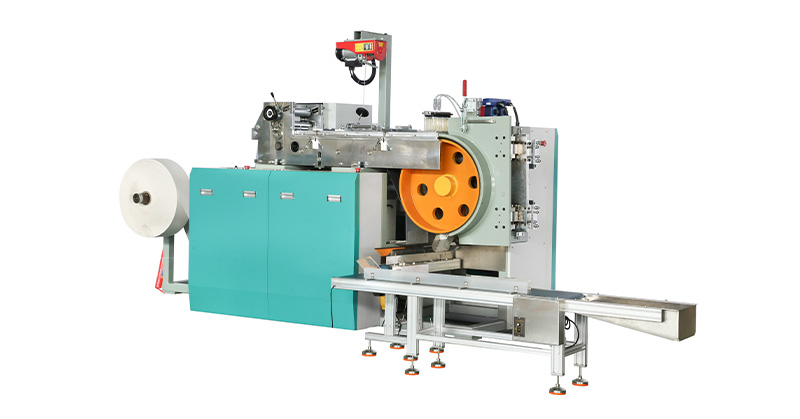
You’ve secured takeaway contracts, your order volume is climbing, and now your manual box-forming process—or your outdated equipment—is becoming the bottleneck. Every jam means delayed shipments. Every inconsistent fold means customer complaints. But rushing to buy a paper lunch box machine without a structured evaluation can lock you into the wrong speed class, the wrong glue system, or a machine that can’t handle the box styles your buyers demand.
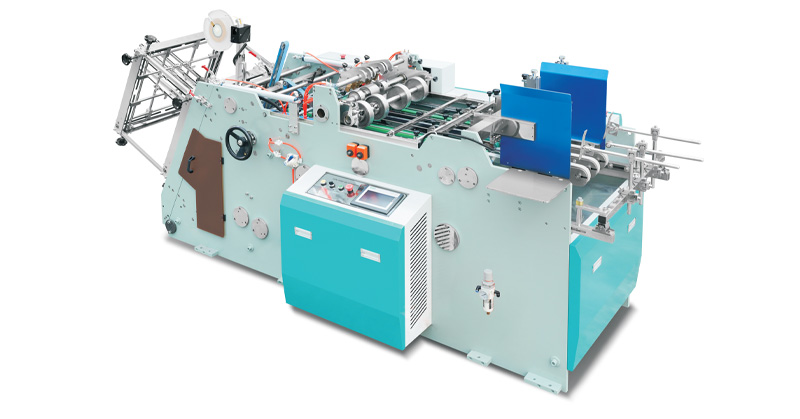
This guide walks you through four technical decision layers—output planning, station configuration, drive precision, and adhesive method—so you can match equipment capabilities to your actual takeaway production reality. No product pitches. Just decision criteria.
First, Match Machine Output to Your Peak Demand, Not Your Average Volume
The most common mistake takeaway packaging producers make is selecting a paper lunch box machine based on monthly average orders. That leaves you crippled during peak seasons (holidays, promotional events, new restaurant chain launches).
Instead, calculate your required pieces per minute (ppm) using this approach:
-
Identify your highest single-day volume from the past 12 months.
-
Divide that number by your planned operating hours per day (minus breaks and material reloading).
-
Add a 20–30% buffer for unexpected order spikes or machine slowdowns during complex box styles.
Why this matters to your operation:
An undersized machine forces overtime, expedited shipping costs, and rejected rush orders. An oversized machine ties up capital in idle capacity and increases energy consumption unnecessarily.
According to a 2023 operational efficiency report by the Food Packaging Association, nearly 40% of small to mid-sized takeaway box producers experience at least one “capacity trap” within 18 months of equipment purchase—where actual demand exceeds rated machine output by more than 25%.
Once you have your target ppm range, you can evaluate whether a single-station or dual-station configuration makes sense. For a closer look at how different output tiers are structured across a complete equipment line, review the paper lunch box machine series designed for growing takeaway operations.
Single Station vs Dual Station – Understanding the Real Trade-Off
Many buyers assume dual station automatically means “twice as good.” That oversimplification ignores setup complexity, changeover time, and the types of boxes you actually run.
| Comparison Factor | Single Station (e.g., up to ~300 ppm) | Dual Station Independent (e.g., 120–600 ppm combined) |
|---|---|---|
| Output per minute | Lower per line, but predictable | Higher total output, but requires two feeding systems |
| Box style flexibility | Run one style at a time | Run two different box styles simultaneously (different sizes/shapes) |
| Changeover time | Faster (one tooling set) | Slower if both stations need reconfiguration |
| Ideal takeaway scenario | Single high-volume SKU (e.g., same burger box for a chain) | Multiple SKUs per shift (e.g., boat-shaped + flip-top boxes) |
| Operator attention | Lower | Higher (two material feeds, two quality checks) |
Decision rule for takeaway producers:
-
Choose single station if 80%+ of your orders are one or two box sizes and your peak ppm requirement stays under 250–300.
-
Choose dual station independent operation if you frequently run small batches of multiple box styles (e.g., 5,000 flip-top + 3,000 window boxes in the same shift) or your total required output exceeds 350 ppm.
A 2024 benchmarking study by Technical University of Munich’s Packaging Technology Group found that improper station selection accounted for 28% of reported “changeover downtime inefficiencies” among European food packaging SMEs. The study emphasized that dual-station machines only deliver ROI when production schedules are intentionally designed to leverage parallel runs.
For takeaway operations serving diverse clients (fast food, bakeries, meal prep services), the ability to run two box types simultaneously often justifies the additional complexity. Explore typical application scenarios like flip-top boxes and boat-shaped boxes to see how station flexibility aligns with real order patterns.
Servo vs Mechanical Drive – Precision That Affects Your Waste Rate
Mechanical drive systems have been the industry workhorse for decades. Full-servo systems are newer, more expensive, and often over-specified for simpler box designs. But the gap matters most when your takeaway boxes require tight tolerances—for example, lock-bottom boxes that must assemble without glue, or window boxes where the film alignment must be millimeter-accurate.
| Drive Type | Typical Precision | Impact on Your Production |
|---|---|---|
| Mechanical (cam/gear) | ±0.3–0.5mm | Acceptable for standard fold-over and burger boxes. Lower upfront cost. |
| Full servo | ±0.1mm | Essential for lock-bottom, complex folds, or boxes with printed registration marks. Higher cost, lower scrap rate on complex jobs. |
The practical question for your team:
Do your box designs include interlocking structures (e.g., lock-bottom), tight folding tolerances, or precise glue pattern placement? If yes, servo precision reduces rejected units. If you primarily run simple fold-over or boat-shaped boxes for basic takeaway meals, mechanical drive is often sufficient.
Data from ASTM International (D642 – Standard Test Method for Determining Compressive Resistance of Shipping Containers) indicates that inconsistent fold angles—often caused by drive imprecision—can reduce box stacking strength by up to 22%, for takeaway operations shipping stacked boxes to multiple locations, that translates directly to damaged goods.
Cold Glue vs Hot Melt – Operating Cost and Food Safety Trade-Offs
Adhesive selection is rarely prioritized during machine shopping, yet it becomes a daily operational expense and a food safety compliance issue.
Cold glue (water-based, food-grade):
-
Lower adhesive cost per box
-
No heated components (reduces energy use and maintenance)
-
Requires drying time (affects stacking/handling immediately after forming)
-
FDA-compliant food-grade options widely available
Hot melt (thermoplastic):
-
Sets instantly (faster downstream handling)
-
Higher material cost
-
Requires heated tanks and nozzles (energy, burn risk, maintenance)
-
Some formulations not suitable for direct food contact applications
What this means for takeaway production:
If you form boxes and immediately pack them into cartons (no dwell time), hot melt’s instant set is operationally convenient. If you have even 5–10 seconds of conveyor time before stacking, cold glue reduces your recurring material cost significantly. For food-contact boxes (directly holding hot or greasy takeaway meals), verify that your chosen adhesive meets local food contact regulations—cold glue is more commonly available in certified food-safe formulations.
Research published in Packaging Technology and Science (Vol. 36, 2023) comparing adhesive methods for paper food containers found that cold glue systems had a 34% lower total cost of ownership over three years in high-volume operations (over 2 million boxes/month), despite requiring longer curing infrastructure.
Many modern paper lunch box machines offer both options. If your takeaway clients include school meal programs or healthcare facilities, cold glue’s food safety profile may become a selling point for your own customers.
Real Takeaway Scenarios – Which Machine Configuration Fits?
Scenario A: High-volume, single-client burger chain
-
Box style: Consistent flip-top burger box, one size
-
Daily volume: 80,000+ boxes
-
Priority: Maximize uptime, minimize changeovers
-
Recommended focus: Single station, mechanical drive, hot melt (for immediate packing)
-
Key metric: Pieces per minute at stable operation
Scenario B: Multi-client meal prep service
-
Box styles: Boat-shaped (salads), lock-bottom (entrees), fold-over (sandwiches)
-
Batch sizes: 5,000–10,000 per style
-
Priority: Fast changeovers, ability to run two styles in one shift
-
Recommended focus: Dual station independent operation, full servo (for lock-bottom precision), cold glue (cost savings across variable runs)
Scenario C: High-end bakery with window boxes
-
Box style: Window boxes requiring film alignment
-
Volume: Moderate (20,000–30,000/month)
-
Priority: Presentation quality, low scrap rate on printed materials
-
Recommended focus: Single station with servo precision, cold glue (cleaner application for window alignment)
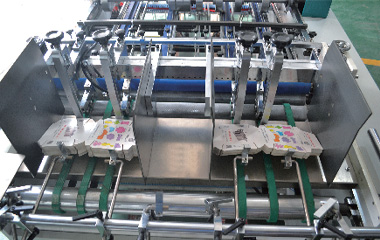
For a deeper look at how machine capabilities map to specific box types—including window box registration requirements and lock-bottom forming challenges—review the paper lunch box machine applications overview.
Next Step – From Selection Criteria to Model Comparison
You now have a decision framework based on output planning, station configuration, drive precision, and adhesive method. The next logical step is comparing how specific machine models within a manufacturer’s line address these four dimensions—particularly the trade-offs between single-station simplicity and dual-station flexibility, or between mechanical and full-servo drive systems.
Before evaluating individual models, create a one-page scorecard for your takeaway operation listing:
-
Your peak ppm requirement (with buffer)
-
The 2–3 box styles that represent 80% of your volume
-
Whether any of those styles require lock-bottom or registered printing
-
Your downstream handling speed (immediate packing vs. conveyor dwell time)
With that scorecard, you can confidently compare technical specifications across suppliers without being overwhelmed by marketing claims.
To continue building your evaluation expertise, explore this related guide on adhesive method comparison for food box production lines, which dives deeper into cold glue vs. hot melt operating economics and food safety compliance across different jurisdictions.
Related Reading
-
Paper Box Machine Buying Guide: 7 Questions Before You Invest
-
Cold Glue or Hot Melt for Your Paper Lunch Box Line: A Cost and Compliance Comparison
-
How to Match Paper Lunch Box Machine Specifications to Fast-Food vs Meal Prep vs Bakery Clients
-
Understanding Servo Precision: When ±0.1mm Actually Matters for Box Strength
-
Dual-Station Paper Box Machine ROI: Calculating Changeover Time Savings for Multi-SKU Takeaway Operations