Starting a paper straw manufacturing business begins with a product decision, not a machine purchase. The sequence that works: define the straw you will sell, confirm the paper and adhesive that meet your market’s requirements, calculate the output your orders actually demand, and only then select the equipment configuration that fits. This guide walks through that sequence and flags the mistakes that most often derail a new production line before it reaches steady output.
1. Define the Product Before the Machine
A paper straw is not a single product. Diameter, length, wall thickness, layer count, and whether the straw is wrapped or unwrapped all change the production requirement. A 6mm unwrapped straw for a local café supply arrangement is a different business from a 12mm wrapped straw for a bubble tea chain, and different again from a three-layer heat-resistant straw for hot beverage export.
The practical starting point is the customer conversation. If you have a prospective buyer, get the specification: diameter, length, layer configuration, and packaging format. If you do not yet have a buyer, start with the most common specification in your target market and plan for changeover capability rather than assuming one fixed product will carry the business.
A common early mistake is buying a machine first and then looking for products it can make. The machine’s capabilities should follow the product plan, not the other way around.
2. Equipment: What a Production Line Actually Includes
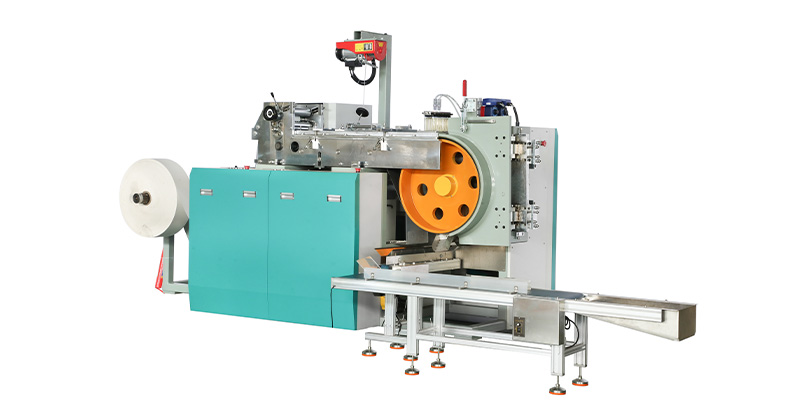
The forming machine is the center of the line, but it is not the whole line. A paper straw production setup typically involves several stages, and each stage creates an equipment decision.
The forming machine. This is the core unit that feeds paper, applies adhesive (or forms without adhesive in a glue-free configuration), winds the layers into a tube, and cuts to length. Hongshuo’s paper straw machine is designed for automated operation with a touchscreen HMI, allowing operators to adjust straw length and diameter and monitor production without specialized engineering support. The machine handles the sequence from paper feeding through gluing, rolling, cutting, and counting with minimal manual intervention.
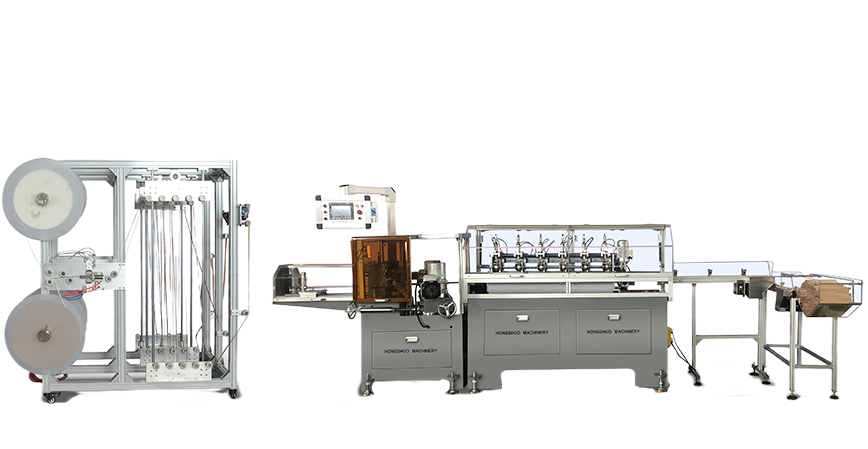
Paper preparation. You can purchase pre-slit paper rolls in the correct width for your straw, or buy wider rolls and slit them in-house. Pre-slit material simplifies the setup and removes a preparation stage. In-house slitting gives more control over strip width but requires additional equipment and floor space. For a new business, pre-slit paper from a reliable supplier is usually the simpler starting point.
Downstream handling. Forming produces loose straws. If your product requires individual wrapping, grouped packing, or counting, those are separate equipment or manual operations. A common bottleneck in new paper straw lines is not the forming machine but the collection and packing stage running slower than the former can produce. Plan the downstream step at the same time as the forming machine, not after.
Utilities and factory conditions. Confirm the electrical configuration for your destination before ordering. Compressed air, ventilation, and floor space requirements should be verified against the specific machine model rather than assumed.
3. Materials: Paper, Adhesive and Food-Contact Requirements
Paper. Paper straw production uses food-grade paper selected for stiffness, forming behavior, and liquid resistance. The paper grade and GSM affect how the straw winds, how the seam bonds, and how the finished straw performs in liquid. If your target market requires specific food-contact documentation, the paper specification should be confirmed against those requirements before production begins, not after.
Adhesive. In glued forming, the adhesive must be suitable for food-contact use and matched to the forming method. For hot beverage applications, the adhesive’s heat resistance becomes a quality factor. Glue-free forming eliminates the adhesive line entirely, which may suit buyers targeting adhesive-free product positioning or markets that screen for adhesive content.
Material trial. A machine demonstration with the supplier’s paper shows how the machine operates. A trial with your paper shows whether your material produces the straw you need to sell. For a new business without an established paper source, this trial is the most reliable way to avoid a machine that runs well in the factory but not with your material. The notes on selecting eco-friendly paper straw equipment cover the comparison factors in more detail.
4. Capacity Planning: Start From Orders, Not Speed
Paper straw machine capacity is often quoted as meters per minute or pieces per minute. Neither figure is your production plan until you apply it to your actual product and operating conditions.
The calculation starts with demand. How many straws do you need to produce per day, per week, or per month to serve your target customers? If you have a purchase order or a letter of intent, use that volume. If you are planning for a market without confirmed orders, use a conservative estimate and plan for the ability to add shifts or capacity later rather than buying for a demand level you have not yet validated.
Once you have a daily output target, account for operating hours and an efficiency factor. A machine does not run at its rated speed for the entire shift; startup, adjustment, material changes, and minor stops reduce effective output. The efficiency factor depends on operator experience and changeover frequency, and should be applied conservatively when planning a new operation.
The figure that matters is stable output with your straw specification and your paper, not the machine’s maximum speed. A slower machine that holds quality consistently serves a new business better than a faster machine that requires frequent adjustment and generates waste. For the mechanics of how paper roll specifications interact with output, the notes on paper roll specifications and paper straw machine output provide the underlying detail.
5. Common Mistakes When Starting Production
Buying capacity you cannot fill. A high-speed machine running at low utilization carries the same capital cost as one running at full output. If your order pipeline is not yet confirmed, a configuration that matches your realistic starting volume is a better first step than one built for demand you hope to reach.
Skipping the material trial. The paper you plan to use may not behave the same as the paper used in a machine demonstration. A trial with your actual material before purchase identifies forming or bonding issues while there is still time to adjust the specification or the machine configuration.
Underestimating the downstream stage. A forming machine that produces straws faster than they can be collected, counted, or packed creates a bottleneck that reduces the effective capacity of the whole line. Plan collection and packing from the beginning.
Treating “eco-friendly” as a complete product claim. Paper straws are marketed as an alternative to plastic, but the finished product’s suitability depends on the paper, adhesive, coating, and the specific requirements of the market where it will be sold. Buyers in export markets increasingly ask for documentation on food-contact suitability and material composition. A production plan that includes these requirements from the start avoids rework later.
Assuming one machine will handle every product. If your business plan includes multiple straw diameters or lengths, confirm how the machine handles changeover. The time required to switch between specifications affects your effective capacity and your ability to serve a mixed order book. The available paper straw machine configurations cover forming and packing options for different production targets.
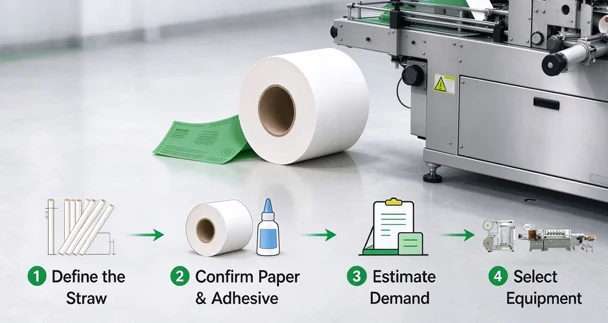
6. A Practical Starting Sequence
Step 1: Define the straw. Diameter, length, layer configuration, wrapped or unwrapped, and the beverage application.
Step 2: Confirm the paper and adhesive. Food-grade paper specification and adhesive suitability for the intended use. Test with the machine supplier if the material source is new.
Step 3: Estimate demand realistically. Use confirmed orders or conservative market estimates. Do not plan capacity around an unvalidated demand figure.
Step 4: Select the machine configuration. Match the forming machine’s stable output to your demand estimate, and plan the downstream handling at the same time.
Step 5: Verify before committing. Material trial, sample approval criteria, and factory acceptance testing scope should be agreed before the order is finalized.
7. FAQ
What equipment is needed to start paper straw production?
A forming machine is the core unit. Depending on the product, you may also need paper slitting equipment (if not buying pre-slit rolls), collection or counting equipment, and packing equipment for wrapped or grouped straws.
How much does it cost to start a paper straw business?
Cost depends on machine configuration, capacity, downstream equipment, and factory conditions. A supplier can provide a quotation based on your defined straw specification and output target, but a meaningful budget should include the full line and installation, not only the forming machine.
What paper is used for paper straws?
Food-grade paper selected for stiffness, forming behavior, and liquid resistance. The grade and GSM should match the straw’s intended use and the machine’s forming capability. Confirm food-contact requirements for your target market before production.
Can one machine produce different straw sizes?
Many automatic models support a range of diameters and cutting lengths through parameter adjustment. The practical range and changeover time should be confirmed for your product mix.
How do I calculate how many straws I can produce per day?
Start with the machine’s stable output at your straw specification and paper, then multiply by operating hours and apply an efficiency factor for startup, changeover, and minor stops. The machine’s maximum speed is not the figure to use for production planning.
Conclusion
Starting a paper straw manufacturing business works best when the sequence runs from product to paper to capacity to machine, not the reverse. Define the straw you will sell, confirm the material that meets your market’s requirements, estimate demand from real or conservative figures, and select equipment that matches your realistic starting volume. The material trial before purchase is not a formality; it is the step that confirms your paper and your machine work together.
If you are working through the equipment decision, the available paper straw machine configurations cover forming and packing options for different production targets. For a look at how one production project addressed heat resistance and export quality requirements, the paper straw machine case in Vietnam documents the testing and approval process. Contact our team to discuss your production goals and get a tailored solution.