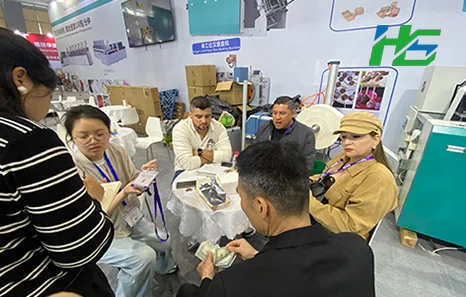
Customer Location: Philippines, Southeast Asia
Industry: Non‑woven bag & paper bag manufacturing — expanded into paper box production
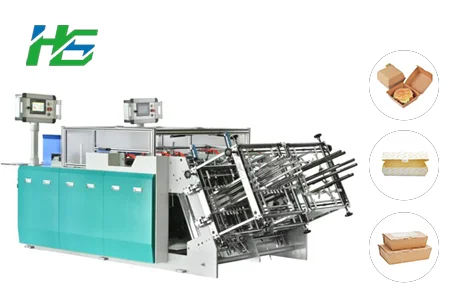
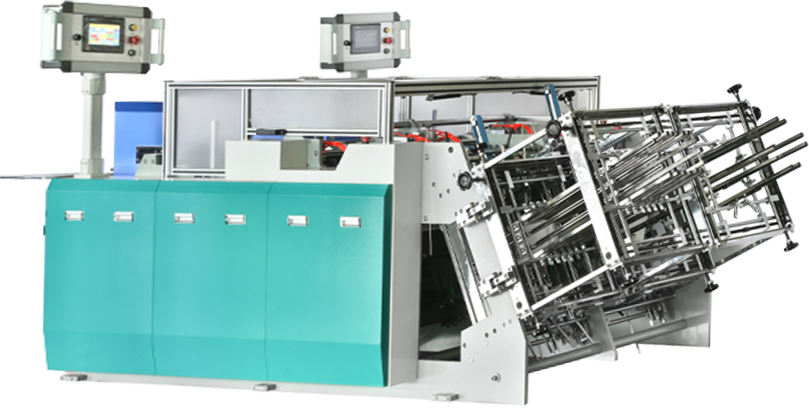
Equipment Purchased: Four units of paper lunch box forming machines (HS Series)
Publish Date: Jun 2026
Executive Summary
This case study features a Philippine packaging manufacturer with an established reputation and strong market presence. Their company specializes in non‑woven bags and paper bags — and this was their first time entering the paper box industry.
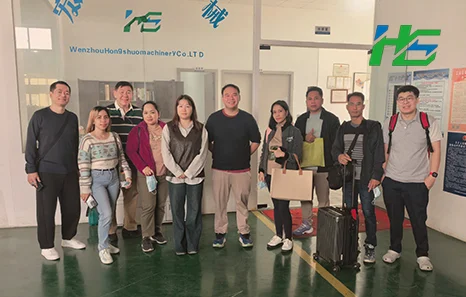
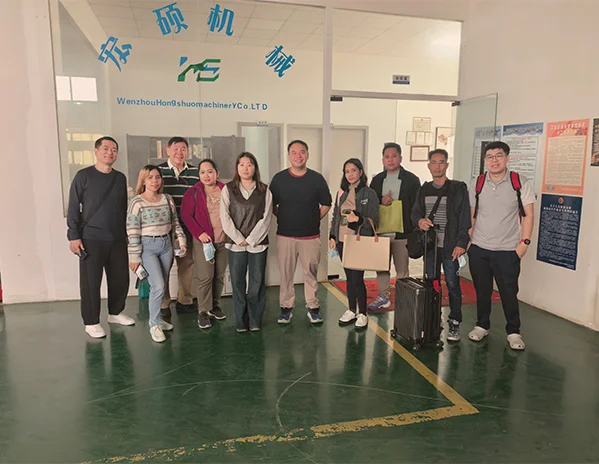
They purchased four units of paper lunch box forming machines from Hongshuo Machinery. After the initial equipment delivery and installation, they came to our factory in person to discuss machine debugging solutions, demonstrating their commitment to quality production and long‑term partnership.
This article explores the Philippine paper packaging market, the customer‘s strategic expansion journey, the technical advantages of Hongshuo’s paper lunch box forming machines, and how a trusted supplier relationship supports cross‑category business growth.
1. Market Background: Why the Philippine Paper Packaging Industry Is Booming
1.1 Market Size & Growth Trajectory
The Philippine paper packaging market has entered a sustained growth phase driven by multiple structural factors. According to Grand View Research, the market generated a revenue of USD 2,418.9 million in 2025 and is expected to reach USD 3,918.7 million by 2033, growing at a compound annual growth rate (CAGR) of 6.2% from 2026 to 2033.
Within the recycled paper segment — which is also the fastest‑growing grade — demand continues to accelerate as sustainability becomes a mainstream consumer expectation.
1.2 Key Drivers: Plastic Bans, E‑Commerce, and Sustainability
Three major forces are reshaping the Philippine packaging landscape:
Plastic Regulation & Taxation. Multiple local governments have implemented bans on single‑use plastics. In Quezon City, Executive Order No. 3, Series of 2025, prohibits the use of plastic bags, packaging, styrofoam, disposable dishware, PET bottles, and plastic and paper cups in all city‑owned facilities. In Baguio City, the “Plastic and Styrofoam‑Free Baguio City Ordinance” (Ordinance 35, Series of 2017) bans single‑use plastic cups, bottles, disposable cutlery, plates, food containers, meal boxes, straws, and styrofoam packaging. At the national level, the Department of Finance (DOF) has proposed an excise tax on single‑use plastics, projected to generate ₱58 billion over five years of implementation. These regulatory pressures are compelling businesses to transition to paper‑based alternatives.
E‑Commerce & Food Delivery Surge. E‑commerce continues to play a central role in driving demand for innovative and flexible packaging solutions in the Philippines. The Philippine packaging industry is expected to record single‑digit growth, with e‑commerce and food delivery platforms as key contributors.
Consumer Preference for Sustainability. Citing data from NielsenIQ, Informa Markets reported that 78% of Philippine consumers prefer brands that prioritize sustainable packaging, while 65% are willing to pay a premium for eco‑friendly products. This consumer shift is accelerating the adoption of paper‑based food packaging across retail and food service sectors.
1.3 Paper Bags as a Complementary Market
The customer’s existing expertise lies in paper bag production — a market that is itself experiencing robust growth. According to 6Wresearch, the Philippine paper bags market is anticipated to experience an exponential growth rate of 15.04% by 2027. The transition of supermarkets, food chains, and fashion retailers to paper bags — often made from recycled paper — further supports this expansion.
For a manufacturer already established in paper bags, the logical next step is to capture additional value by integrating paper box production into its product portfolio. This customer recognized exactly that opportunity.
2. Customer Profile: An Established Philippine Packaging Manufacturer
2.1 Who They Are
The customer is a packaging manufacturer based in the Philippines with a certain reputation and established strength in the local market. Their company specializes in two core product categories:
-
Non‑woven bags — reusable, eco‑friendly shopping bags widely adopted in retail and promotional applications
-
Paper bags — kraft paper bags, white paper bags, and customized paper carrier bags for food, retail, and gift packaging
Having built a solid business in these two segments, the customer identified an emerging opportunity: the growing demand for paper food boxes driven by plastic bans and the rapid expansion of food delivery services.
2.2 The Strategic Decision: Entering the Paper Box Industry
This would be their first time entering the paper box industry. Unlike their established bag production lines, paper box manufacturing requires different forming mechanisms, precision glue application systems (cold glue or hot melt), mold change flexibility for different box shapes and sizes, and higher output speeds to compete with existing paper packaging suppliers.
Rather than expanding with untested local suppliers, the customer chose to source equipment from Hongshuo Machinery — a decision based on the quality and reliability of our paper lunch box forming machines.
2.3 The Purchase: Four Machines
The customer purchased four units of paper lunch box forming machines as their initial equipment package to launch their paper box production line.
This multi‑unit purchase reflects not only the scale of their ambition but also their confidence in our equipment‘s performance and reliability. When a customer buys four machines at once, they are making a strategic commitment — not a trial order.
3. Core Challenges Faced by the Client
As a traditional non‑woven and paper bag manufacturer venturing into the paper box field for the first time, the enterprise encountered multiple pain points restricting production development. These challenges are also common difficulties for most cross‑industry packaging enterprises:
Lack of Professional Experience in Paper Box Production
The team was proficient in the production technology of non‑woven fabrics and paper bags, but had no operational experience with professional paper box-forming equipment. They were unfamiliar with mold replacement, glue system adjustment, paper feeding parameter setting, and finished product quality inspection, and urgently needed systematic equipment debugging and technical guidance.
High Requirements for Multi‑Scenario Flexible Production
The customer‘s existing orders covered daily chemical packaging, food outer packaging, and takeaway food boxes. This required the paper box machine to support the production of multiple box types — including various shapes common in food packaging — putting forward strict demands on the equipment’s mold switching efficiency and production flexibility.
Strict Eco‑Friendly and Export Compliance Standards
Most of the customer‘s products are supplied to local catering brands and export merchants. All paper boxes need to meet international food safety and environmental protection standards, requiring the adhesive residue, raw materials, and production technology to pass international certifications. This raised higher requirements for the equipment’s glue system and craftsmanship.
Stable Operation and Low Failure Rate Requirements
Philippine local factories operate on continuous production schedules. Once equipment breaks down, it directly affects order delivery. The customer hoped the new paper box machines would feature a sturdy structure, low vibration, low failure rate, and simple daily maintenance to adapt to long‑term uninterrupted production.
Difficulty in Raw Material Matching
The enterprise was familiar with paper bag raw materials but lacked experience in selecting cardboard, coated paper, and corrugated paper (200–600g/㎡) for paper boxes. They needed equipment with strong adaptability to different paper materials to reduce the scrap rate.
4. The Factory Visit: Partnering on Debugging Solutions
After the initial equipment delivery and installation, the customer encountered some operational fine‑tuning needs common to any new production line entry. Rather than attempting to resolve these issues remotely or through local technicians only, the customer came to the Hongshuo factory in person to discuss machine debugging solutions directly with our engineering team.
This factory visit served multiple purposes:
-
Hands‑on debugging collaboration: Our engineers worked alongside the customer‘s technical team to identify and resolve adjustment needs specific to their paper materials and box designs
-
Comprehensive training: The customer received in‑depth training on machine operation, preventive maintenance, glue system calibration, and die change procedures
-
Direct access to engineering expertise: By coming to our factory, the customer gained access to our design and manufacturing engineers — the people who built the machines — rather than working through intermediary channels
-
Strengthened partnership: The visit transformed a transactional supplier relationship into a true technical partnership
This level of engagement — a customer traveling to the supplier’s facility for collaborative problem‑solving — is exactly how long‑term business relationships are built.
5. Customized Solutions by Hongshuo
Combined with the customer‘s cross‑industry transformation attributes, production demands, and on‑site actual conditions, Hongshuo’s technical team launched a one‑stop customized solution integrating equipment matching, on‑site debugging, technical training, and after‑sales guarantee.
5.1 Reasonable Equipment Model Matching
According to the customer‘s production scale and diversified box type demands, we matched mainstream models from Hongshuo’s paper lunch box machine series. The series includes multiple models optimized for different production scenarios:
-
Single‑station models: Cost‑effective solutions for small to medium production volumes. Ideal for businesses entering the paper box market or those running limited box varieties.
-
High‑speed single‑station models: Advanced machines with gear mechanical drive and servo motor dual drive systems for ultra‑low noise and minimal vibration.
-
Dual‑lane models (e.g., HS-1200): Double‑lane full servo systems for higher output requirements, with energy‑efficient servo drives and voltage tolerance for regions with unstable power grids.
All equipment adopted a thickened steel main structure to ensure stable operation and effectively reduce vibration and noise during high‑speed production. The core transmission components were precisely processed, equipped with internationally renowned brand electrical accessories, significantly improving the overall reliability of the equipment. The paper feeding part featured shock absorbers for accurate paper feeding, effectively reducing the material scrap rate and solving raw material adaptation problems for novice producers.
5.2 Dual Glue System to Meet Environmental and Export Demands
All four sets of machines were equipped with a standard food‑grade cold glue system compliant with international safety standards, featuring low adhesive consumption and ultra‑low glue residue — fully meeting the requirements of food contact packaging.
Meanwhile, we reserved hot-melt glue upgrade interfaces for each device. Customers can freely switch glue systems according to domestic orders and export orders, taking into account production costs and product waterproof performance, and easily respond to diversified order demands.
5.3 Whole‑Process On‑Site Joint Debugging & Hands‑On Training
Aiming at the customer‘s pain point of zero experience in paper box equipment operation, Hongshuo arranged senior engineers to conduct one‑on‑one, full‑process on‑site debugging together with the customer’s team during their factory visit:
-
Completed the overall assembly, line connection, and parameter calibration of all four paper lunch box machines to ensure coordinated operation of the whole production line
-
Demonstrated the full operation process, including paper feeding, box forming, gluing, cutting, and finished product output, and taught the setting methods for production speed, paper material specifications, and box size parameters
-
Focused on training rapid mold replacement technology — after professional training, the customer‘s team could complete mold switching between different box types in a short time, realizing flexible production of multiple products
-
Explained daily maintenance, fault investigation, and accessory replacement skills in detail, and provided complete operation manuals and video tutorials to reduce the enterprise’s dependence on external technical personnel
5.4 Compliance Guarantee & Personalized Customization Support
All delivered paper lunch box machines have passed CE and other international certifications, with complete qualification documents to help the customer‘s products smoothly enter local and overseas markets.
In view of the customer’s personalized box type customization demands, Hongshuo provided supporting mold customization services. According to the customer‘s box samples and design drawings, we tailored molds of different specifications to meet the production of special‑shaped paper boxes.
5.5 Complete After‑Sales Service System
We provided a 1‑year free warranty for all equipment, paired with 24/7 global technical support. Relying on Hongshuo’s global service network covering more than 20 countries and regions, local after‑sales personnel can respond quickly when customers encounter problems in subsequent production, ensuring that the production line resumes operation in the shortest time.
6. Operational Results & Value Delivered
After the completion of on‑site debugging and technical training, the four sets of Hongshuo paper lunch box machines were officially put into operation at the customer‘s Philippine factory. The production line has been running stably, and the cross‑industry layout has achieved remarkable results:
Successful Market Entry
The customer has successfully entered the Philippine paper box market. By leveraging their existing sales channels for non‑woven and paper bags, they can now offer a broader packaging portfolio — including paper lunch boxes — to their existing customer base.
This cross‑selling advantage is significant: a restaurant chain already buying paper bags from the customer can now also source paper lunch boxes from the same supplier, reducing procurement complexity.
Smooth Transformation and Rapid Production Capacity Release
Thanks to systematic debugging and training, the customer’s team quickly mastered the operation skills of the paper box equipment. The production line runs efficiently, with production speed stably reaching the standard parameter range of the equipment. It can simultaneously produce various box types, such as burger boxes, takeaway lunch boxes, and gift boxes, and production capacity fully meets order demands.
Qualified Product Quality and Enhanced Market Competitiveness
The products produced by the equipment have smooth surfaces, firm bonding, and no burrs. The cold glue process meets food safety and environmental protection standards. The customer‘s new paper box products have passed local and export quality inspections, relying on high‑quality, eco‑friendly packaging products to win more new customers.
Low Operating Cost and High Return on Investment
The equipment features an energy‑saving servo system, low adhesive consumption, and low scrap rate, effectively controlling overall production cost. The sturdy body and high‑quality core components reduce later maintenance costs and downtime losses, creating stable economic benefits for the enterprise.
Technical Partnership Strengthened
The factory visit for machine debugging solutions solidified the relationship between the customer and Hongshuo. Rather than leaving the customer to resolve operational challenges independently, our engineering team worked directly with them to fine‑tune the machines to their specific paper materials and box designs. This collaborative approach — even after multiple machines had been purchased — is what distinguishes a trusted equipment partner from a mere supplier.
Diversified Business Layout Takes Shape
From single non‑woven bags and paper bags to the simultaneous operation of multiple packaging product lines, the customer has realized business diversification, effectively avoided the operational risks of a single product, and further consolidated its leading position in the local packaging industry.
7. What the Customer Appreciated (Based on Cooperation History)
The customer spoke highly of Hongshuo‘s equipment and services:
*“As a newcomer to the paper box industry, we were once worried about equipment debugging and technical barriers. Hongshuo’s professional on‑site debugging and detailed training helped us solve all difficulties. The equipment runs stably with flexible functions. It is a reliable partner for our business expansion. We will continue to maintain in‑depth cooperation with Hongshuo in subsequent capacity expansion.”
While formal client testimonials are presented above, the customer‘s actions — purchasing four machines and traveling to the factory for collaborative debugging — speak louder than any statement.
8. Case Summary
In the context of the global vigorous development of eco‑friendly paper packaging, more and more traditional packaging enterprises are choosing cross‑industry expansion and diversified operation. For enterprises transforming from non‑woven bags and paper bags to paper box production, professional equipment, targeted debugging services, and systematic technical training are the three core elements for a successful transition.
As a leading manufacturer of eco‑friendly paper lunch box machines, Hongshuo Machinery not only provides high‑efficiency, stable, and internationally certified paper box production equipment, but also relies on rich industry experience and a complete service system to provide turnkey solutions for cross‑industry transformation enterprises — from equipment selection, on‑site debugging, technical training, to after‑sales maintenance.
We help packaging enterprises quickly break through technical barriers, release production capacity, seize the market dividend of green packaging, and realize sustainable profit growth.
9. FAQ – Paper Lunch Box Machines for Philippine Manufacturers
Q: Why is the Philippine paper packaging market growing so fast?
A: The market is being driven by three key factors:
(1) local government bans and proposed national taxes on single‑use plastics;
(2) rapid growth in e‑commerce and food delivery services;
(3) strong consumer preference for sustainable packaging, with 78% of Philippine consumers preferring eco‑friendly packaging options.
Q: What types of paper boxes can Hongshuo machines produce?
A: Hongshuo‘s paper lunch box forming machines can produce a wide range of products, including burger boxes, lunch boxes, dinner boxes, hotdog boxes, cake boxes, french fries boxes, and other paper food containers. With appropriate molds, custom box shapes are also supported.
Q: What’s the difference between cold glue and hot melt glue systems?
A: Cold glue systems are more economical and suitable for most domestic box applications. Hot melt glue creates stronger bonds and is often required for export orders or heavy‑duty applications. Hongshuo machines can be configured for either system — or both — providing production flexibility.
Q: Does Hongshuo provide technical support for customers in the Philippines?
A: Yes. Hongshuo offers comprehensive after‑sales support, including remote technical assistance, spare parts supply, and on‑site training as needed. The customer described in this case visited our factory for hands‑on debugging collaboration — a level of support we provide to serious partners.
Q: I’m also in paper bags and considering expanding into paper boxes. Is this a good move?
A: Yes. The Philippine paper packaging market is growing, and demand for paper food boxes is rising due to plastic bans and food delivery expansion. Adding paper boxes to an existing bag portfolio allows you to offer a more complete packaging solution to your current customers — and capture additional revenue from the same sales channel.
10. Contact Hongshuo – Equip Your Paper Box Production Line
If you are a packaging manufacturer in the Philippines — or anywhere in Southeast Asia — looking to enter or expand in the paper box industry, Hongshuo Machinery can help.
Our paper lunch box machine series includes:
-
Single‑station models for entry‑level and mid‑volume production
-
High‑speed single‑station models for higher throughput with precision forming
-
Dual‑lane models for maximum output and voltage‑tolerant operation
We also provide:
-
Custom mold design and manufacturing based on your box samples
-
Glue system configuration (cold glue, hot melt, or both)
-
Factory‑based training and debugging collaboration
-
CE‑certified equipment for export compliance
-
Spare parts supply and remote technical support
Phone/WhatsApp: +86 13958940849
Email: sales2@wzhongshuojixie.com
Website: www.hongshuo-machine.com