You’re eating a burger from your favorite fast-food chain. The box is sturdy, the lid opens smoothly, and everything stays intact during the journey from restaurant to table. But have you ever wondered how that box was made?
The hamburger box is one of the most common paperboard containers in food service. The global paper lunch boxes market is projected to grow from USD 2.51 billion in 2025 to USD 4.375 billion by 2035, at a CAGR of 5.71%, driven by increasing consumer preference for sustainable packaging solutions. Yet the manufacturing process behind these everyday containers is surprisingly precise—requiring careful coordination of paper handling, adhesive application, forming pressure, and quality control.
This guide walks you through the step-by-step hamburger box manufacturing process, explaining what happens at each stage and why it matters for the final product quality.
Raw Materials: Where It All Begins
Hamburger boxes start as printed and die-cut paperboard blanks. The material typically ranges from 200 to 600 g/m² in weight and can include cardboard, coated paper, or single-wall corrugated paper.
Before entering the forming machine, the blanks are stacked in a feeder. The quality of the pre-printed and pre-cut blank directly affects the rest of the process—inconsistent scoring or inaccurate die-cutting creates problems at every subsequent stage.
Step 1: Paper Feeding and Blank Positioning
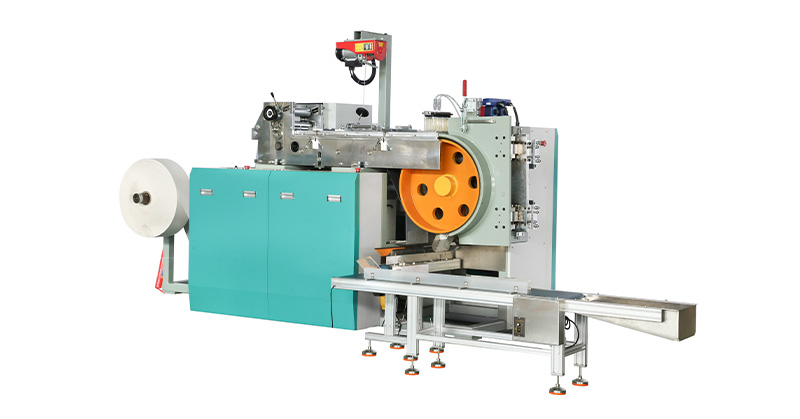
The manufacturing process begins with automated paper feeding. The machine uses a vacuum-sucking mechanism to pick individual blanks from the stack and transfer them to the conveying chain.
Why this matters: Accurate feeding ensures each blank enters the machine in the correct position. Misaligned blanks produce defective boxes and can cause jams. Modern machines use PLC-controlled feeding systems that automatically detect paper absence and stop the machine to prevent damage.
Step 2: Scoring and Pre-Folding
The blank then moves to the scoring and pre-folding station. This step creates the fold lines that will later become the box’s edges, corners, and hinge.
Technical detail: Scores marking the beginning of folds are created using non-cutting tools attached to the cutting tool, imprinting indentations along the fold lines. Pre-folding quality depends heavily on the blank’s score quality—a score too shallow requires excessive force and risks tearing the paperboard; a score too deep may cause premature folding before the blank reaches the correct position.
Why this matters: For a hamburger box, the hinge that connects the lid to the base is one of the most critical features. Field failure analysis published in Food Packaging and Shelf Life (Elsevier) has shown that hinge cracking accounts for a significant proportion of food container complaints in quick-service restaurant applications, with the majority of failures traced to insufficient score depth at the hinge line rather than adhesive or material failures elsewhere in the box.
Step 3: Glue Application
With the blank in its partially folded state, the gluing station applies adhesive to the specific areas that will be bonded when pressed.
For food-service packaging, water-based adhesives are almost universally used over solvent-based options—they comply with food contact material regulations and produce no volatile emissions during operation. Hamburger box forming machines typically use water-based glue devices, which are food-grade water-soluble adhesives with high safety certification.
Technical detail: The adhesive applicator is typically a pneumatically activated nozzle or roller system that deposits a precise pattern of glue on the corner tabs and base overlap areas. Adhesive weight, bead width, and application timing are all parameterized in the machine’s PLC recipe.
Some machines use hot-melt adhesive where faster bond set time is required. Hot-melt sets in 1 to 3 seconds under pressure, compared to 5 to 15 seconds for water-based adhesive. The trade-off is higher equipment complexity—a hot-melt system requires a heated reservoir, temperature-controlled hoses, and more maintenance.
Why this matters: Incorrect adhesive volume is one of the most common causes of failed boxes. Too little adhesive produces weak joints that open under use; too much adhesive squeezes out visibly, creates contamination risk, and may cause adjacent finished boxes to stick in the output stack.
Step 4: Mold Pressing and Forming
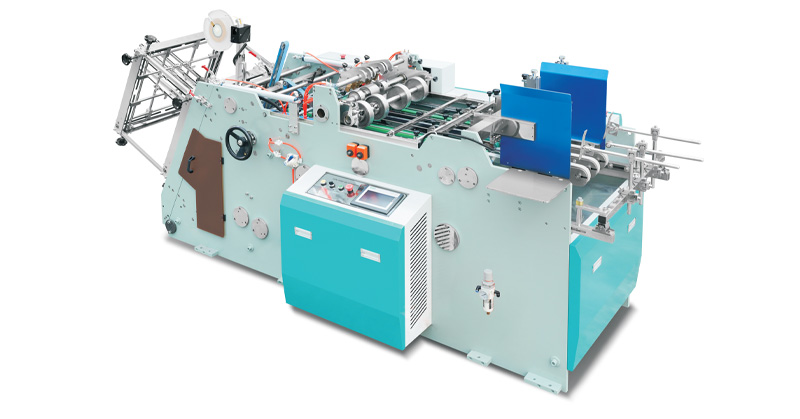
This is the main step where the flat blank becomes a three-dimensional box. The blank, now partially folded and glued, enters the mold press station, where a matched top and bottom mold close around it.
The mold does three things simultaneously:
| Action | What It Does |
| Dimensional forming | Mold walls push all panels, tabs, and flaps into their final positions, setting the exact internal dimensions |
| Adhesive bonding | Pressure from the mold presses glued joints together, initiating the bond |
| Structural setting | For heavier paperboard, the mold briefly holds the blank in position to allow fold memory to dissipate |
Technical detail: Mold dwell time varies with adhesive type and board weight. With water-based adhesive on standard 300 gsm board, a dwell of approximately 0.5 to 1.5 seconds at full closure provides adequate initial bond strength for the box to be conveyed without opening. On hot-melt systems, dwell can be shorter because bond set is faster.
According to Packaging Machinery Manufacturers Institute technical guidance, mold positioning tolerances for clamshell food containers should not exceed ±0.3 mm in any direction to maintain consistent box geometry.
For a detailed breakdown of different machine configurations and their forming capabilities, review the hamburger box forming machine output capacity and configuration options by equipment class.
Step 5: Clamshell Hinge Formation
The hamburger clamshell box has a hinge that allows the lid to open and close without tearing. This hinge is formed during or immediately after the mold press step.
Two approaches exist:
| Approach | Description |
| Single-step | The mold geometry itself forms the hinge—the blank is pressed into a shape that leaves a tight fold at the hinge line |
| Multi-step | A dedicated hinge-forming station follows the main press, using a narrower pressing element to establish the hinge crease precisely |
Why this matters: Hinge durability is one of the most important performance criteria for a hamburger box. A poorly formed hinge fails after just a few openings, rendering the box unusable for its primary purpose.
Step 6: Quality Control and Output Conveying
As formed boxes exit the mold station, a combination of mechanical guides, sensors, and conveyors handles quality verification and output management.
Optical or proximity sensors typically check for:
-
Whether the box is fully formed (flat-box rejection)
-
Whether the lid is aligned within tolerance
-
Whether any adhesive squeeze-out is present in the hinge or lid seating area
Boxes that fail these checks are diverted from the main output stream. On modern machines with IIoT connectivity, production data can be tracked for quality documentation.
Some machines also feature automatic stacking and counting—boxes are collected and stacked according to a preset number, with automatic marking without stopping the machine.
Key Equipment Considerations for Hamburger Box Production
Production Speed
Hamburger box forming machines typically deliver 60–160 pieces per minute, with higher-speed configurations reaching up to 320 pieces per minute. Double-station machines can effectively double output without significantly increasing floor space.
Material Compatibility
Most machines handle 200–600 g/m² paperboard, cardboard, coated paper, and corrugated paper up to 1.5–1.6mm thickness. Compatibility with your target paper grade is essential—mismatches can cause feeding issues, forming defects, and excessive downtime.
Glue System Options
For food-contact compliance, water-based cold glue is the standard choice for hamburger boxes, as it meets food safety regulations and produces no volatile emissions. Hongshuo’s machines offer food-grade cold glue as standard, with hot melt adhesive available as an optional process.
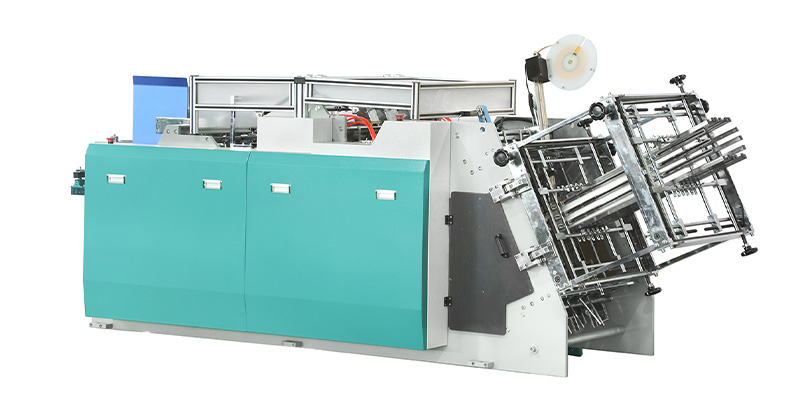
When selecting equipment for hamburger box production, evaluate the hamburger box forming machine for its ability to handle your target paper grade, meet your speed requirements, and accommodate your adhesive system preferences.
Quality Standards in Hamburger Box Manufacturing
The technical demands of hamburger box production have been documented in industry research. According to Packaging Machinery Manufacturers Institute technical guidance, mold positioning tolerances for clamshell food containers should not exceed ±0.3 mm in any direction to maintain consistent box geometry.
Hinge durability is particularly critical. Research published in Food Packaging and Shelf Life (Elsevier) has shown that hinge cracking accounts for a significant proportion of food container complaints in quick-service restaurant applications, with the majority of failures traced to insufficient score depth at the hinge line rather than adhesive or material failures elsewhere in the box.
For converters serving fast-food chains, meeting these quality standards is non-negotiable—rejected shipments mean lost contracts.
From Process Understanding to Equipment Selection
You now have a clear understanding of how hamburger boxes are manufactured—from flat paperboard blanks to finished three-dimensional containers.
The core steps are:
-
Paper feeding — Automated blank pick-up and positioning
-
Scoring and pre-folding — Creating precise fold lines for later folding
-
Glue application — Precision adhesive placement at bonding points
-
Mold pressing and forming — The key step where flat becomes 3D
-
Hinge formation — Creating the durable clamshell hinge
-
Quality control — Sensor-based verification and output management
Understanding the process helps you evaluate the equipment that performs these steps—from machine speed and material compatibility to mold precision and adhesive system suitability.
Once you’ve clarified your production requirements and target box specifications, comparing specific machine configurations becomes the next logical step. You can review single-station configurations for flexible production or double-station models for high-volume scenarios.
For a detailed review of available configurations and their production capabilities, visit the paper lunch box machine specifications and capacity options.