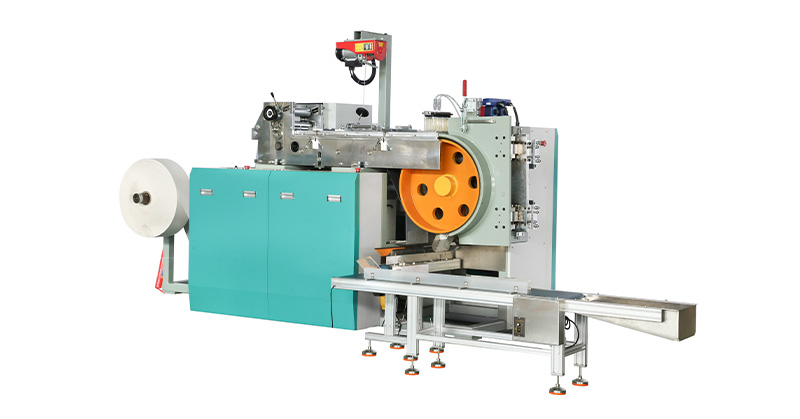
Your fast food business is thriving—orders are up, delivery apps are bringing in new customers, and your brand is gaining recognition. But there's a growing challenge: packaging. Customers are increasingly scrutinizing the containers their burgers, fries, and takeaway meals come in. Regulators are banning single-use plastics. And your packaging choices are becoming a defining part of your brand identity.
The global Quick Service Restaurant (QSR) Packaging Market, valued at $26.8 billion in 2025, is poised to expand at a CAGR of 5.2%, reaching $42.2 billion by 2034. Meanwhile, the fast food wrapping paper market alone is projected to grow from USD 2.88 billion in 2025 to USD 3.96 billion by 2031.
This guide explores paper-based packaging solutions for fast food businesses—from the types of containers available to the equipment that produces them, and the regulatory landscape driving the shift away from plastic.
Why Fast Food Businesses Are Moving to Paper Packaging
Consumer Demand for Sustainability
Consumer preferences have shifted decisively toward environmentally friendly products. McDonald's Corporation reported that by the end of 2024, 90.93% of their primary guest packaging came from renewable, recycled, or certified sources. This reflects a broader industry trend where major fast-food chains are increasingly adopting recycled and paper-based alternatives to minimize waste and enhance their sustainability profile.
The paper lunch boxes market itself is projected to grow from USD 2.51 billion in 2025 to USD 4.375 billion by 2035, at a CAGR of 5.71%. This growth is driven by increasing consumer preference for sustainable packaging solutions.
Regulatory Pressure Against Plastics
Governments worldwide are implementing bans on single-use plastics. From September 1, 2025, the exclusion for pre-packaged EPS cups and bowls was removed in some regions. The EU's Packaging and Packaging Waste Regulation (PPWR), which entered into force on February 11, 2025, bans certain types of single-use plastic packaging. Dubai's second-phase single-use plastics ban took effect on January 1, 2025, covering polystyrene food containers, plastic straws, stirrers, cups, and table covers. Multiple U.S. states have recently passed or expanded bans on polystyrene food containers.
These regulations are compelling fast-food chains to switch to fiber-based alternatives that align with circular economy goals.
The Rise of Food Delivery
The rapid expansion of online food delivery and takeaway services acts as a major engine for the packaging market. According to the DoorDash 2024 U.S. Economic Impact Report, merchants on the platform generated over $40 billion in sales in 2024, emphasizing the vast scale of off-premise dining that depends on disposable packaging solutions. This trend creates a strong need for durable packaging that retains heat and prevents leaks during delivery.
Types of Paper Packaging for Fast Food
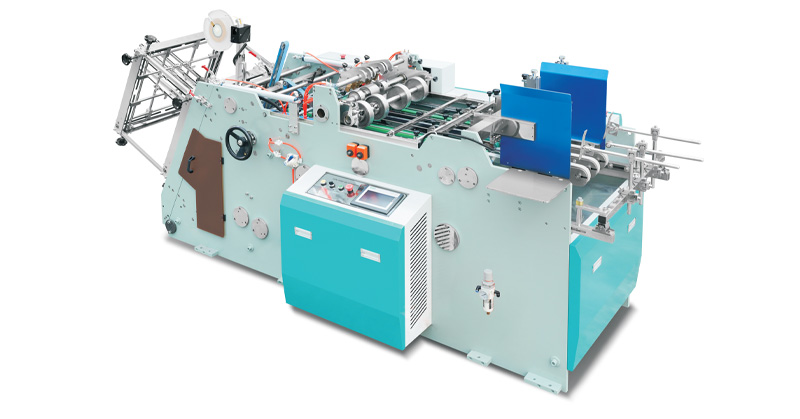
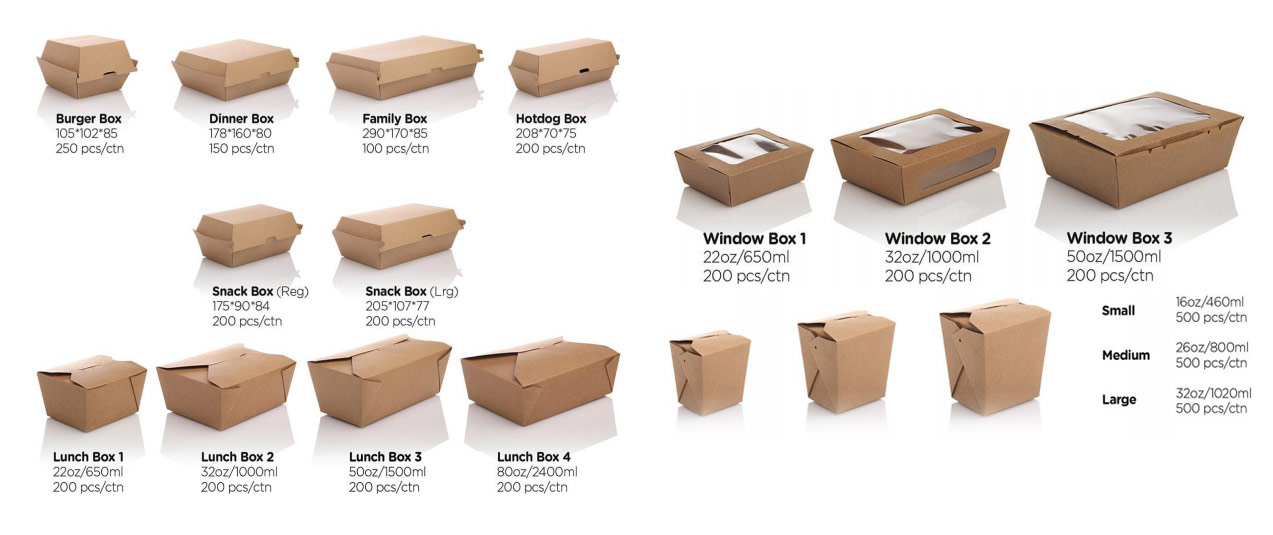
Hongshuo's paper lunch box machines can produce a variety of container types, each suited to different fast food applications:
| Container Type | Best For | Key Features |
| Flip-top box | Burgers, sandwiches, bakery items | Foldable top that opens and closes easily; stable structure |
| Boat-shaped box | Fries, snacks, finger foods | Open/semi-open design; highly displayable; easy access |
| Window box | Premium items, pastries, gift packaging | Skylight design combines sealing with product visibility |
| Fold-over box | Salads, fresh food, sauces | Tight seal; leak-proof performance |
| Lock-bottom box | Delivery meals, takeaway | Interlocking bottom requires no glue; supports transport loads |
Hongshuo's equipment supports 200–600 g/m² paperboard, cardboard, coated paper, and corrugated paper, with food-grade cold glue as standard and hot melt adhesive available as an optional process.
How to Choose the Right Paper Packaging Production Equipment
For packaging converters and fast food chains considering in-house production, selecting the right paper lunch box machine depends on several factors.
Production Volume
Hongshuo offers a broad output range of 60–600 pieces per minute, depending on the model and configuration:
| Monthly Volume | Recommended Configuration | Typical Speed |
| Under 500,000 boxes | Single station | 60–300 pcs/min |
| Over 1,500,000 boxes | Double station | 120–600 pcs/min |
Single-station machines like the HS-800 offer flexible automatic forming for burger boxes, cake boxes, and French fries boxes at 60–300 pieces per minute. Double-station models like the HS-1200 allow two different specifications to run in a coordinated production plan at 120–600 pieces per minute.
Control System Options
Hongshuo offers three control system options: cam double-guide-rail drive, gear mechanical or servo motor option, and full servo precision forming system. Full servo systems offer ±0.1mm precision, ideal for complex box geometries and frequent changeovers.
Glue Process
Food-grade cold glue is standard, with hot melt adhesive available as an optional process. Cold glue systems offer lower adhesive and heating energy consumption and are FDA-compliant for food contact.
For a detailed breakdown of available machine configurations, review the paper lunch box machine output capacity and configuration options by equipment class.
Sustainability Considerations in Paper Packaging
Material Choices
The paper lunch boxes market is seeing a shift toward recycled and virgin paper options. Recycled paper lunch boxes currently dominate the market, while virgin paper options are rapidly gaining traction due to their perceived quality. Manufacturers are responding by innovating designs and materials to align with consumer preferences for biodegradable and recyclable options.
Barrier Coatings
One challenge facing paper packaging is the need for grease and moisture resistance. Traditional plastic coatings create recycling difficulties. However, new technologies like water-based coatings and nano-coatings help maintain biodegradability while enhancing protective properties. The American Forest & Paper Association noted in December 2025 that year-to-date shipments of bleached food wrapping paper rose by 7.4% over the prior year, indicating a rapid shift toward paper substrates.
Customization and Branding
Customization is becoming a key trend within the paper lunch boxes market. Businesses are seeking unique designs that reflect their brand identity, enhancing customer engagement and loyalty. Custom-printed packaging with logos, promotional messages, and unique designs helps fast food brands differentiate themselves in a highly competitive market.
Real-World Application: Fast Food Packaging Converter
Scenario: Packaging Converter Serving Multiple Fast Food Chains
Profile: A packaging converter supplying burger boxes, fry containers, and takeaway meal boxes to regional fast food chains. Monthly target: 1 million+ boxes across 3–4 different box styles. Two-shift operation.
Recommendation: Double-station configuration with servo drives. The HS-1200 allows two different specifications to run simultaneously—burger boxes on one station and fry containers on the other—effectively doubling capacity without requiring a second machine. For maximum flexibility, the HS-1400 full servo independent double-station model offers independent control for completely different box styles on each station.
Key consideration: Ensure food-grade cold glue compliance for FDA and EU market access, as fast food chains increasingly require certified sustainable packaging.
To see how different machine configurations serve various fast food packaging needs, explore the paper lunch box machine application examples for different box styles and production volumes.
From Packaging Choice to Production Implementation
Fast food businesses and packaging converters face a clear choice: continue with plastic packaging and risk regulatory penalties and brand damage, or transition to paper-based solutions that meet consumer expectations and regulatory requirements.
The core principles are clear:
-
Consumer demand for sustainable packaging is driving market growth—the paper lunch boxes market is projected to reach USD 4.375 billion by 2035
-
Regulatory pressure is accelerating the shift—single-use plastic bans are taking effect globally
-
Food delivery growth is creating sustained demand for durable, leak-proof paper packaging
-
Equipment choice depends on production volume, box styles, and automation needs—from single-station entry-level to double-station high-volume configurations
Once you've clarified your packaging requirements and production volume, comparing the specific specifications of available equipment becomes the next logical step. You can review single-station configurations for flexible production or double-station models for high-volume scenarios.
For a detailed review of available configurations and their production capabilities, visit the paper lunch box machine specifications and capacity options.
Related Reading
-
Paper Lunch Box Machine for Small Business vs Enterprise: Scale Selection Guide
-
Paper Lunch Box Machine Applications: Matching Equipment to Box Styles
-
Total Cost of Ownership: Entry-Level vs Industrial Paper Lunch Box Equipment
-
Capacity Planning for Paper Lunch Box Production: From Single Shift to 24/7 Operation