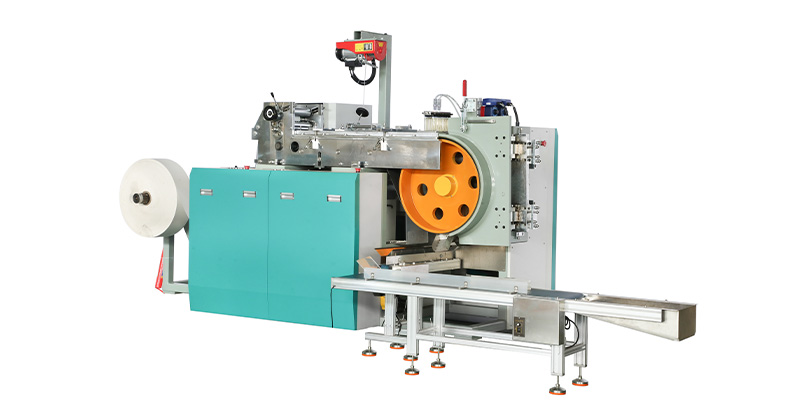
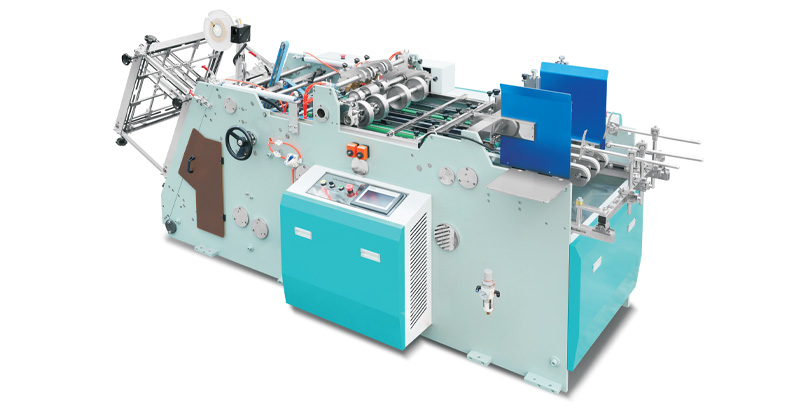
When a sealing defect, a deformed box or an uneven straw diameter appears on the production floor, the first reaction is usually to adjust the machine. In our production support work, that is rarely the fastest route to a fix. Most paper packaging production problems originate from one of four areas: raw materials, machine settings, tooling or molds, and operating conditions. Classifying the problem into the correct area before touching any setting is what separates a quick correction from a long trial-and-error cycle. This guide sets out the four-factor framework we use when reviewing a production issue, with symptom tables for paper lunch boxes, paper straws and paper sticks, and a checklist that production teams can apply directly.
1. What Causes Paper Packaging Production Problems?
When a defect appears, the machine is only one of four potential sources. Before adjusting anything, classify the problem into one of the four categories below.
Raw Material Problems
Paper thickness variation, coating weight inconsistency, moisture content outside the specified range, adhesive performance changes between batches, or a supplier switch without re-validation. These produce defects that appear across all machine speeds and often worsen or improve with a change of paper batch. If the defect follows the paper, it is a material problem — and no amount of machine adjustment will fully correct it.
Machine Setting Problems
Temperature, pressure, speed, cutting position or feeding accuracy drifting outside the validated window. These produce defects that appear at specific operating conditions, for example only at high speed or only after a long production run. A defect that disappears when the speed is reduced is usually a setting issue, not a material issue.
Tooling and Mold Problems
Mold alignment, wear on forming surfaces, dimensional mismatch between a blank design and the mold profile, or insufficient tooling maintenance between changeovers. These produce defects that are consistent in shape or position across all batches. If the defect always appears in the same corner or along the same seam, tooling is the place to look first.
Operating and Environmental Conditions
Humidity, ambient temperature, operator setup errors, improper changeover, or insufficient warm-up time. These tend to produce intermittent defects that correlate with shifts, seasons or specific operators. A defect that appears only on certain shifts or only in certain months is worth investigating at the operating-condition level before touching the machine.
These four categories are not mutually exclusive. A humidity change can alter paper stiffness, which then interacts with a marginal sealing setting. But classifying the problem first usually narrows the investigation faster than adjusting one variable at a time.
2. Paper Lunch Box Production Problems
On paper lunch boxes, defects tend to cluster around the sealing area, the box geometry, and the stacking behavior. The table below is the version our engineers use when reviewing a lunch box complaint, simplified for production use.
| Problem | Possible cause | Check first |
|---|---|---|
| Poor side-seam sealing | Coating condition, heat, pressure | Material coating and sealing temperature |
| Bottom leakage | Blank structure, seal contact, forming pressure | Blank dimensions and seal contact area |
| Box deformation | Mold condition, blank dimension, forming pressure | Blank size against mold profile |
| Uneven rim | Feeding accuracy, mold alignment | Paper positioning and feed guides |
| Poor stacking | Dimensional inconsistency | Finished box geometry and tolerance |
Poor side-seam sealing is frequently blamed on the machine. In practice, if the defect appears across the full speed range and improves when a different paper batch is used, the coating is the more likely cause. Box deformation often traces to a blank cut to a slightly different dimension than the mold was designed for — the mold itself may be fine. Poor stacking is a downstream problem that starts upstream: if the finished box dimensions vary from box to box, the stack will not sit flat, regardless of how carefully the boxes are collected.
When the first check points toward tooling rather than settings, the next step is to confirm the blank against the current product drawing. When it points toward material, a paper batch comparison is usually faster than a full machine recalibration. For a detailed breakdown of each defect and the corrective steps, our forming-problem guide covers the single-product level.
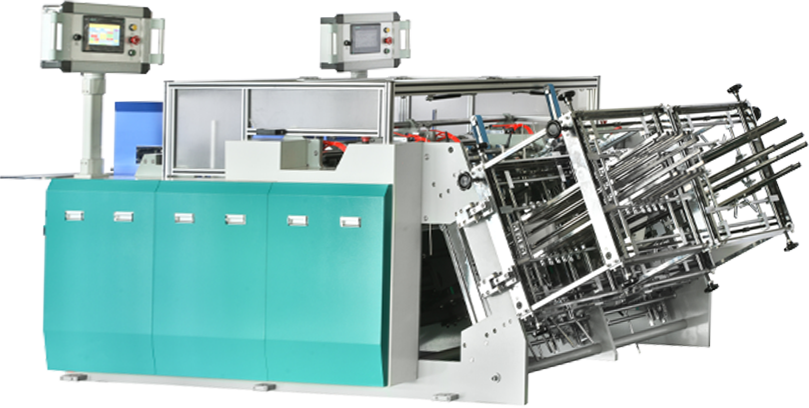
3. Paper Straw Production Problems
Paper straw defects follow a different pattern. They are dominated by bonding, diameter consistency, and cut quality, and the correction path is usually shorter than for lunch boxes because the variables are more concentrated.
| Symptom | Likely cause category | Correction direction |
|---|---|---|
| Weak or open spiral seam | Adhesive amount, paper overlap, rolling pressure, speed | Re-validate adhesive application and rolling settings |
| Straw softening too quickly | Paper composition, coating, wall thickness, adhesive | Review paper specification against beverage condition |
| Uneven diameter | Winding tension, paper alignment, forming setup | Check tension control and paper feed alignment |
| Crushing or deformation | Rolling pressure, paper stiffness, downstream handling | Review pressure settings and collection method |
| Rough or inaccurate cutting | Blade condition, speed synchronization, product support | Check blade wear and cutting timing |
Two points are often misunderstood on the production floor. Softening is rarely a machine problem alone: it depends on the paper’s fiber composition, any barrier treatment, wall thickness and the adhesive’s water resistance. Changing machine settings will not fix a straw made from unsuitable paper. Higher machine speed can increase output, but it can also reduce the time available for adhesive setting and for the plies to consolidate, which may increase defect rates. The stable production speed should be confirmed under the buyer’s actual paper and straw dimensions, not taken from the machine’s rated maximum. Our engineers typically validate the stable speed during the material trial, not from the catalogue figure.

4. Paper Stick Production Problems
Paper stick defects are more concentrated: the rolling process and the paper’s mechanical properties determine most of the outcomes. The common issues are inconsistent diameter, bending, insufficient bonding, surface defects, and inaccurate length.
The first check for inconsistent diameter is whether the paper’s density and stiffness are consistent between rolls. A small variation in fiber composition can shift the rolling result even with unchanged machine settings. Bending is often an application-fit problem rather than a machine fault: if the stick is expected to meet a specific bending strength, the paper specification should be treated as a functional requirement, not a purchasing formality. Insufficient bonding usually traces to adhesive quantity, rolling pressure or paper surface treatment. Surface defects may come from paper quality, dust or tooling wear. Inaccurate length is more likely a cutting timing or feed accuracy issue than a paper problem.
Because paper stick defects interact heavily with application requirements, the diagnostic path should start from the intended end use. A cotton-swab stick and a candy stick do not share the same tolerance window, and a stick that passes one application’s inspection may fail the other.
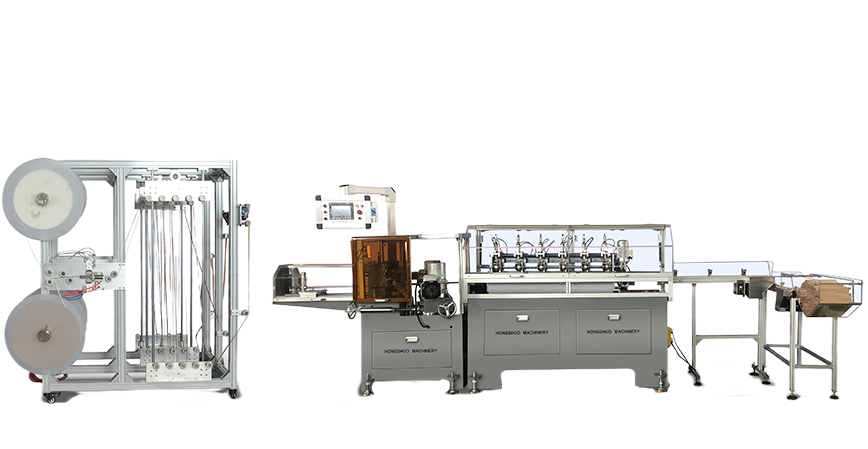
5. How Raw Materials Affect Machine Performance
The table below shows how a material variable typically propagates into machine behavior. It is a diagnostic aid, not a specification table. The actual effect varies by machine configuration and operating conditions.
| Material variable | Possible production effect |
|---|---|
| Paper thickness | Forming and rolling stability; thicker paper may require reduced forming speed |
| Stiffness | Shape retention; low stiffness may lead to deformation or poor stacking |
| Coating | Sealing performance; coating weight and type affect heat-seal response |
| Moisture | Forming consistency; high moisture can cause dimensional drift and weaker bonds |
| Adhesive | Bonding strength; adhesive grade and application amount affect seal and spiral seam quality |
The practical implication for production teams is that material changes should be treated as a process change, not just a purchasing change. A new paper batch from the same supplier can behave slightly differently; a new supplier at the same nominal GSM can behave more differently still. The material selection logic — including how coating, grammage and stiffness interact with product requirements — is covered in more depth in our paper material selection guide.
6. How Machine Settings Affect Finished Product Quality
When the material is confirmed and stable, machine settings become the primary variable. In our experience, four settings account for a large share of finished-product quality issues.
Speed. Speed is not a quality-neutral setting. Higher speed can increase output, but it also shortens the time available for heat transfer, adhesive setting and forming consolidation. A defect that appears only at high speed usually points to a speed-related setting issue, not a material issue.
Temperature. Temperature affects sealing strength, adhesive behavior and, in some cases, paper stiffness during forming. A temperature that works for one coating type may not work for another; a temperature that works on a cold day may not work on a warm, humid day.
Pressure. Pressure affects forming quality, bonding and dimensional consistency. Insufficient pressure can cause weak seals; excessive pressure can cause material deformation or tooling wear.
Feeding accuracy. Feeding accuracy determines whether the paper enters the forming area in the correct position. A small positioning drift can produce uneven rims, cutting misalignment and finished-product dimensional variation. Feeding accuracy is often affected by paper surface condition, roll tension and feed guide condition.
7. When Should You Adjust the Machine and When Should You Change the Material?
This is the question we hear most often from production managers, and it is the one that saves the most time when answered correctly. The table below is the diagnostic aid our engineers use to separate material-related defects from machine-related ones.
| Observation | More likely material-related | More likely machine-related |
|---|---|---|
| Same defect across all speeds | ✓ | |
| Defect appears only at high speed | ✓ | |
| Different paper batch changes result | ✓ | |
| Position varies continuously | ✓ | |
| Seal strength varies by coating | ✓ |
The reasoning behind the table is practical. If a defect is consistent across every speed setting, the material is a more likely contributor than the speed setting. If a defect appears only at a specific speed, the speed setting itself is worth reviewing before the material. If changing the paper batch changes the outcome, the material is the key variable. If the defect position shifts continuously over time, machine or feed stability is the more likely source. If seal strength changes when the coating changes, the material is the primary driver.
Using this table before adjusting the machine saves time and reduces the risk of “fixing” a machine that was not the cause of the problem.
8. Production Optimization Checklist
This checklist is the short version our production support team recommends for daily use. It is not exhaustive, but it covers the checks that most often prevent small issues from becoming full-batch defects.
Before production
- Verify the paper specification against the material trial record
- Verify blank or roll dimensions against the current product drawing
- Check mold condition and alignment against the previous run
- Confirm machine settings match the validated window for this material
- Confirm ambient humidity and temperature are within the range used during validation
During production
- Inspect the first samples against the acceptance criteria
- Monitor sealing strength or bond quality at defined intervals
- Check dimensional consistency at the start, middle and end of the run
- Watch the scrap rate for early signals of drift
- Record any material, setting or environmental changes made during the run
After production
- Clean the machine and inspect wear parts
- Record any abnormalities observed during the run
- Note the paper batch and supplier for traceability
- Review the run against the checklist to identify patterns
9. When Technical Support Is Needed
Some problems can be resolved on the production floor. Others warrant a conversation with the machine supplier, because they involve tooling, structural issues or product changes that cannot be safely diagnosed from the operator’s position.
Indicators that technical support should be involved include: repeated sealing defects that do not respond to setting changes; abnormal vibration or noise from the forming or rolling section; unstable feeding that persists after guide and tension checks; frequent stopping that cannot be tied to material or operator error; tooling mismatch after a product change; and any product change that requires a new mold or significant reconfiguration.
For issues in these categories, the fastest path is usually a structured conversation with the supplier’s technical team, supported by machine settings, paper specification, sample defects and a short video if available. The goal is not to ask the supplier to “fix it” but to give them enough information to reproduce and diagnose the problem. If you are working through a production issue on a Hongshuo line, you can discuss a production problem with our technical team directly rather than starting from a price inquiry.
FAQ
What are the most common paper packaging production problems?
Weak sealing, dimensional inconsistency, material deformation and bonding failure are the most frequent categories across paper lunch boxes, straws and sticks. Most trace back to raw material variation, machine settings, tooling condition or operating environment, in that order of diagnostic priority.
Why does a paper lunch box fail to seal properly?
Poor sealing usually involves one of four causes: unsuitable coating, insufficient heat, insufficient pressure, or a contaminated sealing area. If the defect appears across all speeds and improves when the paper batch changes, the coating is the more likely cause. If it appears only at high speed or after a long run, the sealing setting is more likely.
Why do paper straws lose bonding strength?
Bonding strength depends on adhesive quantity, paper overlap, rolling pressure, adhesive water resistance and paper surface condition. A change in paper supplier or adhesive grade can weaken the seam even if the machine settings are unchanged. The adhesive and paper should be validated together.
Can paper quality affect machine speed?
Yes. A paper with higher stiffness or heavier grammage may require a lower stable speed to achieve consistent forming or bonding. The machine’s rated maximum speed should not be treated as the expected production speed for every paper grade; the stable speed should be confirmed under the buyer’s actual material.
How often should paper packaging machines be maintained?
Daily cleaning and inspection of moving parts, sensors and the cutting area are standard practice. Weekly and monthly checks should cover wear parts, alignment and calibration. The exact schedule depends on the machine type and production intensity, and should follow the maintenance guidance for the specific equipment.
How can manufacturers reduce production waste?
Most waste comes from startup scrap, material variation, feeding instability and tooling condition. Reducing waste starts with confirming the material window, validating the settings, stabilizing the feed and maintaining tooling. Monitoring the scrap rate during the run, not only at the end, helps catch drift before a full batch is affected.
Conclusion
Paper packaging production problems are rarely solved by adjusting one variable in isolation. The more reliable approach is to classify the problem into one of four root-cause categories — raw material, machine setting, tooling or operating condition — and then apply the appropriate diagnostic table. This reduces trial-and-error, protects the machine from unnecessary adjustment, and makes it easier to identify when a problem genuinely requires supplier technical support.
For buyers evaluating equipment configurations, the paper lunch box machine page, paper straw machine page, and paper stick machine page provide the starting specifications. For problems that persist after the diagnostic steps above, the service and support page explains how to involve our technical team.