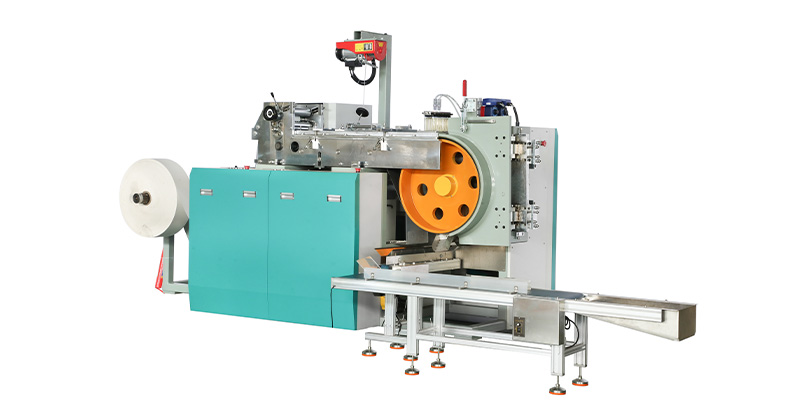
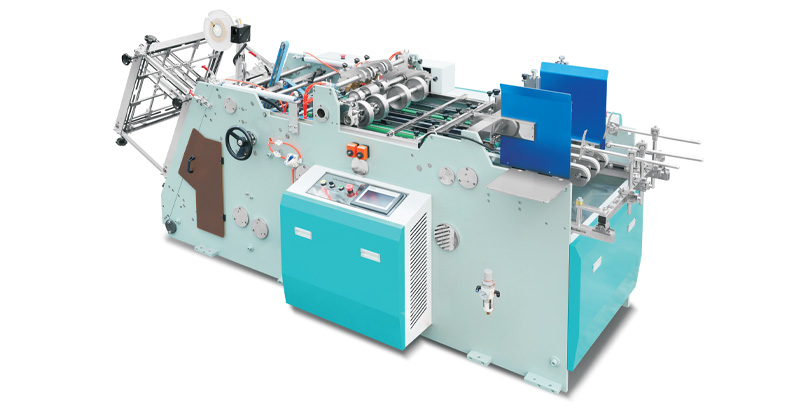
Paper material selection for food packaging is not a matter of choosing “the best paper.” It is a matter of matching three variables — coating type, grammage and stiffness — to the specific product, the food contact condition and the forming method. A double-side PE coated 300 gsm board may work well for a soup container but fail on a dry bakery box where single-side coating is sufficient and more economical. A paper straw made from 60 gsm outer layers may cut cleanly but soften faster than one built on 120 gsm inner layers. This guide explains how each material variable affects finished-product performance and where a material change should trigger a review of machine settings.
1. Why Material Selection Matters More Than Buyers Expect
In paper packaging production, material and machine are not independent decisions. The forming mold, heat-sealing temperature, rolling tension and cutting pressure on a paper lunch box machine, paper straw machine or paper stick machine are all set to work within a defined material window. When the material changes — a different coating weight, a new paper supplier, a switch from PE to PLA — the machine may still run, but the output quality can shift in ways that are not immediately visible: weaker seals, inconsistent stacking, faster softening in liquid, or subtle dimensional drift.
The practical implication is straightforward: confirm the material specification before machine configuration is finalized, and run a material trial whenever the paper source or coating type changes. The cost of a trial is almost always lower than the cost of discovering a sealing defect after a production run.
2. Coating Type: Single-Side, Double-Side and the Alternatives
The coating on food-grade paperboard or paper serves a specific barrier function. On a paper lunch box, the coating on the food-contact side resists moisture and grease; on a paper straw, the adhesive and any barrier coating determine how long the straw holds its structure in a beverage. The most common coating configurations are single-side PE, double-side PE, and — increasingly — water-based or PLA-based alternatives.
Single-side PE coating is typically sufficient for dry or semi-dry foods where the paper is exposed to moisture or grease from one side only. A burger box or bakery container often falls into this category: the inside needs grease resistance, while the outside can remain uncoated for printing and breathability. Applying PE to both sides in this scenario can trap steam and create condensation inside the package, which may affect food texture.
Double-side PE coating is required when the container holds liquid or when condensation is expected on the outer surface. Paper cups and soup containers are the standard examples. For a paper lunch box designed for sauced dishes or takeaway meals with high moisture content, double-side coating protects both the food-contact side and the outer wall, reducing the risk of the board softening and losing shape during transport or handling. The trade-off is higher material cost and a slightly narrower heat-sealing window compared with single-side coating.
Water-based and PLA-based coatings are evaluated when the project requires a fiber-recyclable or compostable structure. These coatings can provide heat-seal performance and moisture resistance, but their sealing behavior differs from PE: the required temperature, dwell time and pressure may fall outside the range used for conventional PE-coated board. A machine configured for PE may not produce a consistent seal on a water-based or PLA-coated substrate without parameter adjustment or, in some cases, a different sealing module. Buyers exploring a plastic-free structure should confirm coating compatibility with the machine supplier before committing to a material specification.
| Coating configuration | Barrier behavior | Typical fit | Machine consideration |
|---|---|---|---|
| Single-side PE | Moisture/grease barrier on food-contact side only | Dry or semi-dry foods; boxes where outer breathability is acceptable | Standard heat-sealing or cold-glue process; confirm uncoated side printability |
| Double-side PE | Barrier on both sides; resists external condensation | Liquid-containing containers; sauced meals; cold or hot takeaway formats | Heat-sealing window may need adjustment; verify board stiffness at target grammage |
| Water-based / PLA | Barrier and heat-seal via dispersion or bio-based film | Projects targeting recyclability or compostability | Sealing temperature, dwell time and pressure must be confirmed with a material trial |
3. Grammage and Stiffness: The Structural Side of the Decision
Coating determines the barrier; grammage and stiffness determine whether the finished product holds its shape. For paper lunch boxes, the board range commonly discussed in the industry runs from roughly 200 to 600 gsm, with many takeaway and meal-box formats using 250–350 gsm as a practical working range. Higher grammage generally improves rigidity and stacking strength, but it also increases forming pressure requirements and may reduce the machine’s comfortable speed window. A machine rated for a wide grammage range is not automatically optimized for every point in that range; the actual forming quality at a specific grammage should be verified with a sample.
For paper straws, the material structure is different: the base paper is typically lighter, and the number of plies and the adhesive between them do more of the work than a heavy single sheet. A three-layer straw with a heavier inner ply and lighter outer plies can balance stiffness, surface quality and liquid resistance differently from a uniform two-layer structure. The material specification should therefore be read as a layer configuration, not just a single GSM number.
For paper sticks, bending stiffness and density are the parameters that matter most in application. A stick that feels rigid in hand may still fail under load if the fiber density is not high enough or if the rolling process does not achieve consistent compaction. Food-service and confectionery applications often specify a minimum bending strength and a density range; these values should be requested from the paper supplier and confirmed against the stick machine’s rolling capability.
4. Matching Material to Product: Three Different Logic Paths
The three product families on this site — paper lunch boxes, paper straws and paper sticks — do not share a single “ideal paper.” Each has its own material logic.
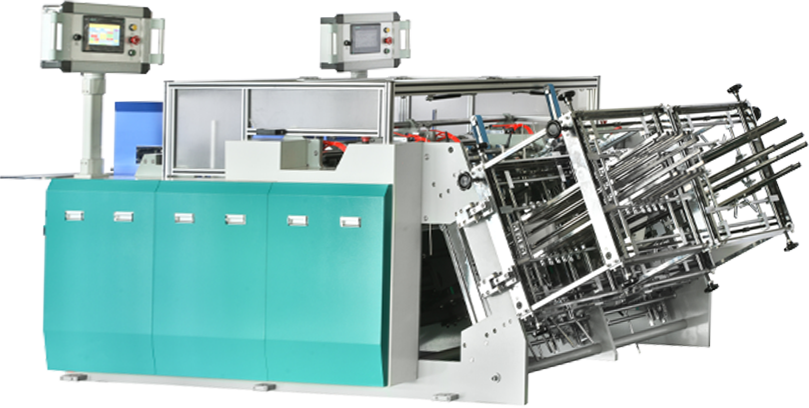
Paper lunch boxes: sealing and shape retention dominate. The material decision starts with the food type (dry, greasy, saucy, hot, cold) and the container format (clamshell, lock-bottom, window, boat-shaped). A coated board that seals well on a simple rectangular box may behave differently on a multi-corner or lock-bottom structure, because the coating has to survive more folding and compression at the corners. When the box format involves multiple sizes and frequent mold changes, material consistency across batches becomes as important as the nominal specification, because small variations in coating weight or stiffness can shift the forming result after a changeover. The available paper lunch box machine configurations are built around specific material windows; confirming the board grade against the machine’s stated range is the first step, and a sample trial is the second.
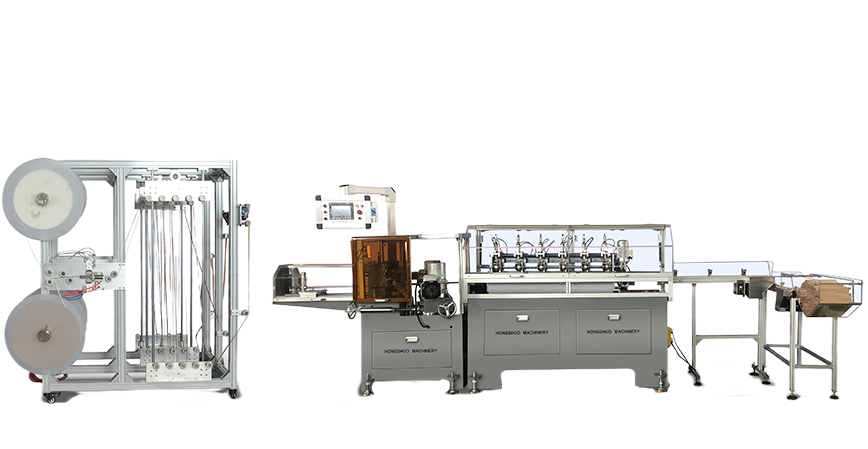
Paper straws: layer structure and adhesive work together. A paper straw’s useful life in a beverage depends on the paper’s fiber composition, the adhesive’s water resistance and the winding quality of the machine. Base paper in the range commonly used for drinking straws is lighter than lunch box board, and the adhesive must be food-contact compliant and capable of maintaining bond strength under moisture. Higher machine speed can increase output, but it can also reduce the time available for the adhesive to set and for the plies to consolidate; the material and the speed setting should be validated together. Buyers reviewing paper straw machine options should confirm which paper grades and layer counts have been tested on the specific machine configuration, rather than assuming that a higher-speed model will handle any straw paper.

Paper sticks: density and bending behavior. A paper stick is a rolled, compacted structure. The paper must be strong enough to withstand the rolling tension without tearing, and the finished stick must meet the application’s stiffness or flexibility requirement. Food-service sticks, cotton-swab sticks, and candy sticks may use different paper grades and density targets. When a stick application requires a specific bending strength, the material specification should be treated as a functional requirement, not a purchasing formality. Paper stick machine configurations differ in rolling pressure control and cutting precision; the material trial should confirm both the stick’s dimensional consistency and its mechanical behavior.
| Product | Primary material variables | What to confirm before machine configuration |
|---|---|---|
| Paper lunch box | Coating type, board grammage, stiffness, coating adhesion | Board grade within machine range; seal performance on target food condition; behavior at box corners and lock points |
| Paper straw | Base paper GSM and fiber type, layer count, adhesive water resistance, barrier coating | Tested paper/layer combinations on the machine; bonding under moisture; cutting quality at target speed |
| Paper stick | Paper density, fiber strength, bending stiffness, surface smoothness | Achievable compaction and diameter tolerance; bending behavior after rolling; suitability for downstream handling |
5. When a Material Change Requires a Machine Review
Not every paper change requires a new machine. But some changes should trigger a structured review:
- Switching from PE to a water-based or PLA coating. Sealing temperature, pressure, and dwell time may need adjustment. In some cases, the sealing method itself may need confirmation.
- Increasing grammage significantly within the machine’s stated range. Forming pressure and speed may need to be reduced, and mold condition should be checked.
- Changing paper supplier while keeping the same nominal GSM and coating. Fiber composition and stiffness can differ between suppliers even at identical grammage. A trial run is advisable.
- Moving from a single-side coated board to double-side coating for a liquid-containing format. Heat transfer through the thicker coating stack may change the sealing response.
- Using a lighter or heavier base paper for straws or sticks. Winding tension, adhesive application, and cutting pressure should be re-validated.
The common thread is that the machine’s “rated range” is a starting point, not a guarantee. Actual compatibility should be verified through a material trial using the buyer’s paper and the target product specification.
6. Material Testing Before Production: What to Ask and What to Check
A material trial is not a formality. It should answer four questions: Can the machine form the product without cracking, delamination or incomplete sealing? Does the finished product meet the dimensional and functional requirements? Does the machine run at a stable speed with the buyer’s paper, not just with the supplier’s reference paper? And does the material behave consistently across the batch?
Buyers preparing a material trial should send production-quality paper samples, the finished-product drawing or physical sample, and the intended food-contact condition. The trial should record the paper grade, coating type, grammage, machine settings, and finished-sample results. If the trial reveals a sealing or forming issue, the first step is to determine whether the cause is material-related (coating weight, stiffness, moisture content) or setting-related (temperature, pressure, speed). This diagnostic logic is developed further in the guide on troubleshooting paper packaging production problems.
FAQ
Is double-side PE coating always better than single-side for a paper lunch box?
Not necessarily. Double-side coating is appropriate when the container holds liquid or when condensation forms on the outside. For dry or semi-dry foods, single-side coating is often sufficient and can help maintain breathability while reducing material cost. The decision should follow the actual food condition and storage environment.
Can a machine configured for PE-coated paper run PLA-coated paper without changes?
It may run, but consistent sealing is not guaranteed. PLA and water-based coatings can require different sealing temperature, pressure and dwell time compared with PE. A material trial on the specific machine is the reliable way to confirm compatibility before committing to a coating change.
What GSM board is suitable for a takeaway paper lunch box?
Many takeaway and meal-box formats use boards in the 250–350 gsm range, while the broader machine range often spans 200–600 gsm. The appropriate point within that range depends on the box size, the food weight and moisture level, and the required stacking strength. A sample forming trial at the intended grammage is advisable.
How do I know if my paper stick meets the required stiffness?
Request the bending stiffness or bending strength specification from the paper supplier, and confirm that the stick machine can achieve the required compaction and diameter tolerance with that paper. The finished stick should be tested under the intended application load, not only by hand feel.
Should I change the machine settings if I switch paper suppliers but keep the same GSM and coating?
A trial run is recommended. Fiber composition, stiffness and coating adhesion can differ between suppliers even when the nominal GSM and coating type are the same. If the trial shows a change in sealing, forming or cutting behavior, the settings may need adjustment.
Conclusion
Material selection for paper food packaging comes down to three decisions: the coating that matches the food-contact condition, the grammage and stiffness that match the structural requirement, and the layer or density structure that matches the product family. No single paper grade is “best” across lunch boxes, straws and sticks. The useful question is whether a specific paper has been validated on the intended machine configuration, with the buyer’s material and the target product specification.
Before finalizing a machine order or changing a paper source, confirm the material window, request a material trial, and record the result against the finished-product acceptance criteria. For buyers reviewing equipment configurations, the paper lunch box machine page, paper straw machine page and paper stick machine page provide the starting specifications; the material trial is what turns those specifications into a production-ready decision.