You’re evaluating whether to add paper stick production to your manufacturing portfolio—or whether your existing paper stick equipment is being fully utilized. The challenge isn’t finding information about what a paper stick machine does; it’s understanding which specific applications align with your target market, material capabilities, and production economics.
The global paper stick market sits within a broader shift toward sustainable materials. The biodegradable paper straw market alone was valued at USD 25.16 billion in 2025 and is projected to reach USD 41.45 billion by 2032, growing at a 7.5% CAGR. Paper sticks—the cylindrical rods used as handles for confections, hygiene products, and cosmetic applicators—represent a closely related and growing segment of this transition.
This guide maps out the five core application areas for paper stick making machines, explains the technical requirements each application demands, and helps you identify which use case best matches your production capabilities and market opportunity.
What Exactly Is a Paper Stick Making Machine?
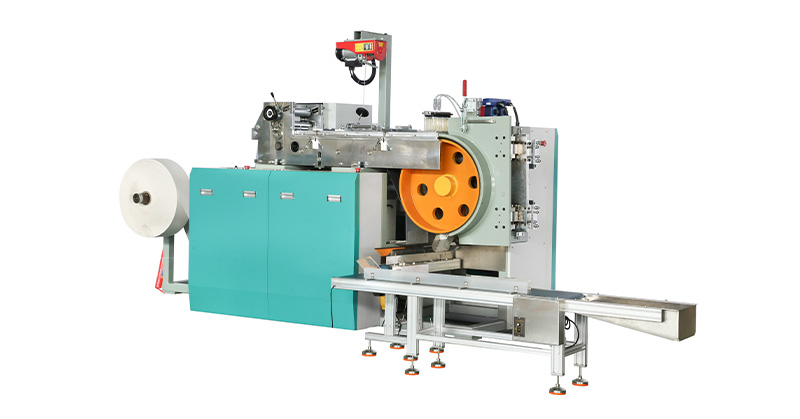
Before exploring applications, it helps to understand the core technology. A paper stick making machine—also called a straight winding machine—takes rolls of paper (typically single glossy paper or kraft paper) and rolls them into solid cylindrical sticks. The process involves cutting the paper to length, rolling it tightly from the beginning, and applying a layer of glue to the outer circle of the completed stick.
The result is a paper stick with the hardness of a wooden stick, but without thorns or sharp corners. It is as environmentally friendly as wood, but safer and resistant to mold.
Key technical parameters to understand:
| Parameter | Typical Range | What It Means for Your Business |
|---|---|---|
| Stick diameter | 1.5–6 mm | Determines which end-products the stick can serve; smaller diameters suit cotton swabs, larger diameters suit lollipops and craft items |
| Stick length | 50–260 mm (customizable) | Longer sticks for ice cream and cake supports; shorter sticks for cotton swabs and cosmetic applicators |
| Production speed | 400–1,500 pcs/min | Higher speed means greater daily output, but actual throughput depends on stick diameter—larger diameters reduce machine speed |
| Paper thickness | 60–100 g/m² | Thicker paper produces stronger, more rigid sticks; thinner paper suits flexible, food-safe applications |
These specifications don’t exist in isolation—they directly determine which of the five applications below your machine can serve profitably. For a broader view of how different machine configurations map to production scenarios, explore the paper stick machine series designed for various output and material requirements.

Use 1 – Food Industry: Lollipop and Confection Sticks
The application: Paper sticks are widely used as eco-friendly, safe alternatives for lollipop sticks, cotton candy sticks, and ice cream sticks. They are durable, moisture-resistant, and meet food-contact safety standards.
Why this application matters: The confectionery industry has historically relied on wooden sticks. But wooden sticks present quality challenges: they can splinter, develop mold during storage, and are less consistent in diameter. Paper sticks produced by straight winding machines are more suitable for lollipop manufacturers because they are easy to bend—protecting children’s safety—and have a hardness that is softer than inclined-winding paper sticks but still sufficient for confection support.
Technical requirements:
-
Food-grade adhesive: The glue used must be safe for food contact. Polyvinyl alcohol (PVA) glue is commonly used because it is water-soluble, odorless, and biodegradable under bacterial action—degrading up to 75% in 46 days.
-
Consistent diameter: Lollipop sticks require uniform diameter (typically 2.5–6 mm) for automated candy insertion equipment.
-
Smooth surface: No splinters or rough edges, which is critical for products that contact the mouth.
Key decision factor: If your target market includes confectionery manufacturers or party supply distributors, a paper stick machine configured for food-grade adhesive and diameters above 3.0 mm is the appropriate starting point. Smaller diameters (below 3.0 mm) are more suited to cotton swab production than confection sticks.
Use 2 – Medical & Hygiene: Cotton Swabs and Examination Sticks
The application: Paper sticks are ideal for cotton swabs, medical examination sticks, and similar hygiene products. Their biodegradability and stable strength make them an excellent alternative to plastic swabs, meeting the stringent cleanliness and safety standards required for medical supplies.
Why this application matters: The shift away from plastic cotton swabs has accelerated in many markets as regulations restrict single-use plastics. Paper sticks for cotton swabs typically require smaller diameters—1.5 mm to 2.8 mm—and shorter lengths (68–150 mm), which demand higher precision in the winding and cutting process.
Technical requirements:
-
Diameter precision: Cotton swab sticks require diameters as small as 1.5 mm with minimal variance; inconsistency causes swab head attachment failures.
-
Surface cleanliness: Medical-grade applications demand clean, dust-free surfaces. Paper sticks for this application must meet cleanliness standards comparable to plastic alternatives.
-
Consistent compressive strength: The stick must withstand the force of cotton head application without bending or cracking.
Key decision factor: If your market includes medical supply distributors, hygiene product manufacturers, or pharmacies, precision matters more than speed. A machine capable of producing sub-2 mm diameters with consistent quality is essential. For real-world examples of how paper stick equipment adapts to different market demands, explore the paper stick machine application case studies.
Use 3 – Personal Care & Beauty: Cosmetic Applicators
The application: In the production of cosmetic applicators and cleaning brushes, paper sticks are lightweight, durable, and environmentally friendly, providing added value to personal care products while enhancing user comfort.
Why this application matters: The beauty industry faces growing consumer scrutiny over plastic waste. Cosmetic applicator sticks—used for mascara wands, lip gloss applicators, and precision makeup brushes—are a natural fit for paper alternatives because they don’t contact food or require medical-grade sterility.
Technical requirements:
-
Length flexibility: Cosmetic applicators vary widely in length (50–150 mm), requiring quick changeover between production runs.
-
Surface finish: Smooth, splinter-free surfaces are essential for products that contact the face and eyes.
-
Lightweight construction: Paper sticks are naturally lighter than wooden alternatives, improving the feel of finished cosmetic products.
Key decision factor: If your customers are in the beauty or personal care sector, flexibility in stick length and diameter matters more than maximum production speed. Semi-automated or modular machines with quick mold-change capability are often the better fit.
Use 4 – Craft and DIY Market
The application: Thanks to their easy-to-process and eco-friendly qualities, paper sticks are popular in crafts and DIY projects, making them ideal for schools, art projects, and family crafting activities.
Why this application matters: The craft market values versatility and safety over precision. Paper sticks for craft use don’t require food-grade adhesives or medical-grade surface finishes, which means they can be produced with broader tolerances and lower-cost materials.
Technical requirements:
-
Broad diameter range: Craft sticks span a wider range of sizes than food or medical sticks.
-
Cost efficiency: Since craft applications don’t require food-contact or medical certifications, lower-cost adhesives and standard paper stocks can be used.
-
Sufficient rigidity: Craft sticks need to hold their shape during use without excessive flexibility.
Key decision factor: This is the most accessible entry point for manufacturers new to paper stick production. The lower certification requirements and broader material tolerances reduce both technical barriers and production costs.
Use 5 – Industrial and Specialty Applications
The application: Beyond consumer-facing products, paper sticks serve as supporting rods for shoe manufacturing, industrial cores, and specialty packaging inserts. One case study documented a manufacturer that needed a single machine capable of flexibly producing different specifications—from high-strength industrial cores to food-grade cotton swab sticks.
Why this application matters: Industrial applications often demand high compressive strength and precise diameter tolerances, prioritizing performance over aesthetics. The stick must function as a structural component, not a consumer-facing product.
Technical requirements:
-
High compressive strength: Industrial cores must withstand pressure without deformation.
-
Diameter consistency: Tight tolerances ensure proper fit into automated assembly equipment.
-
Material adaptability: Different industrial applications may require different paper stocks or adhesive formulations.
Key decision factor: Industrial buyers typically prioritize equipment stability and consistency over production speed. A machine with servo-controlled diameter adjustment and reliable tension control is essential for maintaining quality across large production runs.

Comparison of Application Scenarios
| Application | Diameter Range | Key Quality Priority | Certification Needs | Best For |
|---|---|---|---|---|
| Food (lollipop/confection) | 2.5–6 mm | Surface safety, food-grade adhesive | FDA, food-contact compliance | Confectionery manufacturers |
| Medical/Hygiene (cotton swabs) | 1.5–2.8 mm | Precision, surface cleanliness | Medical-grade standards | Medical supply distributors |
| Personal Care (cosmetic applicators) | 2.0–5.0 mm | Surface finish, length flexibility | Cosmetic safety standards | Beauty brands, contract manufacturers |
| Craft/DIY | 3.0–6.0 mm | Cost efficiency, broad tolerance | None (non-food-contact) | Schools, art supply distributors |
| Industrial/Specialty | 2.0–6.0 mm | Compressive strength, diameter tolerance | Application-specific | Industrial component manufacturers |
Next Steps: From Application Mapping to Equipment Evaluation
You’ve now identified which of the five paper stick applications aligns with your business model. The next step is translating that application choice into equipment specifications—diameter range, production speed, adhesive system, and certification requirements.
Once you have clarified which application area matches your market, comparing the specific capabilities of available equipment becomes the next logical step. You can review the paper stick machine series for specifications organized by diameter range and production capacity, or explore how different configurations perform in real production environments through the application examples collected from manufacturers across different industries.
Related Reading
-
Paper Stick Diameter Selection Guide: Matching Specifications to End-Use Applications
-
Paper Stick Diameter Selection Guide: Matching Specifications to End-Use Applications
-
How Paper Stick Machines Compare to Wooden and Plastic Alternatives
-
Professional Eco-Friendly Paper Stick Machine - Hongshuo Machinery