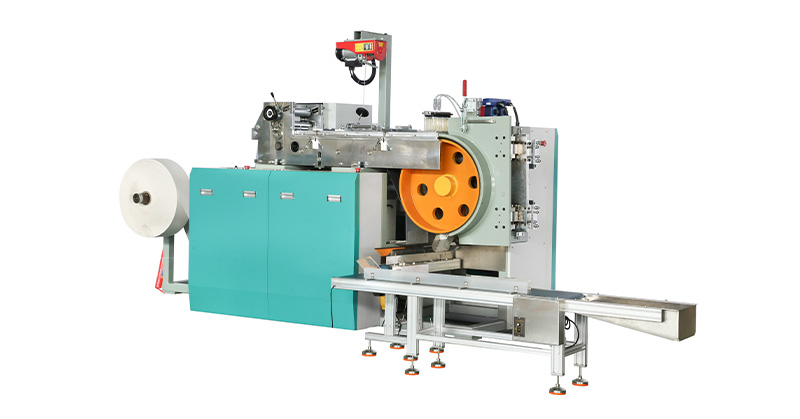
You’ve decided to invest in paper lunch box production. The market is growing—the global paper lunch box machine market is expected to grow from USD 470.8 million in 2025 to USD 1,000 million by 2035, at a CAGR of 7.8%. But walking into a purchasing decision without a clear comparison framework is risky. Specifications like “300 pieces per minute” or “dual station” sound impressive—but what do they actually mean for your daily production, your labor costs, and your ability to fulfill orders?
A machine rated at 300 pieces per minute rarely delivers that number consistently. Material variations, changeovers, and operator experience all reduce actual output. This guide breaks down the five most important specifications to compare—not as abstract numbers, but as decision criteria that directly impact your production capacity, operating costs, and business growth.
Spec 1 – Production Speed: What “Pieces Per Minute” Really Means
Production speed is the specification most buyers look at first. But the number on the spec sheet—typically expressed as pieces per minute (PPM)—is rarely the number you’ll achieve on your factory floor.
The technical reality: A machine’s rated speed represents maximum output under ideal laboratory conditions: perfect paper quality, optimal temperature, experienced operators, and zero interruptions. Your sustainable output will be lower.
What this means for your business: If you need 100,000 boxes per week, a 60 PPM machine running one 8-hour shift delivers approximately 28,800 boxes per day (theoretical). With changeovers and downtime factored in, your actual daily output may be 20,000–24,000 boxes.
The practical rule: Apply a 20–30% efficiency buffer when calculating capacity. If you need 100,000 boxes per week, look for a machine rated at 130,000–140,000 boxes per week to account for real-world production factors.
Speed ranges by configuration:
-
Single-station machines: typically 60–150 PPM; high-speed automated systems can reach 150–200+ PPM
-
Double-station configurations: 120–300+ PPM—roughly double the output
For a detailed look at how different speed tiers map to production volumes, explore the paper lunch box machine series designed for various output scales.
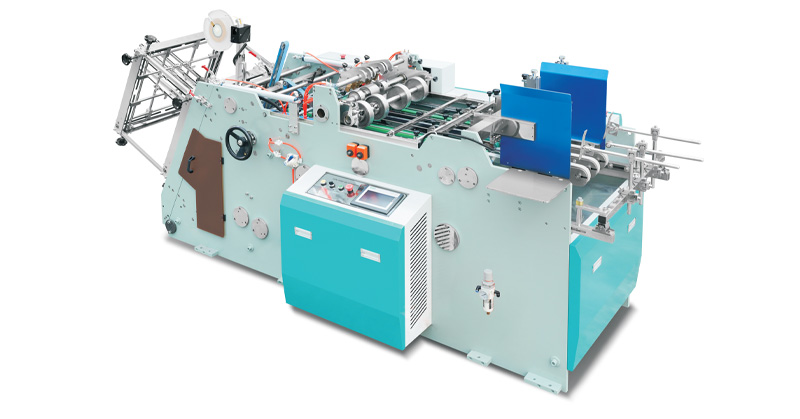
Spec 2 – Single Station vs Double Station: Which Configuration Fits Your Production Mix?
Station configuration determines not just output volume, but also production flexibility. Many buyers assume dual station automatically means “twice as good”—but that oversimplification ignores setup complexity and the types of boxes you actually run.
Single-station machines complete one forming cycle at a time. They offer:
-
Lower initial investment
-
Faster mold changes (approximately 30 minutes)
-
Ideal for small to medium batch production (500–5,000 pieces per day)
-
One box style at a time
Double-station machines operate two forming stations simultaneously. They deliver:
-
Higher total output (120–600+ PPM combined)
-
Ability to run two different box styles simultaneously
-
Slower changeovers if both stations need reconfiguration
-
Higher operator attention requirements
Decision framework:
-
Choose single station if 80%+ of your orders are one or two box sizes and your peak PPM requirement stays under 250–300
-
Choose double station if you frequently run small batches of multiple box styles or your total required output exceeds 350 PPM
A 2024 benchmarking study by Technical University of Munich’s Packaging Technology Group found that improper station selection accounted for 28% of reported “changeover downtime inefficiencies” among European food packaging SMEs.
For a deeper comparison of single vs dual station configurations, read the detailed guide on single vs double station paper box machine.
Spec 3 – Material Compatibility: What Paper Stock Can the Machine Process?
Not all paper is created equal. Your machine’s material compatibility range directly affects both production quality and operating costs.
The technical specification: Paper lunch box forming machines typically process paperboard in the 200–600 g/m² range, including cardboard, coated paper, and corrugated paper. Some machines handle specific materials better than others—and this matters more than you might think.
What this means for your business: Material incompatibility causes:
-
Increased rejection rates (wasted paper and labor)
-
Slower forming speeds (reduced output)
-
Premature wear on tooling and forming dies (higher maintenance costs)
Key material factors to compare:
-
Paper weight range – A wider range gives you more sourcing flexibility and the ability to switch between lightweight takeaway boxes and heavier premium packaging
-
Coated vs uncoated paper – PE-coated or PLA-coated papers require different heat-sealing or adhesive parameters
-
Recycled content compatibility – Recycled fibers behave differently than virgin fibers; not all machines handle them equally
Practical check: Before committing to a machine, test your actual paper stock on the equipment. A machine that processes 200–600 g/m² on paper may struggle with specific coated papers or corrugated materials that don’t feed consistently.
Spec 4 – Adhesive System: Cold Glue vs Hot Melt and What It Means for Your Product Quality
The adhesive system is often overlooked in initial comparisons—but it directly impacts product quality, food safety compliance, and production consistency.
The two primary systems:
| Adhesive Type | How It Works | Key Considerations |
|---|---|---|
| Cold glue | Applied at ambient temperature; water-based adhesive | Longer drying time; lower operating cost; requires precise application |
| Hot melt | Heated adhesive applied in molten state | Instant bond; higher energy consumption; more expensive adhesive |
| Heat-sealing (no glue) | Heat and pressure bond coated paper layers | No adhesive cost; requires coated paper; cleaner process |
What this means for your business:
-
Cold glue systems are more economical for high-volume production but require longer curing time—which affects stacking and downstream packaging
-
Hot melt systems offer instant bonding but add energy costs and require more maintenance on heating elements
-
Heat-sealing eliminates adhesive costs entirely but requires compatible coated materials
Food safety implications: Adhesives used in food contact packaging must comply with FDA 21 CFR 175.105 (for adhesives) and EU Regulation (EC) 1935/2004 for food contact materials. If your target market includes the US or EU, verify that your machine’s adhesive system supports compliant adhesives.
Spec 5 – Certifications: CE, FDA, and What Compliance Really Costs
Certifications are not just paperwork—they are market access credentials. A machine without the right certifications can produce excellent boxes that you cannot legally sell in your target markets.
The key certifications to compare:
| Certification | Region | What It Covers | Business Impact |
|---|---|---|---|
| CE marking | European Union | Health, safety, and environmental protection standards | Required for machine sale and operation in EU markets |
| FDA compliance | United States | Food contact safety standards (21 CFR 176.170, 176.180) | Required if you export to the US |
| ISO 9001 | Global | Quality management systems | Indicates manufacturing process quality |
| FSC certification | Global | Responsible paper sourcing | Required for some sustainability-focused buyers |
The cost reality: A certified paper lunch box production system typically costs 15–25% more upfront than an uncertified equivalent. But the cost of non-compliance—shipments held at customs, rejected products, damaged customer relationships—can far exceed that premium.
What certifications mean for your production line: CE and FDA certifications don’t just affect the machine itself—they affect the entire production process. Certified equipment requires food-grade materials in all contact surfaces, traceable production parameters, and documented quality control procedures.
Practical Application Scenarios
Scenario A: Startup entering takeaway packaging
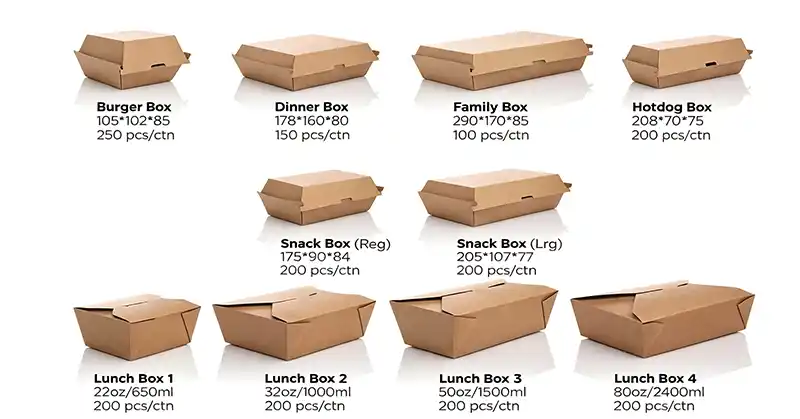
A new packaging producer expects 300,000–400,000 boxes per month, primarily in two box styles (burger boxes and standard lunch boxes). Peak demand occurs during holiday seasons.
Key specs to prioritize:
-
Single-station machine (60–150 PPM range) for lower initial investment and faster changeovers
-
Cold glue system for lower operating costs
-
CE certification if exporting to EU markets is a future possibility
-
Material compatibility with 250–400 g/m² paperboard (the most common range for takeaway boxes)
Scenario B: Established producer expanding into multi-SKU production
A medium-sized producer with 1 million+ boxes per month needs to produce flip-top, boat-shaped, and window boxes on the same line—often switching between styles within the same shift.
Key specs to prioritize:
-
Double-station or servo-driven independent dual station for running different styles simultaneously
-
Fast mold change capability (under 30 minutes)
-
Hot melt or heat-sealing system for faster production cycles
-
FDA and CE compliance for export market flexibility
For more application-specific guidance, explore the paper lunch box machine applications page for real-world deployment examples.
Next Steps: From Spec Comparison to Equipment Selection
You’ve now clarified the five key specifications that separate a machine that fits your business from one that doesn’t. Production speed determines your capacity ceiling. Station configuration determines your flexibility. Material compatibility determines your input costs. Adhesive system determines your product quality and compliance. Certifications determine your market access.
The next logical step is comparing specific equipment specifications against your actual production requirements—not against theoretical maximums.
Once you have clarified these key decision factors (required output volume, box style mix, material types, target export markets, and adhesive preferences), comparing the specific specifications of available options becomes the next logical step. You can review equipment configurations for high-volume scenarios or streamlined efficiency models designed for growing operations.