You’ve identified a growing demand for disposable paper food containers. The numbers support your instinct—the global disposable paper container market was valued at USD 65.8 billion in 2024 and is projected to reach USD 98.2 billion by 2032, growing at a CAGR of 5.1%. But as you evaluate production equipment, a fundamental question emerges: should you invest in a paper lunch box machine or a paper bowl machine?
The two machine types may look similar on the surface—both form paper into food-safe containers. But they serve distinctly different markets, require different forming technologies, and demand different production line configurations. Choosing the wrong one can lock you into a product category that doesn’t match your actual market opportunity.
This guide breaks down the technical and business differences between paper lunch box machines and paper bowl machines, so you can match equipment capabilities to your target market—not just to a spec sheet.
Understanding the Core Difference: Forming Technology and Container Geometry
The fundamental distinction between a paper lunch box machine and a paper bowl machine lies in container geometry—and that geometry drives entirely different forming processes.
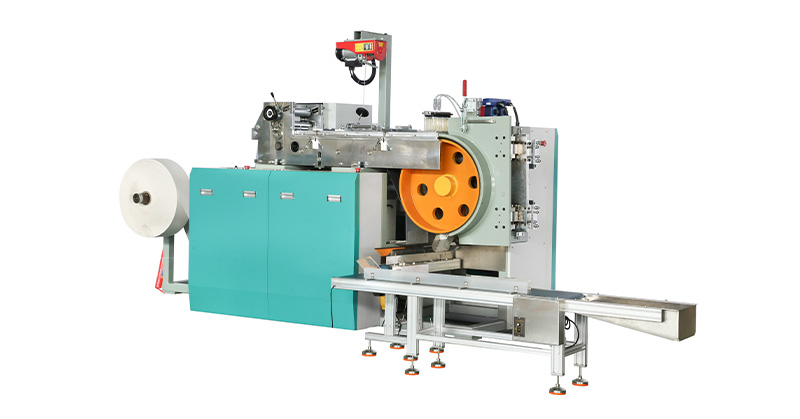
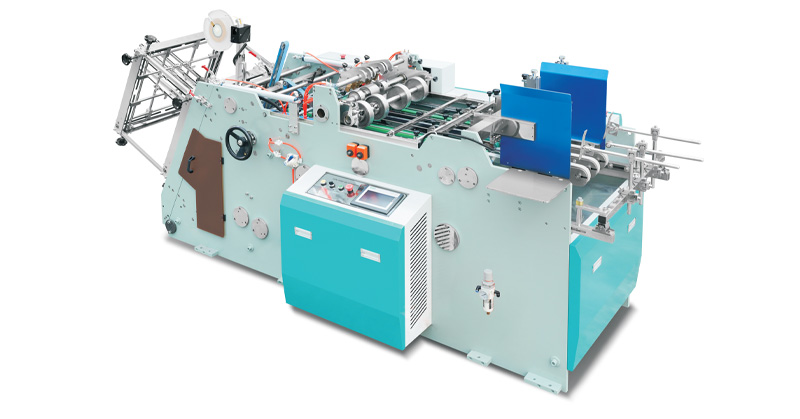
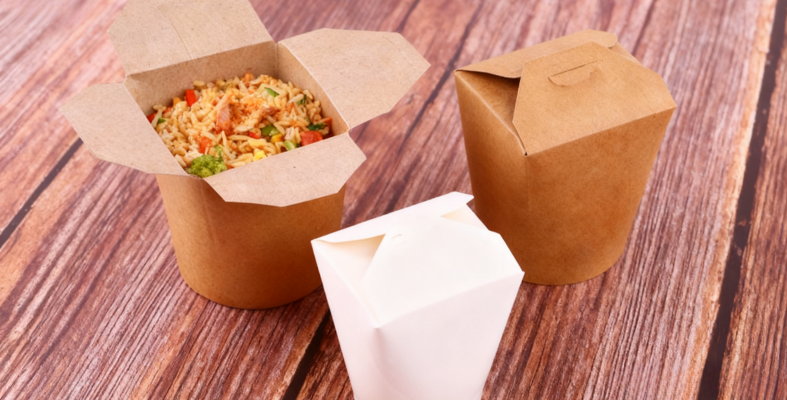
Paper lunch box machines produce containers with straight or angled walls, flat or compartmentalized bottoms, and foldable closure mechanisms. Common products include:
-
Flip-top lunch boxes (foldable lids with locking tabs)
-
Boat-shaped containers (open-top, display-friendly)
-
Window boxes (with transparent panels for visual appeal)
-
Lock-bottom paper boxes (interlocking base structure for stability)
These containers typically require scoring, folding, gluing (or heat-sealing), and bottom-locking mechanisms. The forming process involves multiple stations that crease paperboard along precise lines, fold flaps into position, and apply adhesive to secure the structure.
Paper bowl machines, by contrast, produce round or oval containers with curved walls and rolled rims. The forming process emphasizes:
-
Circular forming—shaping flat paperboard into a rounded bowl body
-
Rolled edge technology—creating a smooth, reinforced rim that prevents leakage and provides structural integrity
-
Warping control—managing paper distortion during the curved forming process, which is critical for maintaining consistent bowl dimensions
According to industry analysis, paper bowl forming machines are specialized multi-station automatic equipment that handles continuous processes including automatic paper feeding, sealing, bottom punching, and rim rolling.
What this means for your business: If your target customers demand compartmentalized meal boxes with secure lids for delivery and takeaway, a paper lunch box machine is your path. If they need soup bowls, salad bowls, or ice cream cups with rolled rims and leak-proof curved walls, a paper bowl machine is the right choice.
Side-by-Side Comparison: Paper Lunch Box Machine vs Paper Bowl Machine
| Comparison Factor | Paper Lunch Box Machine | Paper Bowl Machine |
|---|---|---|
| Container shape | Rectangular, square, or multi-compartment with flat/angled walls | Round or oval with curved walls |
| Key forming processes | Scoring, folding, gluing, bottom-locking | Circular forming, bottom punching, rim rolling |
| Closure mechanism | Fold-over lids, locking tabs, flip-top designs | Typically open-top (lids produced separately) |
| Typical material range | 200–600 g/m² cardboard, coated paper, corrugated paper | Similar range; may require specialized coated papers for liquid resistance |
| Production speed | 60–300 pcs/min (single station); 120–600+ pcs/min (dual station) | Varies by model; typically 40–80 pcs/min for standard bowl sizes |
| Primary applications | Meal delivery, bento boxes, takeaway containers, bakery boxes | Soup, salad, ice cream, instant noodles, hot beverages |
| Critical quality factors | Folding precision, glue application consistency, lid fit | Rim integrity, warping control, leak resistance |
| Changeover complexity | Moderate—tooling changes for different box sizes/styles | Moderate—diameter and depth adjustments required |
Decision framework:
-
Choose paper lunch box machines if your market serves meal delivery, fast-food chains, bakery outlets, or corporate catering—where compartmentalization, secure closures, and stackability are priorities.
-
Choose paper bowl machines if your market serves soup kitchens, salad bars, ice cream parlors, instant noodle manufacturers, or hot beverage takeaway—where curved walls, rolled rims, and liquid containment are essential.
Five Steps to Match Equipment Choice to Your Market Opportunity
Step 1: Define your primary container types
List the specific products your customers order most frequently. If more than 60% of inquiries are for rectangular meal boxes with lids, a paper lunch box machine is your logical starting point. If bowls dominate your inquiry pipeline, prioritize bowl-forming equipment.
Step 2: Analyze your target end-user industries
Paper lunch box machines are heavily utilized in the food delivery and quick-service restaurant (QSR) sectors. Data shows that quick-service restaurants are converting 65% of their packaging to paper-based solutions. Paper bowl machines serve soup and salad chains, ice cream brands, and instant food manufacturers.
Step 3: Assess your required production capacity
A standard single-station paper lunch box machine typically produces 60–150 pieces per minute, while high-speed automated systems can reach 150–200+ pieces per minute. Double-station configurations can deliver 120–300+ pieces per minute. Paper bowl machines generally operate at lower speeds due to the more complex curved forming process—typically 40–80 pieces per minute for standard sizes.
Step 4: Evaluate material compatibility
Both machine types process similar paperboard ranges (200–600 g/m²), but bowl machines may require specialized coated papers with enhanced moisture resistance for liquid-holding applications. If your market demands bowls for hot soups or oily foods, verify that your chosen equipment can handle the necessary coated or PE-laminated materials.
Step 5: Consider future product line expansion
Many manufacturers start with one container type and later expand. If you anticipate eventually producing both lunch boxes and bowls, evaluate whether your chosen equipment platform offers modular expandability or whether you’ll need separate dedicated lines.
For real-world examples of how paper container equipment is deployed across different food service scenarios, review the application guides for various end-use cases.
Real-World Application Scenarios
Scenario A: Meal Delivery Service Provider
A food delivery company serving office lunch programs needs 50,000–80,000 compartmentalized meal boxes per week. Boxes must have secure lids to prevent spillage during delivery, and multiple compartments to separate main courses from sides.
Equipment implication: A paper lunch box machine with dual-station capability allows simultaneous production of different box sizes (e.g., single-compartment for individual meals, three-compartment for family packs). The machine’s folding and gluing precision directly impacts lid fit—a critical factor for delivery reliability.
Scenario B: Ice Cream and Dessert Brand
An artisanal ice cream brand expanding into retail needs 20,000–30,000 round paper cups/bowls per week. Bowls must have smooth rolled rims for comfortable handling and consistent diameters for lid compatibility.
Equipment implication: A paper bowl machine with precise rim-rolling capability and warping control ensures every bowl meets the brand’s quality standards. The machine’s ability to handle coated paperboard (for moisture resistance) is essential.
Beyond the Machine: What Else Affects Your Decision?
While the machine type is the primary decision, three additional factors should influence your equipment selection:
Regulatory compliance
The European Union’s Packaging and Packaging Waste Regulation (PPWR) and Extended Producer Responsibility (EPR) laws in multiple U.S. states are reshaping the packaging landscape. Equipment that supports material traceability and food-grade certifications (CE, FDA) is becoming a compliance necessity rather than a differentiator. CE-certified paper lunch box production systems typically cost 15–25% more upfront than uncertified equivalents, but this investment mitigates regulatory risk.
Total cost of ownership vs. purchase price
Industry analysis indicates that U.S. tariff measures on paper, pulp, and steel components in 2025 are reshaping pricing dynamics across the paper container forming equipment landscape. Buyers are increasingly prioritizing total cost of ownership analyses over upfront capital expenditure. When comparing paper lunch box machines vs paper bowl machines, consider:
-
Energy consumption per thousand containers
-
Maintenance frequency and parts availability
-
Operator training requirements
-
Changeover time between different container sizes
Service and support infrastructure
Equipment downtime directly impacts your ability to fulfill orders. According to operational data, nearly 40% of small to mid-sized takeaway box producers experience at least one “capacity trap” within 18 months of equipment purchase—where actual demand exceeds rated machine output. Access to 24/7 technical support and local authorized service partners can mean the difference between a minor production hiccup and a missed delivery deadline.
Next Steps: From Decision Framework to Equipment Evaluation
You’ve now clarified the key decision factors: container geometry determines machine type, production volume determines machine scale, and regulatory requirements determine certification needs. The next logical step is comparing specific equipment specifications for your target container types.
If your market analysis points toward meal delivery, takeaway, or compartmentalized food containers, review the paper lunch box machine series for detailed specifications on speed ranges, station configurations, and material compatibility.
If bowls, cups, or curved containers are your primary focus, evaluate bowl-forming equipment with attention to rim-rolling precision, warping control, and coated-material handling capability.
For a deeper dive into capacity planning—including how to calculate your true output requirements and avoid the “capacity trap”—read the guide on how to choose a paper lunch box machine for your production volume.